Calligraphy Tools
The brush, the inkstone and the ink stick — the three tools of Japanese calligraphy each come from a town that has perfected them. Here is where Japan's writing culture is physically made.
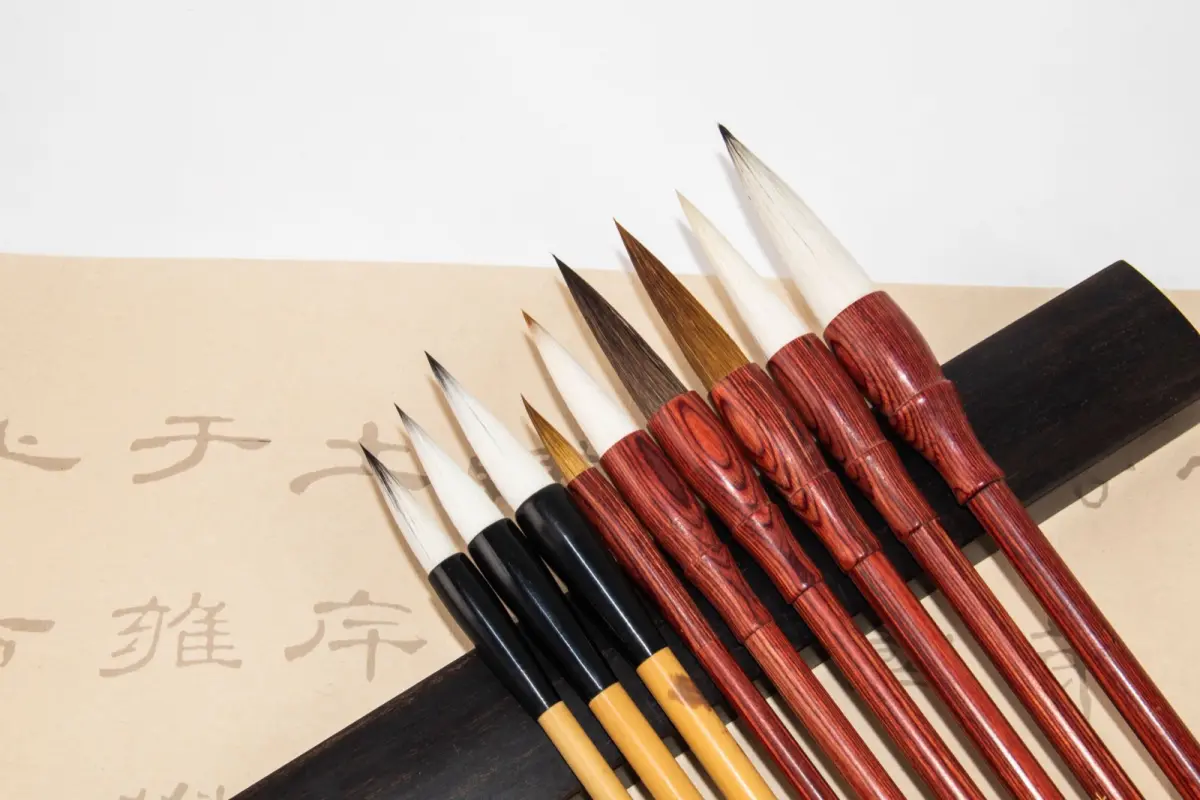
Kumano Brushes
This Hiroshima town made brushes after farmers, short of land, peddled brushes and ink home from seasonal work — a trade that boomed as Meiji schooling spread calligraphy. Kumano now leads Japan in writing, painting and prized makeup brushes, almost all shaped by hand.
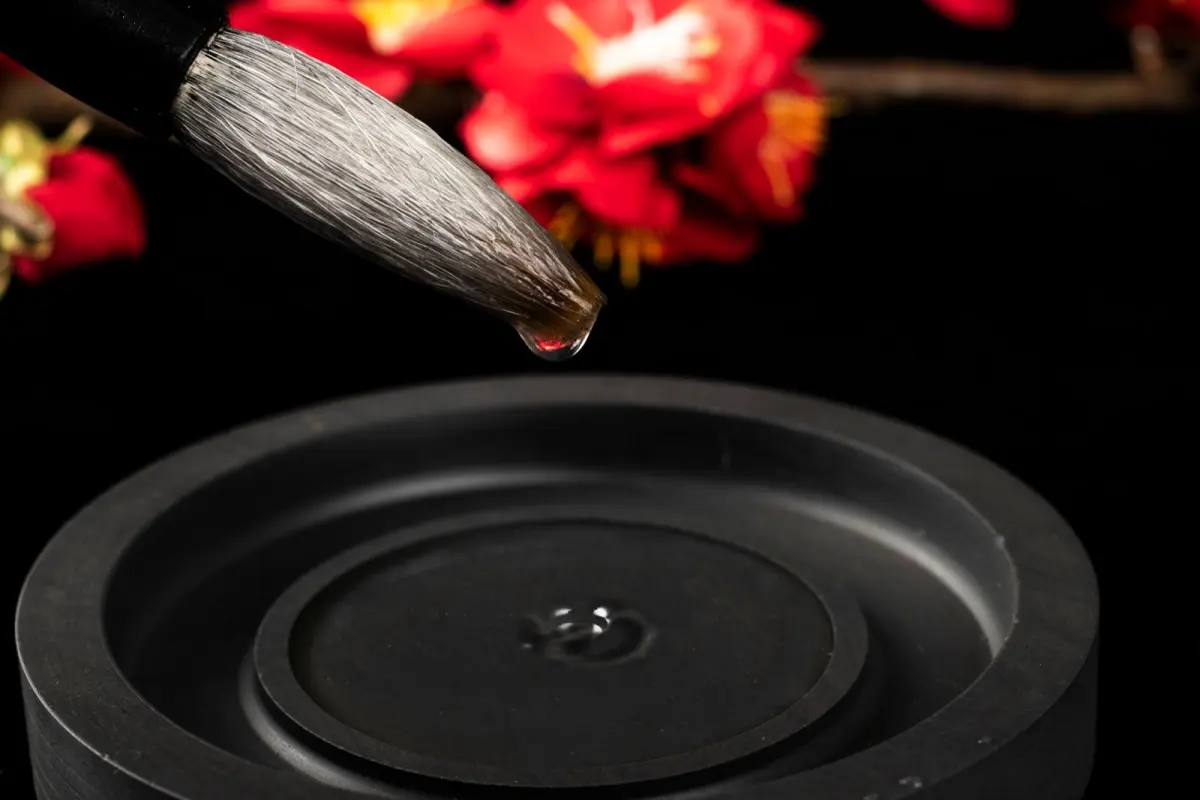
Ogatsu Inkstones
Inkstones carved from fine black Ogatsu slate, quarried on the Miyagi coast since about 1396. So prized that the lord Date Masamune closed the quarry mountain to outsiders. Pure, hard and water-tight, the stone grinds ink beautifully — and once made 90% of Japan's school inkstones.
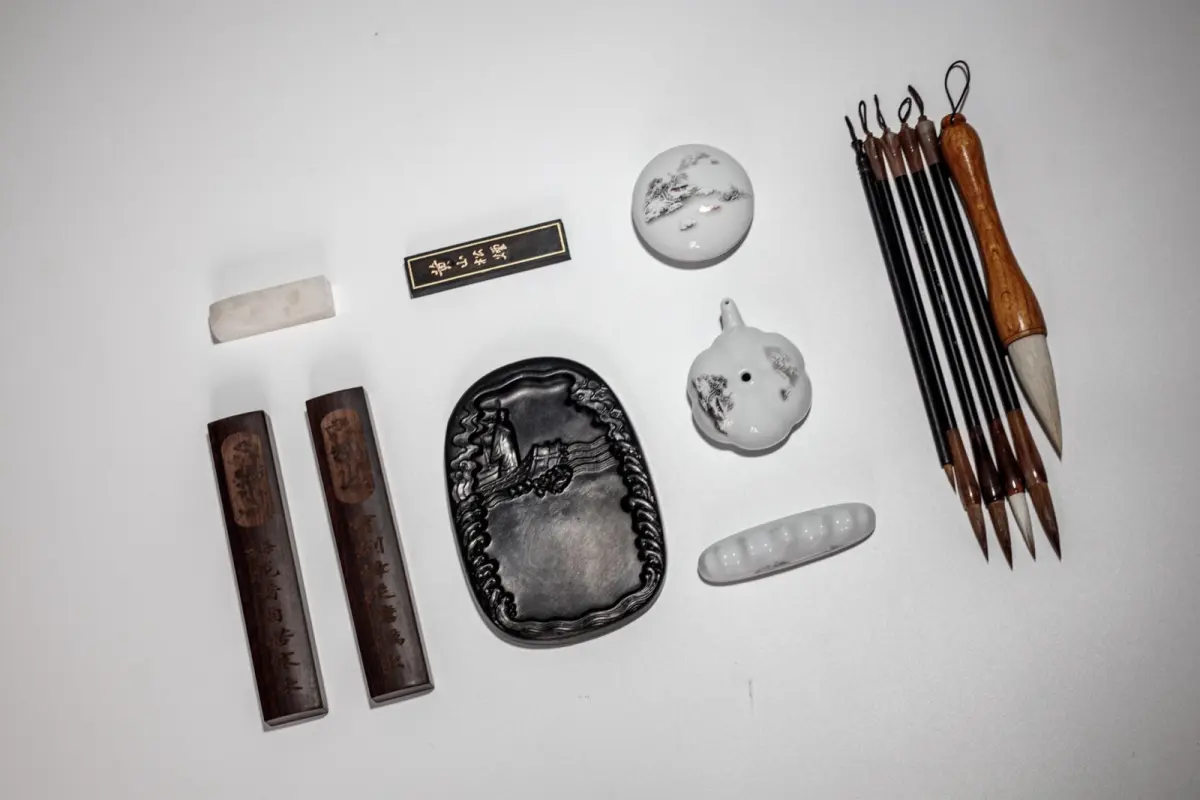
Nara Ink Sticks
Nearly all of Japan's solid ink is made in Nara, where oil-soot 'yuen-boku' ink was born from the lamp-soot of a Kofuku-ji hall. The house Kobaien, founded 1577, still gathers soot from some 400 flames; ink is kneaded in the cold winter months.