Tsugaru Nuri: Aomoris Speckled Lacquer
On this page
The lacquer artist in Hirosaki builds a surface like sediment—layer upon patient layer, forty or fifty coats deep, each one a different hue. Then the grinding begins, and what seemed solid becomes a landscape: flecks of cinnabar, moss green, amber, all swimming together in the wood.
The Patience of Tsugaru Lords
Tsugaru nuri (津軽塗) emerged in Hirosaki, Aomori, during the mid-Edo period under the patronage of the fourth Tsugaru lord. Unlike lacquerware painted atop a finished surface, this is togidashi kawari-nuri—a technique of revelation rather than decoration. Dozens of lacquer layers are applied, each allowed to cure, then ground back with charcoal and whetstone to expose the strata beneath. The process is so labour-intensive that craftspeople nicknamed it Tsugaru no baka-nuri, 'Tsugaru's fool's lacquer,' a term of exasperated affection for work that defies shortcuts. In 1975, the Japanese government designated it a Traditional Craft, acknowledging centuries of uncompromising skill.
Four Faces of Depth
The technique divides into four distinct styles, each with its own grammar of pattern. Kara-nuri is the signature: a speckled, mottled surface where colours seem to float and collide, achieved by applying contrasting lacquers and grinding them back in careful stages. Nanako-nuri takes its name from fish roe—rapeseed seeds are sprinkled onto wet lacquer, later removed to leave a field of tiny rings. Monsha-nuri layers rice-husk charcoal powder over glossy black, creating a texture like distant stars. Nishiki-nuri, the 'brocade finish,' weaves multiple hues into something that catches light like silk. Each style demands its own rhythm of application and abrasion, a conversation between addition and subtraction.
The Arithmetic of Layers
A single piece of Tsugaru nuri may wear forty, fifty, even more coats of lacquer. The base layers establish structure; middle coats introduce colour; top layers protect and deepen. Between each application: drying time, sometimes days in controlled humidity. The craftsperson must know exactly when each layer has cured enough to accept the next, yet remains soft enough to bond. Too soon and the surface wrinkles; too late and it won't adhere. This is not assembly-line work. It is a practice of attention sustained over weeks, where impatience ruins months of effort.
Grinding Toward Beauty
The grinding—togidashi—is where intention meets accident. Using progressively finer abrasives, the artisan wears away the top layers at angles, exposing the colours beneath in unpredictable constellations. What emerges cannot be fully planned:
The pattern reveals itself only as the craftsperson works, each stroke of the whetstone a small negotiation with chance.
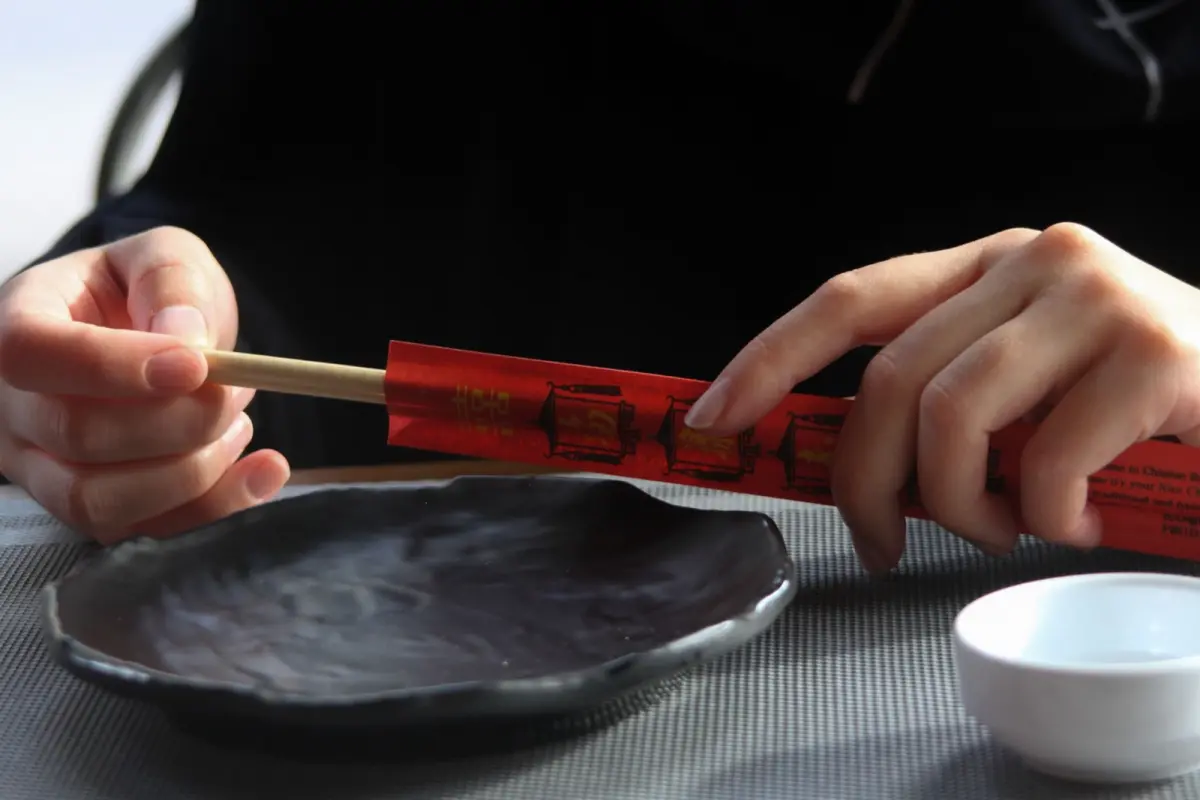
Charcoal powder, then finer stones, then polishing compounds bring the surface from matte to mirror. The final finish is both tough and luminous, dense enough to withstand daily use yet refined enough to hold candlelight in its depths. This durability is not incidental—Tsugaru nuri chopsticks are prized precisely because they marry everyday resilience with the kind of beauty you might hesitate to touch.
Treasure and Tool
In Hirosaki today, workshops continue the tradition with the same essential methods, though some have adapted designs for contemporary tables. A rice bowl, a tray, a pair of chopsticks—each object carries the weight of its making, the weeks of lacquer and grinding compressed into a surface you can hold. The craft asks a question: what if the things we use every day were made as though they mattered for generations? Tsugaru nuri answers by refusing to separate the practical from the precious, offering objects tough enough for the everyday, beautiful enough to pass down.
The lacquer holds its colours like a forest floor holds leaves—many seasons pressed into one glance.
Chaware curates authentic Japanese crafts — straight from the makers in Japan to your table.
Explore the Chaware collection →
Keep exploring