Kyoto Folding Fans: A Thousand Years of Sensu Craftsmanship
On this page
A flick of the wrist, a whisper of paper, and suddenly the air moves. The folding fan seems simple until you learn it takes eighty-seven steps to make one properly in Kyoto, each step the work of a different pair of hands.
Born in the Courts of Heian
The folding fan is a Japanese invention, its story beginning in the Heian period not as a tool for cooling but as something far more practical: a memo pad. The earliest form, called hiougi (檜扇), consisted of thin slats of hinoki cypress bound together with cord. Courtiers carried these fans during ceremonies, jotting notes on the wooden surfaces. Only later did the fan discover its second life as a way to move air, to punctuate a dance, to speak without words.
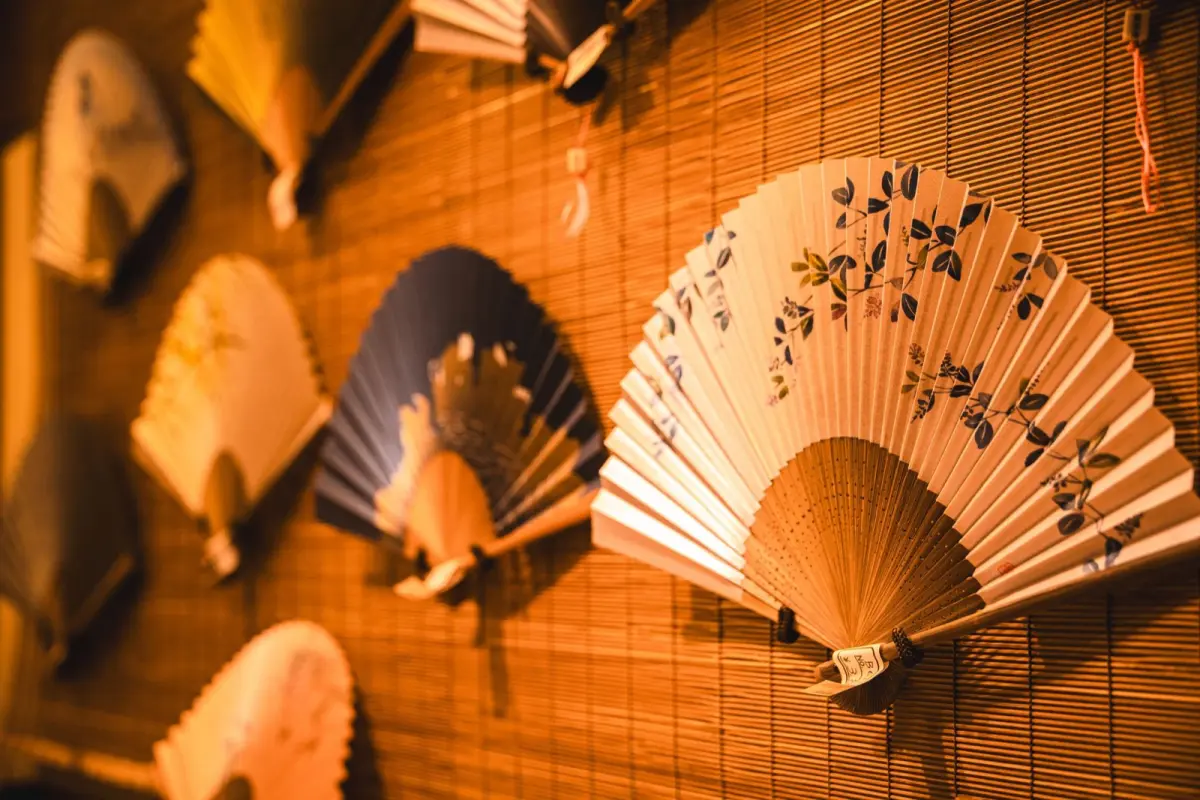
The next evolution came with the kawahori-ougi (蝙蝠扇), named for its resemblance to a bat's wing—five wooden ribs with paper mounted on one side. This asymmetry gave the fan a new lightness, a new purpose. From these humble beginnings in the imperial capital, the folding fan would eventually travel the world, though its heart remained in Kyoto.
Eighty-Seven Steps, Many Hands
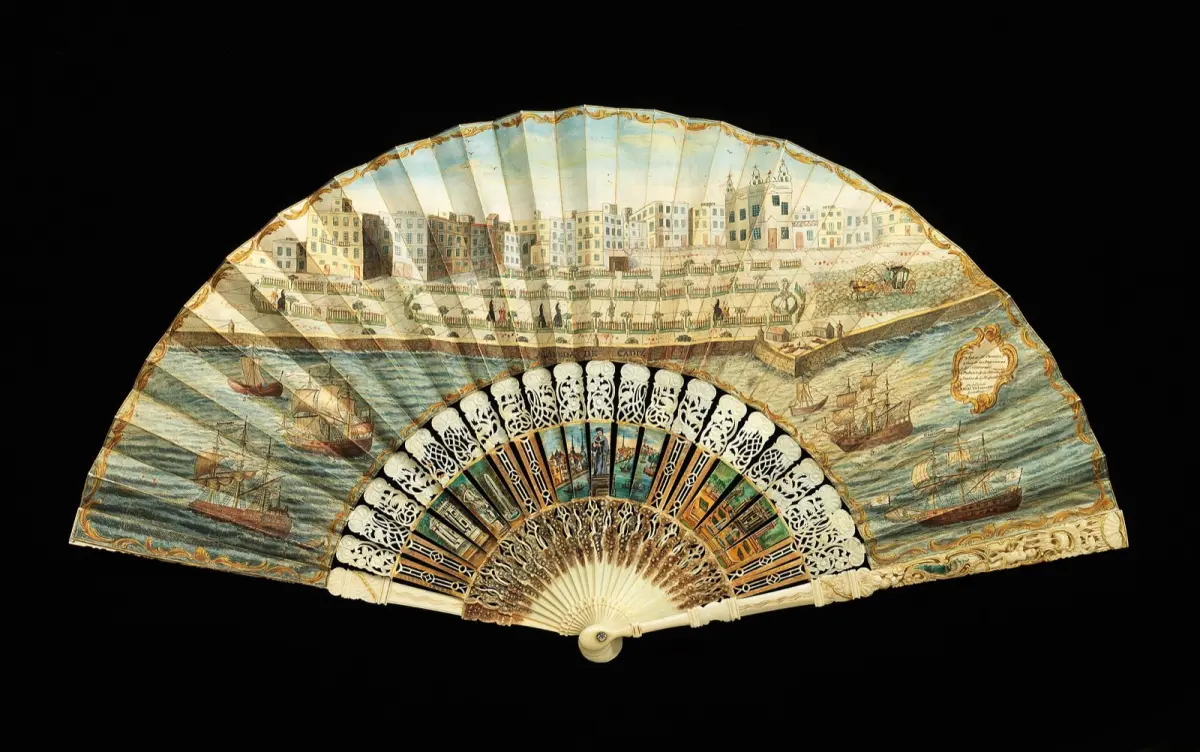
To make a Kyoto folding fan today is to participate in a system of exquisite specialization. The process divides into eighty-seven distinct steps, each performed by a different craftsperson. One workshop prepares the bamboo ribs, splitting and shaving them to precise thickness. Another applies the paper, stretching it taut without tearing. A third paints or prints the design. Yet another folds and pleats, then inserts the ribs with a rhythm learned over years.
This division of labour is not inefficiency but refinement—each artisan perfecting one small gesture until it becomes invisible, until the fan seems to have made itself.
The system requires trust. A painter never meets the person who will fold their work. A rib-maker never sees the finished fan leave the shop. Yet the whole holds together, bound by centuries of shared standards.
The Momoyama Refinement
By the Momoyama period, the techniques we recognize today had crystallized. This was an era of bold aesthetics and technical confidence, when tea ceremony and Noh theatre demanded props of corresponding elegance. The folding fan became lighter, stronger, more versatile. Decorative techniques expanded: gold leaf, mineral pigments, delicate line work that seemed to float on the paper's surface.
Kyoto's fans earned their reputation for elegance during these years—not flashy, but refined. The kind of object that improves the longer you look at it. The ribs taper just so. The paper catches light without glare. Even closed, the fan has presence.
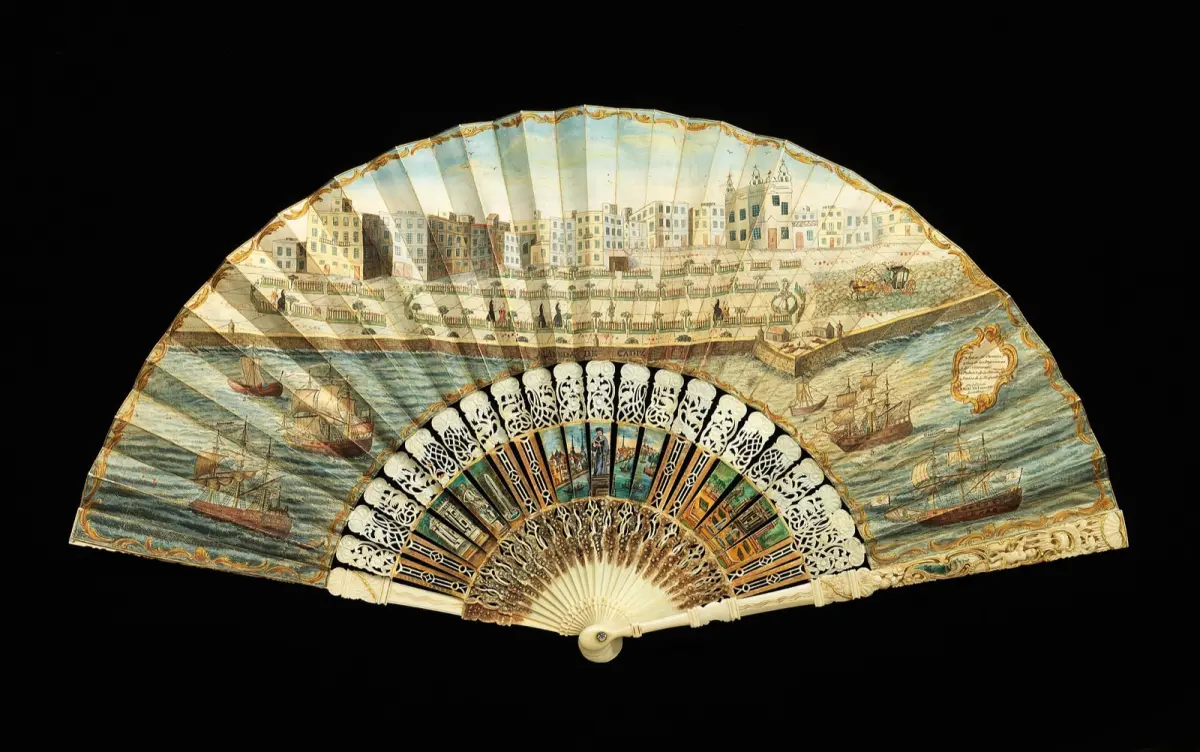
A National Treasure in Daily Hands
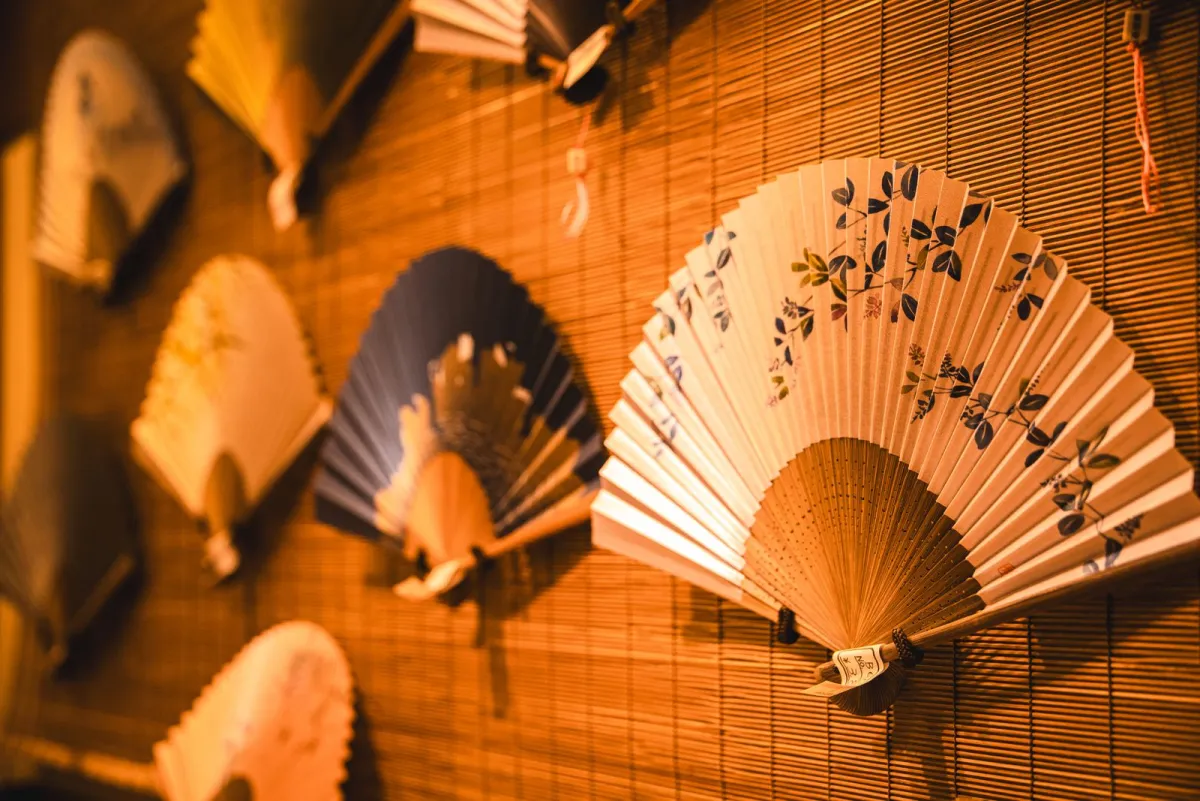
Today, Kyoto folding fans hold the designation of a national Traditional Craft, recognition of both their historical importance and the living skill required to make them. Yet they remain functional objects. Dancers snap them open in a single motion. Tea practitioners use them to mark boundaries of respect. Summer festival-goers tuck them into yukata sashes, pulling them out when the evening heat presses close.
The designation ensures support for the workshops, but it cannot manufacture demand. Young people must still choose to learn the eighty-seven steps, to become one link in the long chain. Some do. The fan, after all, is patient. It has survived a thousand years by being both beautiful and useful—a rare combination.
The Whisper Continues
Walk through Kyoto's older neighbourhoods and you might glimpse a workshop through an open door: paper drying on racks, bamboo shavings curling on the floor, the soft tap of a craftsperson's blade. The folding fan asks nothing more than this—skilled hands, good materials, attention to detail. In return, it offers a breeze, a gesture, a flicker of elegance in an ordinary afternoon.
The fan closes as easily as it opens, and waits.
FAQ
Chaware curates authentic Japanese crafts — straight from the makers in Japan to your table.
Explore the Chaware collection →
Keep exploring