Seki: The Blade City of the Samurai Where Steel Became Legend
On this page
The clang of hammer on steel has echoed through Seki's forges for seven hundred years. What began as swordcraft for samurai now slices tomatoes with surgical precision. The city that armed warriors has become the quiet capital of the world's sharpest kitchen drawers.
The Five Great Traditions
In the early Kamakura period—the 13th century—sword-making took root in Seki, a city in Gifu Prefecture blessed with everything a bladesmith could want. Good clay for furnaces. Dense pine charcoal that burned hot and steady. The cold, pure waters of the Nagara and Tsubo rivers for tempering. Word spread, and smiths arrived. Their work became known as Mino-den (美濃伝), the Mino tradition, and it earned a place among the Gokaden (五箇伝)—the five great sword traditions of Japan, alongside Yamato, Yamashiro, Bizen, and Soshu. To be counted among these five was to be recognized as essential to the soul of the Japanese blade.
Unbreakable, Unbendable, Sharp
Seki blades carried a reputation that preceded them into battle: unbreakable, unbendable, and sharp. This wasn't marketing poetry—it was the result of relentless technical refinement. The master smith Magoroku Kanemoto (孫六兼元), a name passed down through more than twenty generations, devised the shiho-zume forging technique, a method that married hard and soft steels in a way that made blades tougher without sacrificing their edge. The name Magoroku Kanemoto became synonymous with excellence, each generation inheriting not just a title but a standard.
"Unbreakable, unbendable, and sharp"—the three qualities that defined Seki's reputation across centuries.
From Battlefield to Kitchen
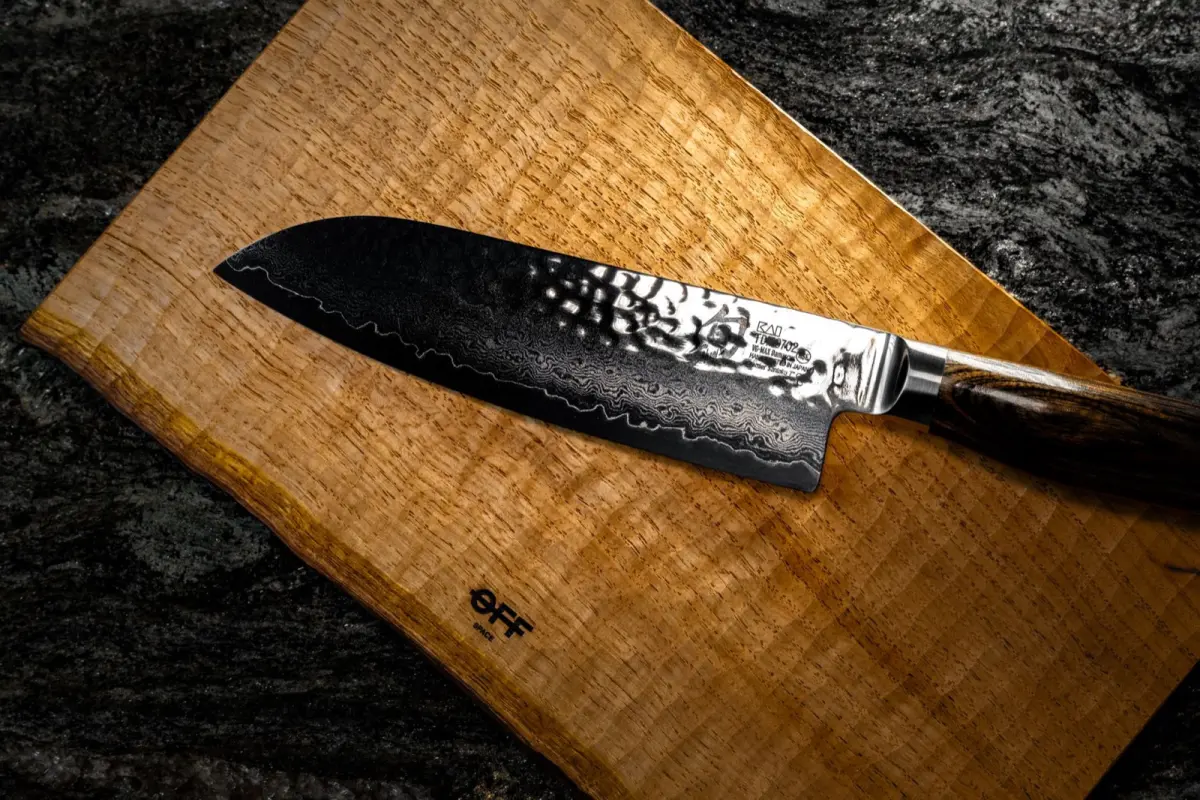
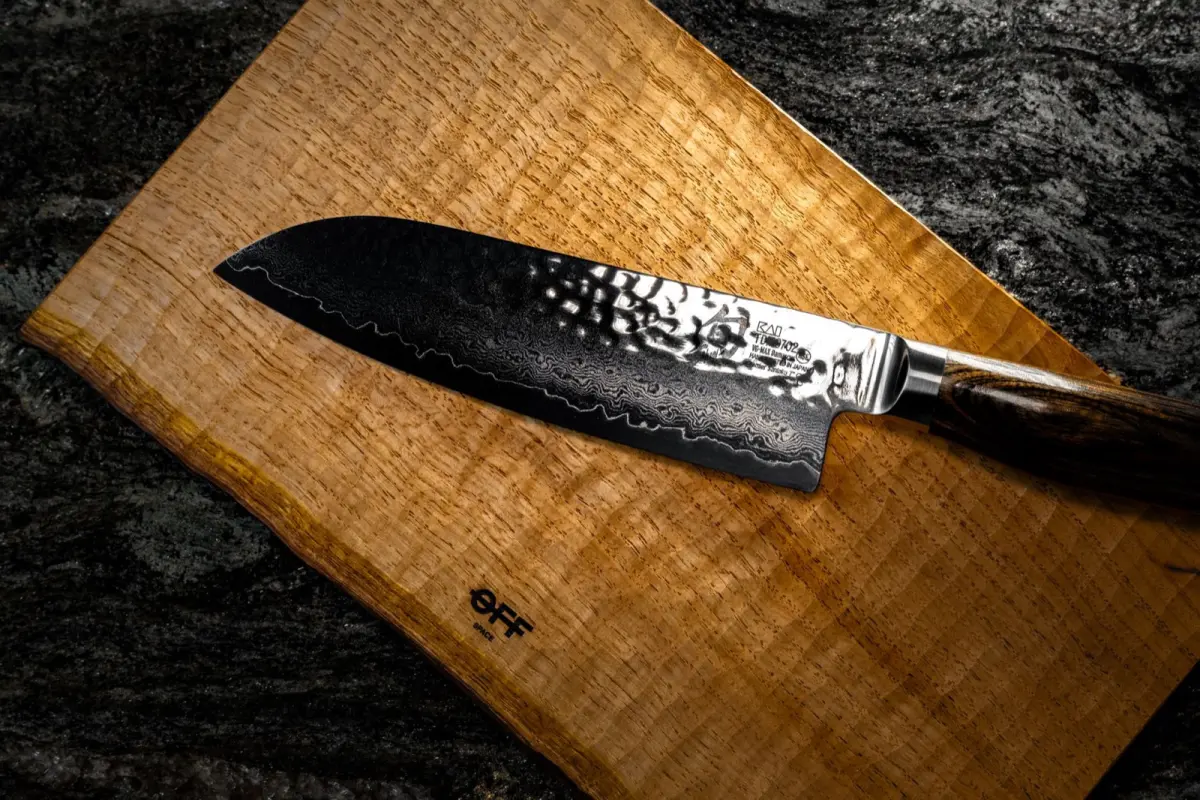
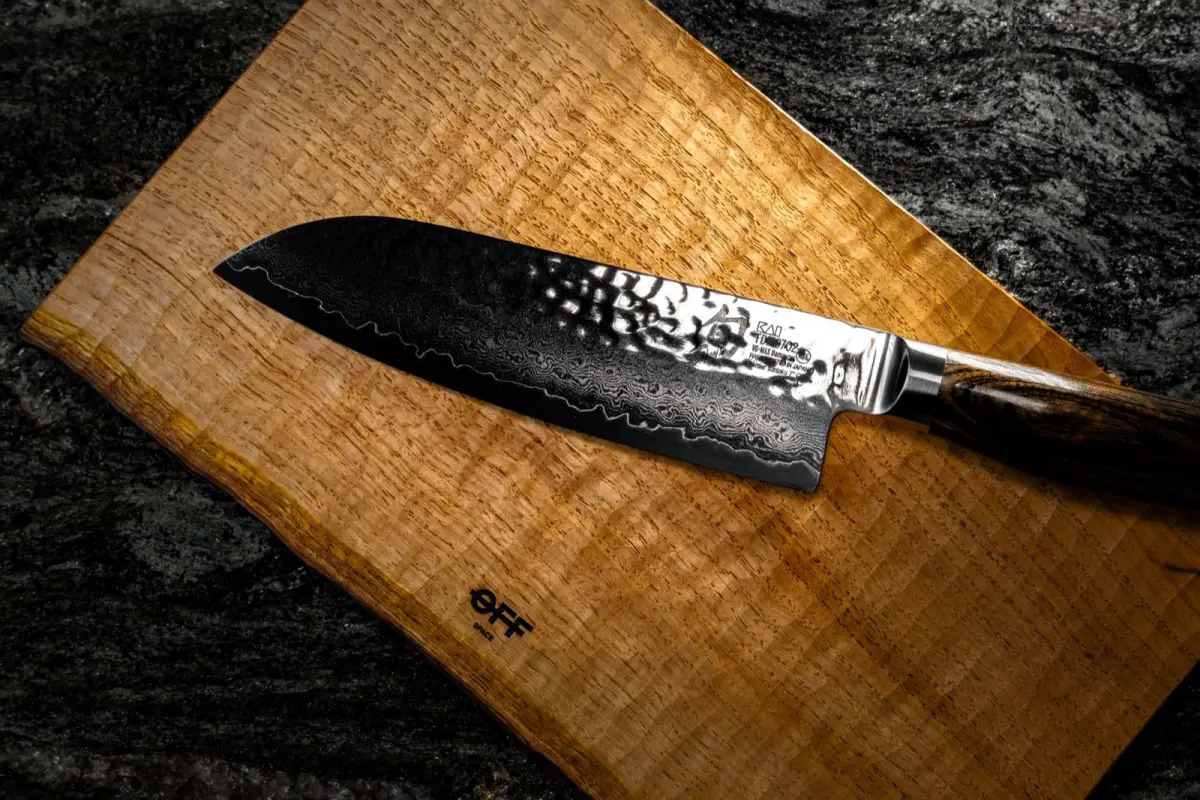
When the age of the sword ended, Seki's smiths faced a choice: disappear or adapt. They adapted. Seven centuries of blade-craft—the understanding of steel's temperament, the precision of the grind, the patience required to bring an edge to its sharpest possible life—transferred seamlessly to new forms. Kitchen knives. Pocket knives. Scissors. The same hands that once forged katana now produce some of the finest culinary blades on earth. Walk into a professional kitchen anywhere in the world, and there's a good chance the chef's knife was born in Seki.
The Geography of Steel
Seki's rise wasn't accidental. Geography made it inevitable. The rivers provided water for quenching—the critical moment when red-hot steel meets cold liquid and its internal structure locks into place. The surrounding forests yielded pine, which when turned to charcoal burned at the precise, sustained temperatures needed for forging. The local clay formed the walls of furnaces that could withstand repeated heating and cooling. These weren't luxuries; they were necessities. A blade is only as good as the elements that shape it, and Seki had them all within reach.
Living Tradition
Today, Seki remains a city of blades. The forges still operate, though the scale has changed—what was once dozens of individual smiths is now a thriving industry producing knives for home cooks and professionals alike. The techniques endure: differential hardening, multi-layer construction, the careful attention to the transition between edge and spine. Modern Seki blades carry forward the Mino-den legacy, each knife a descendant of swords that once defined an era. The city that armed samurai now arms the world's kitchens, proof that true craft doesn't fade—it simply finds new forms.
The hammer still falls in Seki. The steel still sings.
FAQ
Chaware curates authentic Japanese crafts — straight from the makers in Japan to your table.
Explore the Chaware collection →
Keep exploring