Hakata Dolls: The Painted Clay Figures That Capture Fukuoka's Soul
On this page
The clay remembers every fingertip. In Fukuoka's workshops, artisans still shape unglazed figures by hand, then paint them with brushes so fine they hold only a few hairs. Each Hakata ningyō (博多人形) emerges singular, unrepeatable—a small sculpture that has carried Kyushu's name across oceans for more than a century.
Warlords and Gathered Hands
The ground was laid in 1600, when Kuroda Nagamasa entered Chikuzen province and gathered craftsmen to his new domain. Among them were potters, tile-makers, and artisans skilled in festival-float decoration—trades that would converge in unexpected ways. The origins of Hakata ningyō remain a matter of friendly debate among three lineages: the Nakanoko family of potters, the Shirouzu line with roots in Hakata's festival floats, and the Masaki family of roof-tile craftsmen. Each claims a thread in the tradition's weaving, and perhaps all are right. What matters is that clay and colour met in Fukuoka, and a distinctive doll-making culture took root over the following centuries.
Bisque and Brush
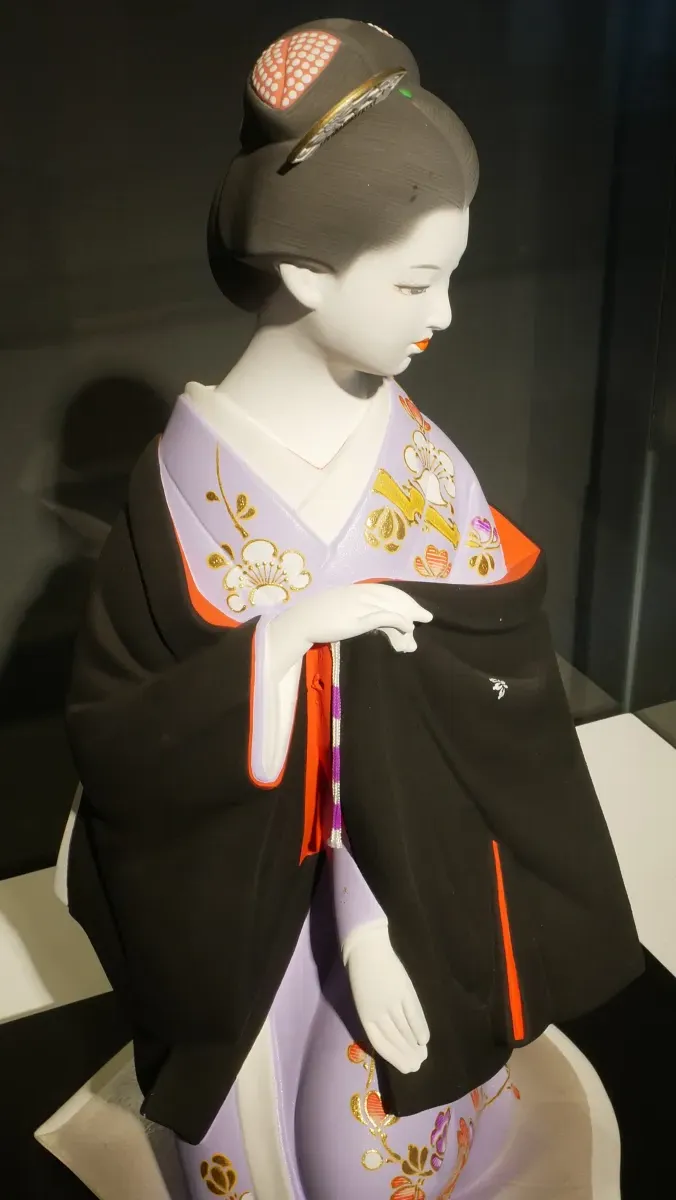
The technique is deceptively straightforward. Each doll is fired once as bisque—unglazed earthenware that remains porous and matte. Then comes the painstaking work: colouring entirely by hand. No glaze seals the surface; instead, pigments are applied directly to the clay, layer by patient layer. The result is a softness of tone and a subtlety of gradation that glazed ceramics cannot achieve. Cheeks blush. Kimono patterns emerge in delicate strokes. The unglazed surface holds light differently, lending the figures a quiet, almost breathing presence.
Every Hakata ningyō is a one-of-a-kind piece, shaped and painted by individual hands. No mould produces identical twins; no assembly line speeds the process.
Beauties and Actors
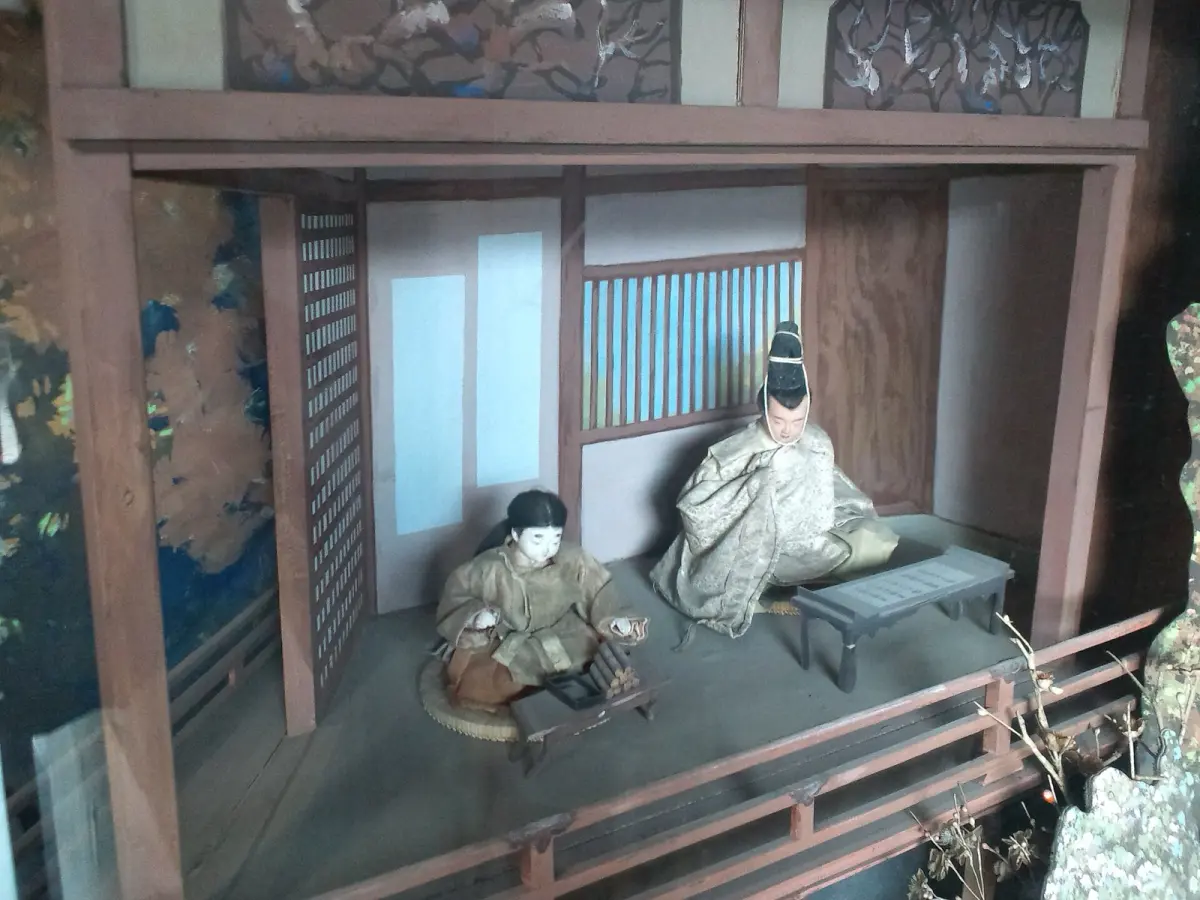
The dolls fall into several broad types: bijin-mono (beauties), kabuki figures, Noh characters, children at play, and festival scenes. But it is the bijin-mono—realistic, softly modelled women in elegant poses—that have become the tradition's signature. These figures capture a particular ideal: grace without stiffness, detail without fussiness. A tilt of the head, the fall of a sleeve, the suggestion of a smile—each element is observed and rendered with care. Kabuki and Noh dolls, meanwhile, freeze dramatic moments, their costumes and expressions drawn from the stage. Children tumble and laugh in miniature. Festival dolls recall Hakata's own Yamakasa, the summer event that still thunders through the city's streets each July.
Paris and Beyond
From the Meiji era onward, Hakata ningyō won high praise at international expositions, including the great fairs in Paris. Foreign audiences, encountering these unglazed figures for the first time, were struck by their lifelike quality and the evident skill of their makers. The name 'Hakata doll' spread, and exports followed. What had been a regional craft became an ambassador, carrying an image of Japanese artistry—intimate, meticulous, human-scaled—to collectors and museums abroad. The dolls' success also reflected a broader moment: Japan opening to the world, and the world eager to see what Japanese hands could make.
Holding the Singular
Today, Hakata ningyō continue to be made in Fukuoka by artisans who have inherited techniques and sensibilities passed down through generations. Each doll still begins as raw clay, still receives its single bisque firing, still waits for the brush. In an age of mass production, these figures insist on the value of the unrepeatable. They are small monuments to patience, to the collaboration of hand and eye, to the quiet drama that unfolds when colour meets unglazed earth.
To hold one is to hold four centuries of gathered skill, and the particular vision of a single maker.
FAQ
Chaware curates authentic Japanese crafts — straight from the makers in Japan to your table.
Explore the Chaware collection →
Keep exploring