Tamba Ware: Hyogo's Six-Ancient-Kiln Stoneware
On this page
Article Body
In the hills of Hyogo Prefecture, potters still kick their wheels to the left—a quiet rebellion against the clockwise world, and a thread that runs unbroken through nine centuries of Tamba-yaki (丹波焼). Here, in the village of Tachikui near Tamba-Sasayama, clay and flame have spoken the same language since the late Heian period, making this one of Japan's Rokkoyo (六古窯), the Six Ancient Kilns.
Fire That Climbs Mountains
For roughly four hundred years, from Tamba's beginnings through the Momoyama era, potters fired their work in anagama (穴窯)—tunnel kilns dug straight into hillsides, where flame and ash tumbled over stoneware jars in a single, surging chamber. Then, in the early Edo period, Korean peninsula technology arrived: the noborigama (登り窯), a half-underground climbing kiln that steps up slopes in linked chambers, each feeding heat to the next. This is the kiln Tamba potters still use today, and the shift marked not just a technical evolution but a doorway to new glazes, new colours, new possibilities. Around sixty kilns continue to work at Tachikui, their chimneys stitching the valley to the sky.
The Left-Turning Wheel
Walk into a Tamba workshop and you may feel momentarily disoriented. The potter's kick-wheel—the rokuro (轆轤)—spins counter-clockwise, turning left where most Japanese pottery traditions turn right. No one quite agrees why. Some say it reflects an ancient local custom; others suggest a link to continental techniques. What matters is that Tamba throwers have trained their hands, for centuries, to this opposite rhythm, shaping clay against the grain of convention. It is a small stubbornness, but stubbornness is how traditions survive.
Ash, Iron, and the Colours of Accident
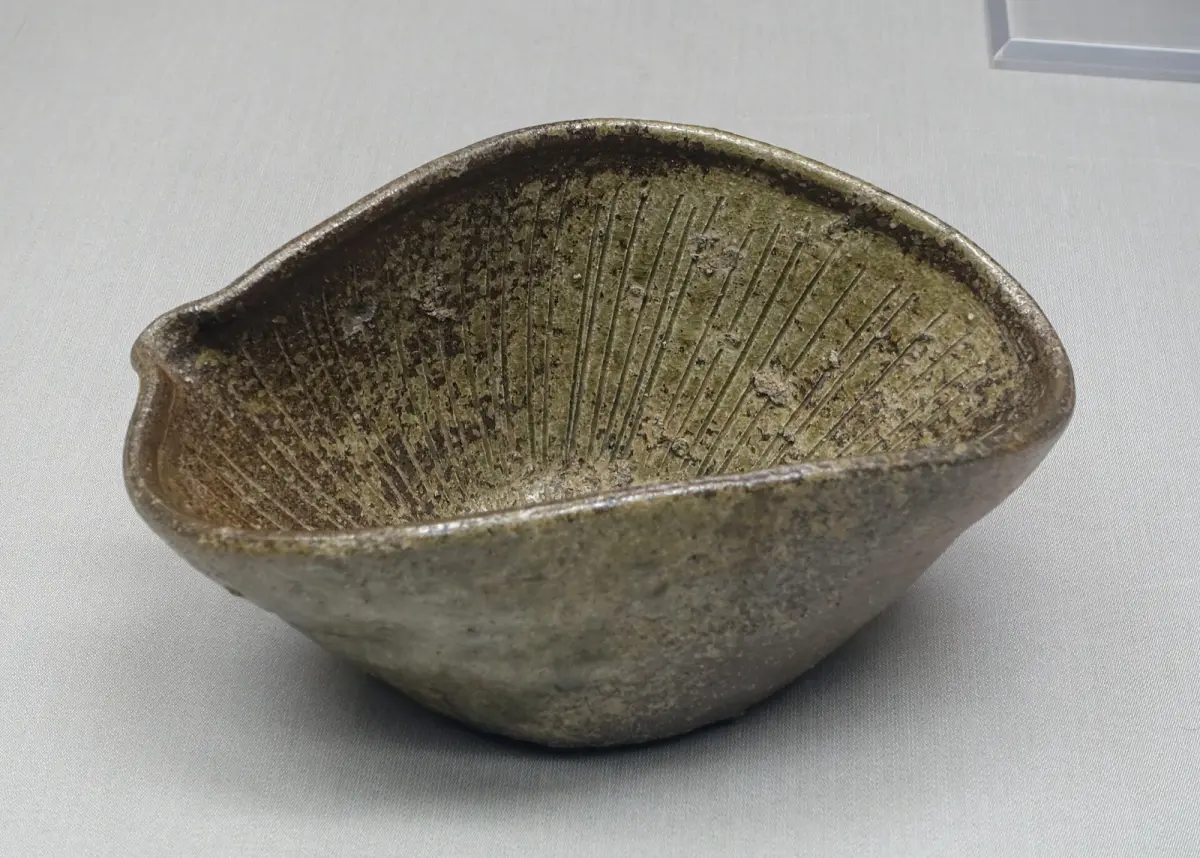
Tamba's soul lies in its glazes, especially the radiant, unpredictable surfaces born from natural ash. Potters layer their work with hai-gusuri (灰釉)—glazes made from wood ash, rice-straw ash, chestnut-husk ash—that melt and flow in the kiln's heat, pooling in earth tones of amber, olive, rust, and cream. Add tetsu-gusuri (鉄釉), an iron glaze that fires to deep black, or a pale shiro-gusuri (白釉), white glaze, and the palette expands. The magic is that no two pieces emerge identical: ash glaze is a conversation between maker and fire, and fire always has the last word.
The kiln decides. The potter proposes; the flame disposes.
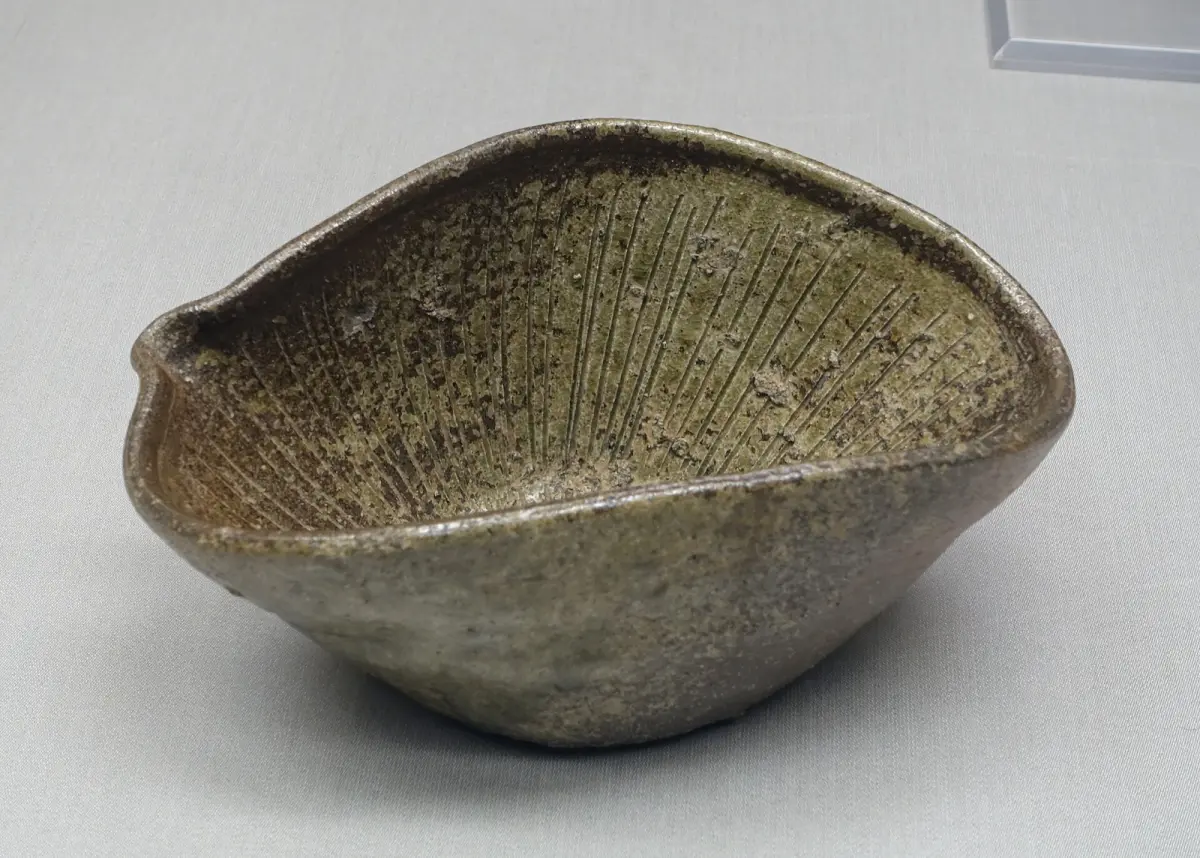
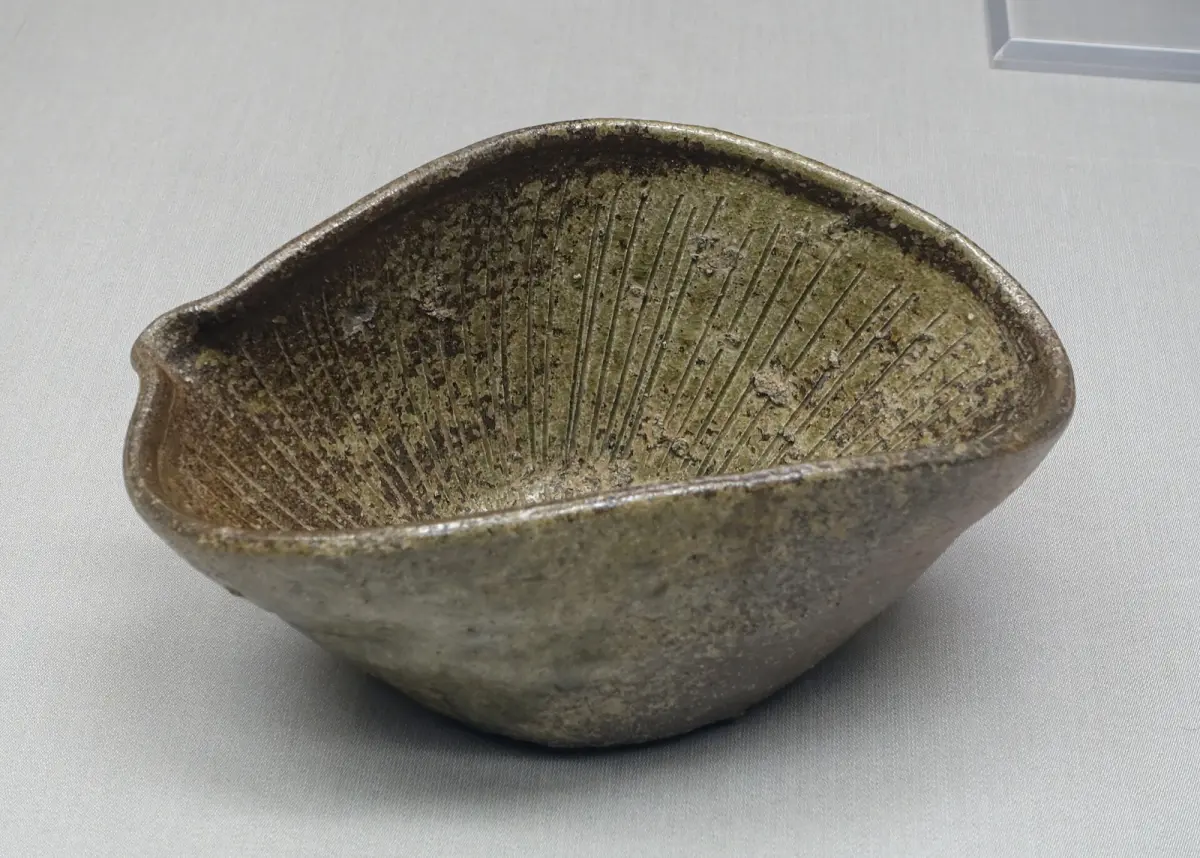
Decoration, too, is direct and unfussy. Potters carve patterns with a fingernail or wooden tool—kushime (櫛目), comb marks—or press leaves into soft clay to leave fossil-like impressions. Stamps called inka (印花) add repeating motifs, and glazes are poured or trailed in loose, gestural strokes that harden into permanent calligraphy.
From Seed Jars to National Treasure
Tamba began humbly, making tsubo (壺)—large storage jars for seeds, grain, and fermented goods—alongside mortars, bowls, and sake vessels for daily rural life. These were sturdy, honest things, built to last generations. By the Momoyama period, tea masters had noticed: Tamba's rough beauty, its accidental drips and fire-scorched shoulders, fit the wabi-sabi aesthetic that prized imperfection and age. Today, Tamba potters make everything from traditional storage ware to contemporary tableware, sculpture, and art pieces. The craft was designated a national Traditional Craft in 1978, formal recognition of what the kilns had quietly known all along.
A Living Village
Tachikui is not a museum. It is a working pottery village where apprentices still sleep above kilns, where the smell of wood smoke mingles with wet clay, and where the left-turning wheel keeps spinning. Visitors can watch potters throw, tour noborigama kilns, and handle centuries-old techniques made new each day. The continuity is not nostalgic—it is practical, economic, alive. Tamba-yaki endures because it remains useful, beautiful, and stubbornly itself.
In Tamba, the wheel turns left, the kiln climbs the hill, and ash becomes light.
Chaware curates authentic Japanese crafts — straight from the makers in Japan to your table.
Explore the Chaware collection →
Keep exploring