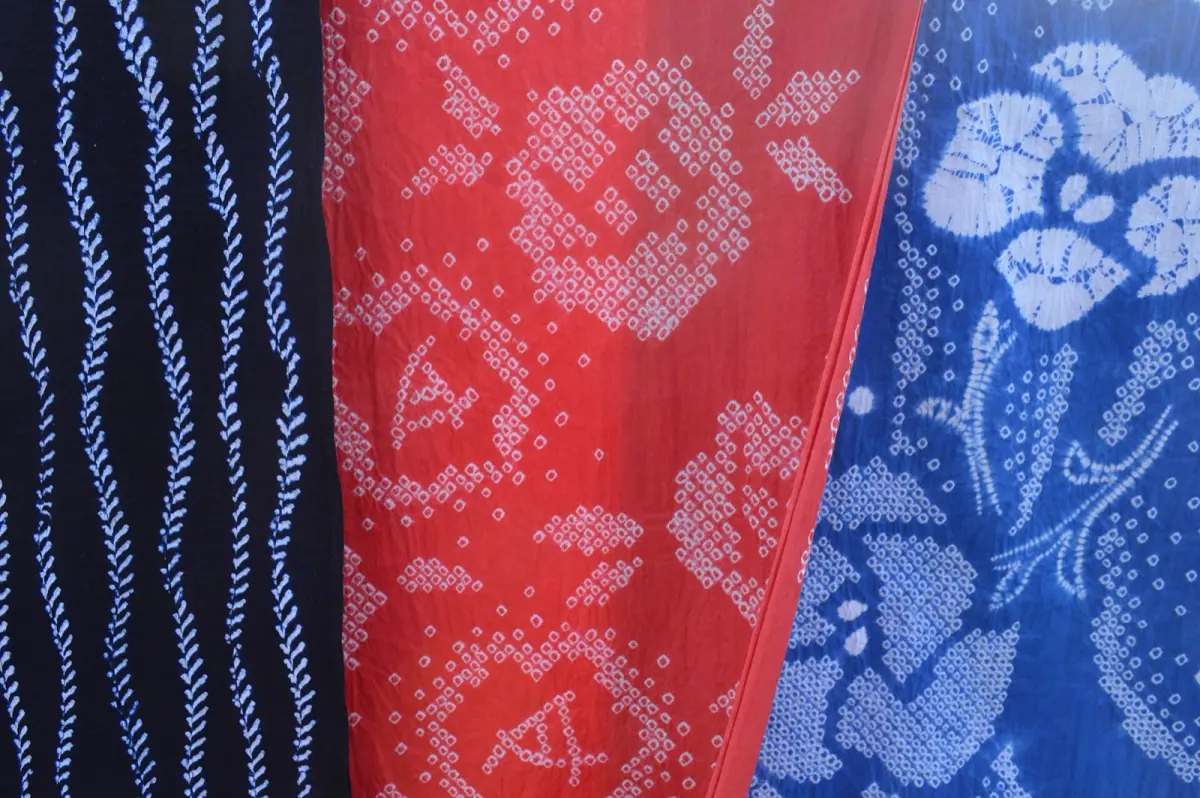
Kiso Lacquer: Nagano's Nakasendo Lacquerware
On this page
The mountain town of Kiso-Hirasawa clings to a fold in the Nagano highlands, where the old Nakasendō highway once threaded between Kyoto and Edo. Travellers paused here for lacquered trays and bowls burnished to a mirror shine. Six centuries later, the craft endures, anchored by an iron-rich earth that makes its lacquer nearly indestructible.
Born of Highway and Hinoki
Lacquerwork in the Kiso valley traces back at least to 1394, when a lacquered sutra box was recorded—the oldest surviving evidence of the craft's roots here. But organised production truly took hold in the seventeenth century, when the Nakasendō became one of Japan's great arteries of commerce and pilgrimage. Kiso-Hirasawa, nestled in the valley, enjoyed two natural blessings: abundant Kiso hinoki (木曽檜), the prized Japanese cypress that provided stable, fine-grained timber, and a climate cool and humid enough to let lacquer cure slowly and evenly. Workshops multiplied to serve the steady flow of travellers, and the town's reputation spread.
The Secret in the Soil
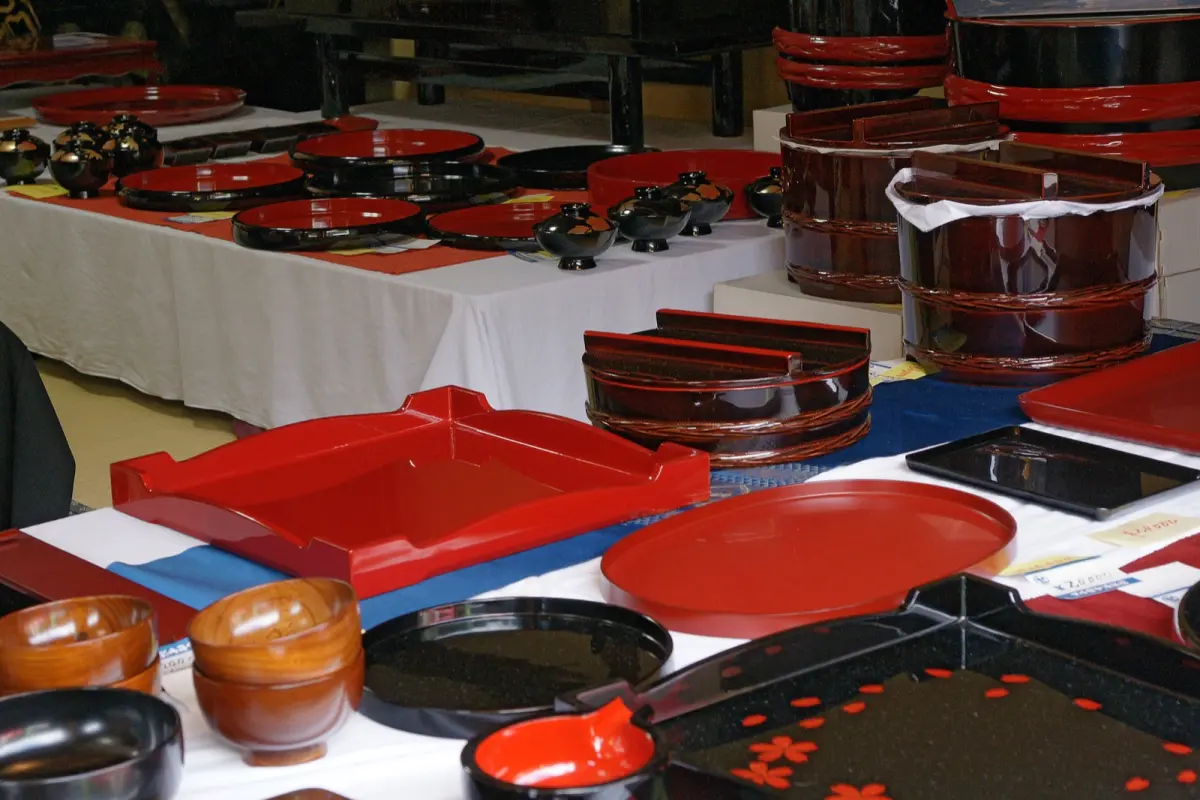
What truly sets Kiso shikki (木曽漆器) apart is sabitsuchi (錆土), a rust-coloured earth discovered in the Kiso region during the early Meiji era. Rich in iron oxide, this clay is mixed with raw lacquer to form an undercoat of exceptional hardness and durability. The sabitsuchi layer creates a foundation so tough that Kiso lacquerware can withstand daily use for generations without chipping or cracking. This technical advantage became the craft's calling card, allowing artisans to build pieces that married beauty with resilience—a practical elegance suited to both the tea ceremony and the everyday table.
Techniques That Define a Tradition
Kiso's artisans developed several signature methods, each with its own aesthetic. Kiso-tsuishu (木曽堆朱) involves applying dozens of layers of red lacquer, then carving intricate relief patterns into the built-up surface—a painstaking process that reveals subtle gradations of crimson. Nuriwake-roiro (塗分呂色) combines contrasting lacquer finishes on a single piece, juxtaposing glossy mirror-black sections with matte or coloured bands. Then there is Kiso-shunkei (木曽春慶), a translucent yellow lacquer that allows the wood grain to glow through, named after a style that originated elsewhere but found particular refinement here. Each technique demands years of apprenticeship to master.
The sabitsuchi undercoat, unique to Kiso, transforms lacquerware from delicate art object into heirloom tool—beautiful enough for ceremony, tough enough for a lifetime.
From Jubako to Chopstick
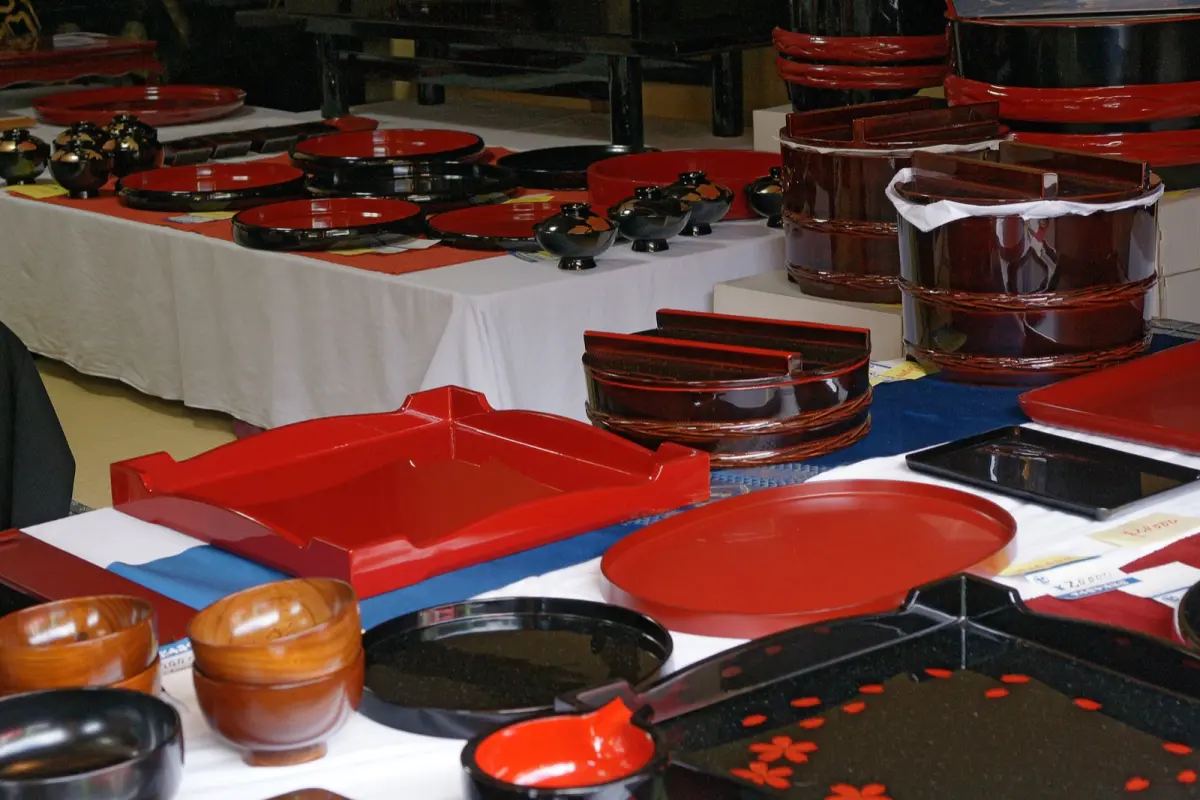
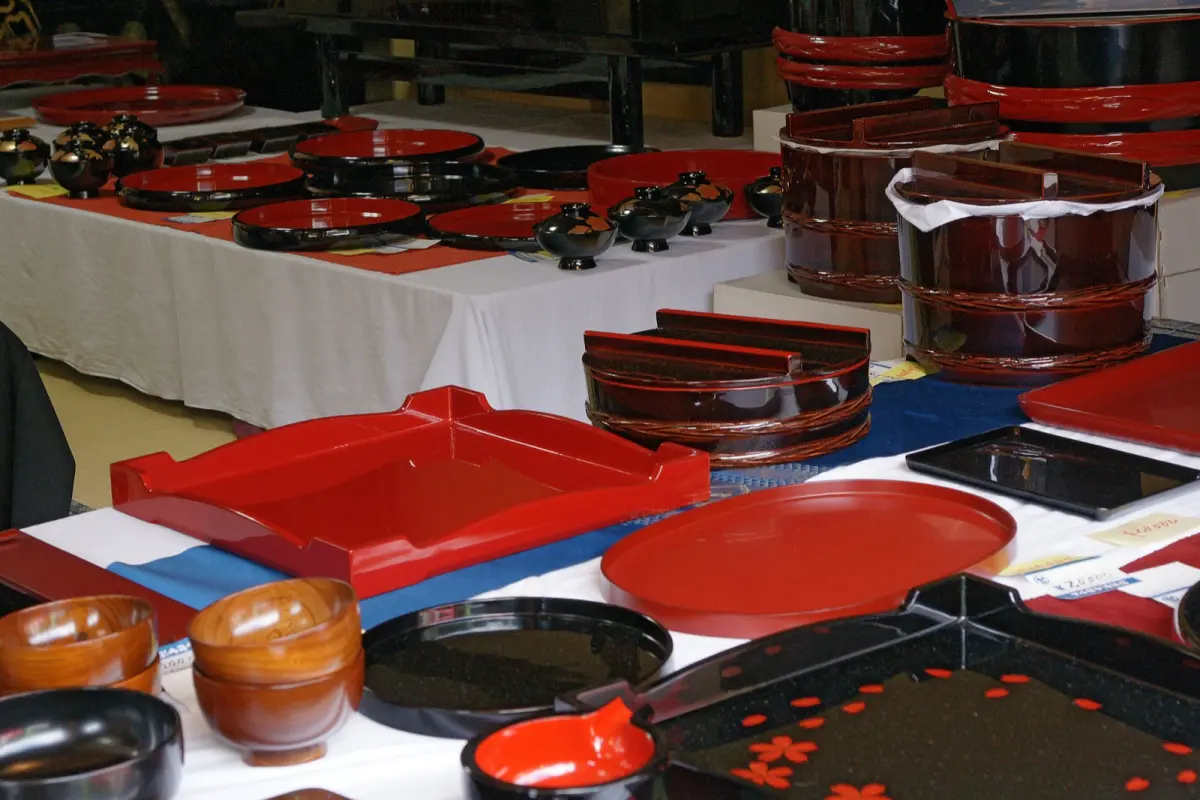
The range of Kiso shikki is broad. Low tables and serving trays showcase the mirror-like roiro finish; stacked jubako (重箱) boxes, traditionally used for New Year delicacies, display the craft's architectural precision. Bowls for rice and soup, sake cups, and even chopsticks all emerge from Kiso workshops. This versatility reflects the craft's dual heritage: refined enough for the tea masters who travelled the Nakasendō, practical enough for the merchants and farmers who lived along it. Today, contemporary makers experiment with new forms—jewelry boxes, small vessels—while honouring the rigorous layering and finishing that define the tradition.
A Living Preservation District
In 1975, Kiso lacquerware received designation as a national Traditional Craft, formal recognition of its historical and technical significance. The town of Kiso-Hirasawa itself has been named a nationally designated Important Preservation District for Groups of Traditional Buildings, its wooden shopfronts and narrow lanes preserved as a living museum of the highway era. Walk those streets now and you'll find workshops where the scent of lacquer still hangs in the air, and artisans still mix sabitsuchi by hand, layering the iron-rich earth as their predecessors did more than a century ago.
The old highway is quiet now, but the lacquer still cures in the mountain air, hard and bright as memory.
Chaware curates authentic Japanese crafts — straight from the makers in Japan to your table.
Explore the Chaware collection →
Keep exploring