Ryukyu Glass: Okinawa's Bubbled Recycled Glass
On this page
The thick tumbler catches the light, its cobalt depths alive with tiny bubbles—each one a memory of scarcity turned into beauty. What began as necessity in post-war Okinawa has become one of Japan's most distinctive glass traditions, where imperfection itself is the art.
From Salvage to Signature
Ryūkyū garasu (琉球ガラス) tells a story that begins not in abundance but in absence. When American forces occupied Okinawa after the Second World War, demand for glassware surged among military families and personnel stationed on the islands. Yet materials were scarce. Resourceful glassblowers in Naha and Itoman turned to what the Americans left behind: discarded beer and cola bottles, gathered and melted down in furnaces that glowed through the night.
The recycled glass carried traces of its former life. Paper labels that hadn't been fully removed left impurities in the molten mixture, and as craftsmen worked the gather, air bubbles formed and froze in the cooling glass. What might have been dismissed as flawed became, instead, the defining characteristic of a new aesthetic—one born entirely of its time and place.
Roots in the Meiji Era
Glassmaking itself had arrived in Okinawa decades earlier, in the mid-Meiji period over a century ago. Skilled workers from Osaka and Nagasaki brought their techniques to the Ryukyu islands, establishing workshops that served local needs. But it was the post-war years of American administration that transformed the craft, when necessity and innovation met in the furnace heat.
The thick-walled vessels that emerged—tumblers, sake cups, vases—bore little resemblance to the delicate glassware of mainland Japan. Ryūkyū garasu was bold, substantial, its colours saturated and unsubtle:
Deep ocean blues, sunset oranges, the green of shallow reef waters, amber like aged awamori spirit.
Each piece carried within it a constellation of bubbles, awa (泡), that caught and scattered light in ways smooth glass never could.
The Aesthetic of Imperfection
The bubble-flecked character of Ryūkyū garasu aligns it, perhaps unexpectedly, with broader Japanese aesthetic principles—the acceptance of the unplanned, the beauty in what is irregular. Yet this wasn't a philosophical choice at the outset. It was glassblowers making do, then recognising that what they'd created had its own particular appeal.
The thick walls served a practical purpose in Okinawa's subtropical climate, keeping cold drinks cooler and providing heft that felt substantial in the hand. The vivid colours—achieved through various metal oxides added to the recycled glass—echoed the intense palette of the islands: the cerulean sea, the brilliant sky, the rust-red roof tiles and the deep green of gajumaru banyan trees.
Recognition and Continuity
In 1998, Ryūkyū garasu received formal recognition as an Okinawan traditional craft, an acknowledgment that a technique born of post-war scarcity had matured into a genuine tradition. Workshops in Naha and Itoman continue the practice today, though they no longer rely on salvaged bottles. Modern glassblowers work with purpose-made materials, yet they deliberately preserve the bubble-flecked aesthetic and saturated hues that define the form.
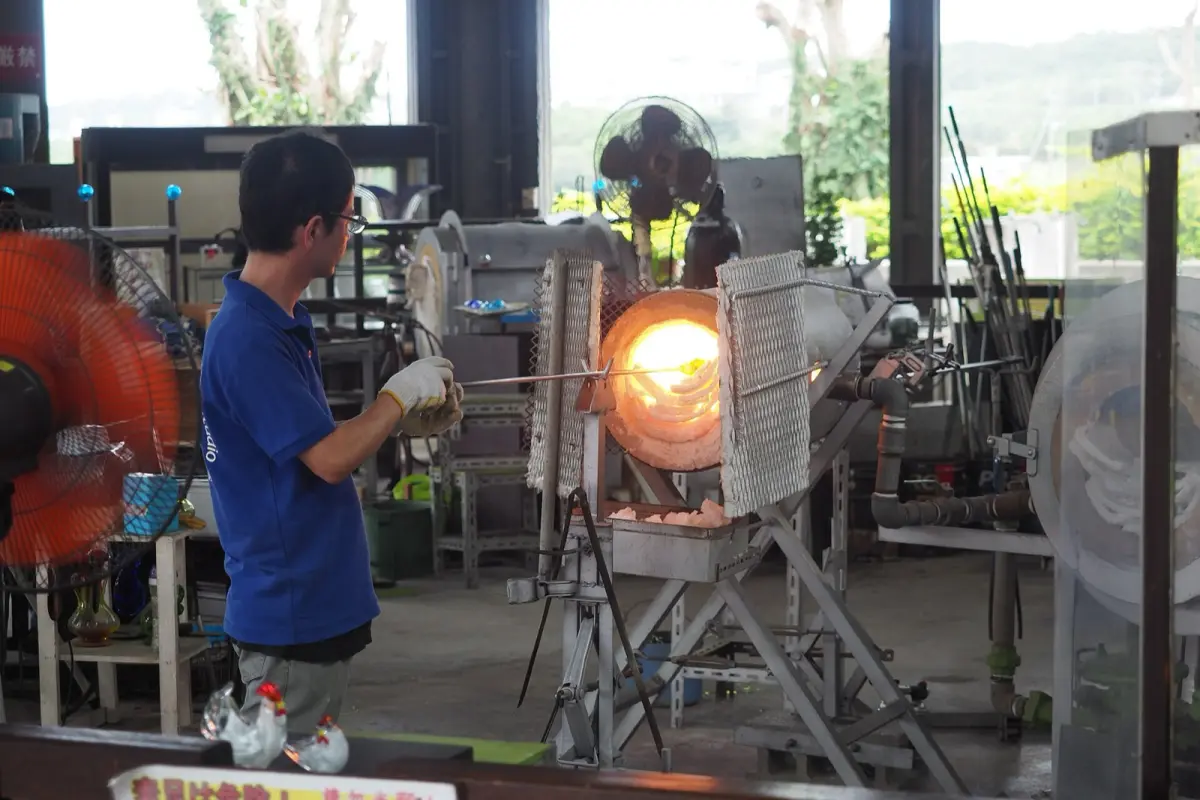
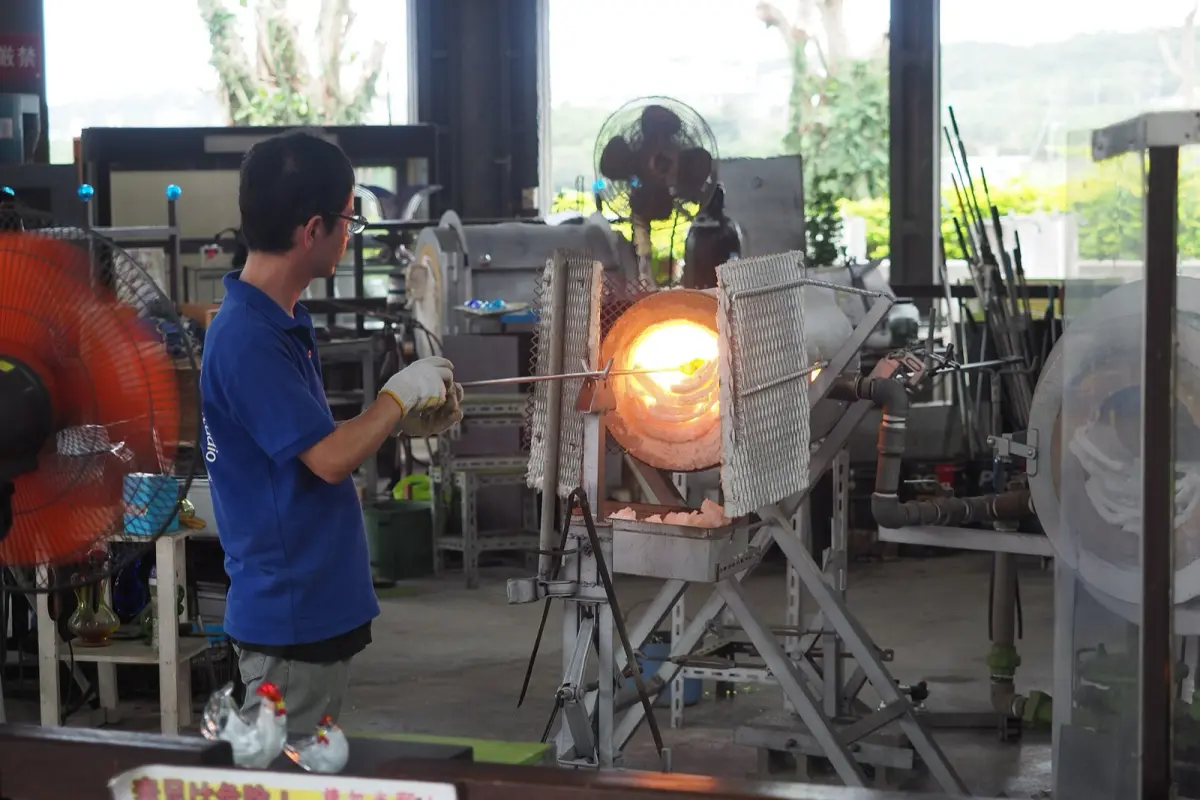
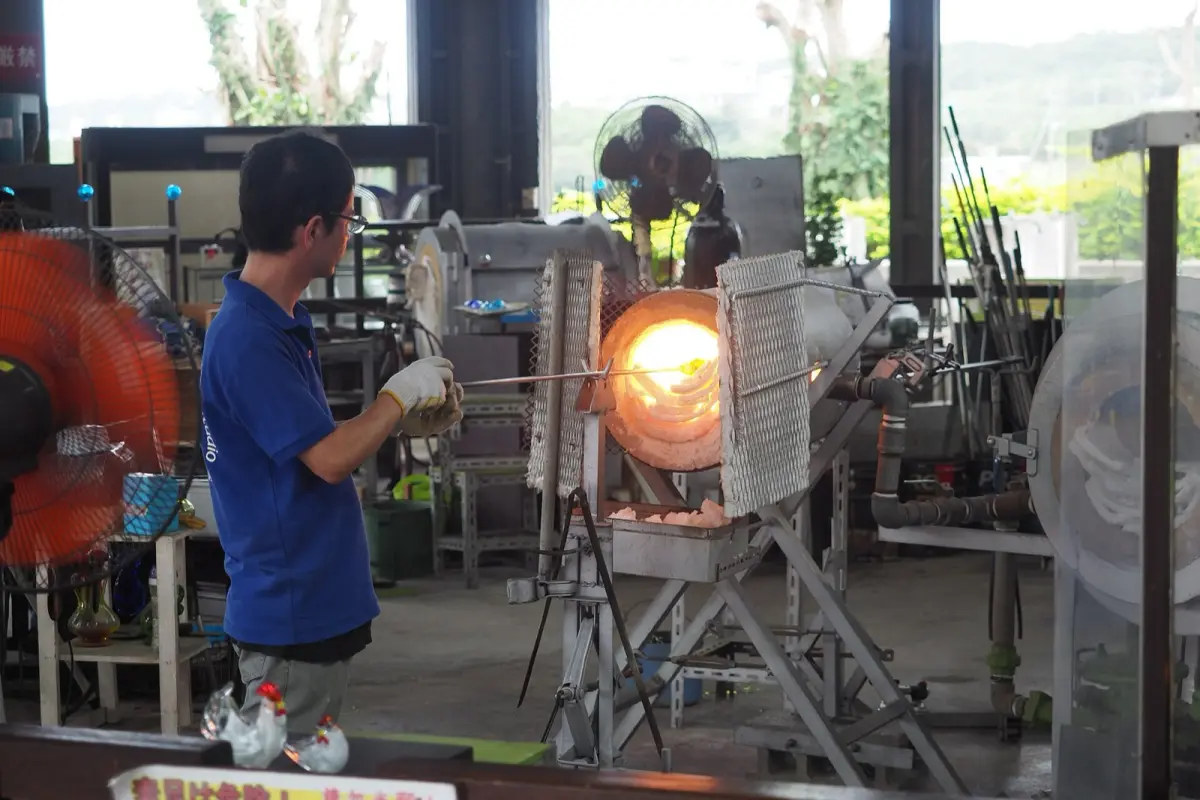
Visitors to these workshops can watch craftsmen gather molten glass on blowpipes, turning and shaping it with tools and breath, the ancient dance of glassmaking adapted to Okinawa's particular vision. The heat is tremendous; the timing, critical. Each piece is formed in minutes, cooled over hours.
Light Through Water
To hold a piece of Ryūkyū garasu is to hold captured light—sunlight filtered through seawater, frozen mid-shimmer. The bubbles within aren't flaws to overlook but points of interest, each one a small lens refracting the world beyond. Pour sanpin jasmine tea into a Ryukyu tumbler and the amber liquid glows; fill it with ice and awamori and the blue glass deepens to twilight.
What began as making do has become making beautiful—a craft where history, necessity and the particular light of Okinawa fuse into something you can drink from, gift, treasure. The bubbles remain, deliberate now, each one a tiny breath of the past.
Chaware curates authentic Japanese crafts — straight from the makers in Japan to your table.
Explore the Chaware collection →
Keep exploring