Sekishu Washi: Shimane's Thousand-Year Paper
On this page
Article Body
In the old province of Iwami, where the Japan Sea wind meets forested hills, papermakers have for thirteen centuries kept a secret in their hands: the thin green layer that most others throw away. This is the heart of Sekishu washi, a paper so strong it has outlasted empires, yet soft enough to glow with morning light.
The Province That Became Paper
The story begins in the early eighth century, when the poet Kakinomoto no Hitomaro served as governor of Iwami, the region now known as Shimane Prefecture. According to local records, Hitomaro taught the people of this remote coastal territory the art of papermaking—a gift that would define them for the next millennium. By 905, when the imperial court compiled the Engishiki (延喜式), a detailed record of laws and customs, 'Sekishu' paper was already listed among the realm's notable products. The name Sekishū (石州) is simply the Sinified reading of Iwami, the stone province, and for thirteen hundred years that name has meant paper of uncommon character.
The Layer Others Discard
What sets Sekishū-banshi (石州半紙) apart lies in a single deliberate choice. When preparing kōzo (楮) mulberry bark—the fibrous foundation of most Japanese paper—makers typically strip away the ama-kawa (甘皮), the delicate inner layer that clings between the white bark and the woody core. It is fiddly work to remove, and most regard it as impurity. But in Hamada, in the Misumi district where Sekishu washi is centred, papermakers have always kept this layer. The ama-kawa gives the finished sheets their distinctive qualities: unusual tensile strength, a soft hand that belies that strength, and a faint green sheen that seems to hold the memory of the living tree.
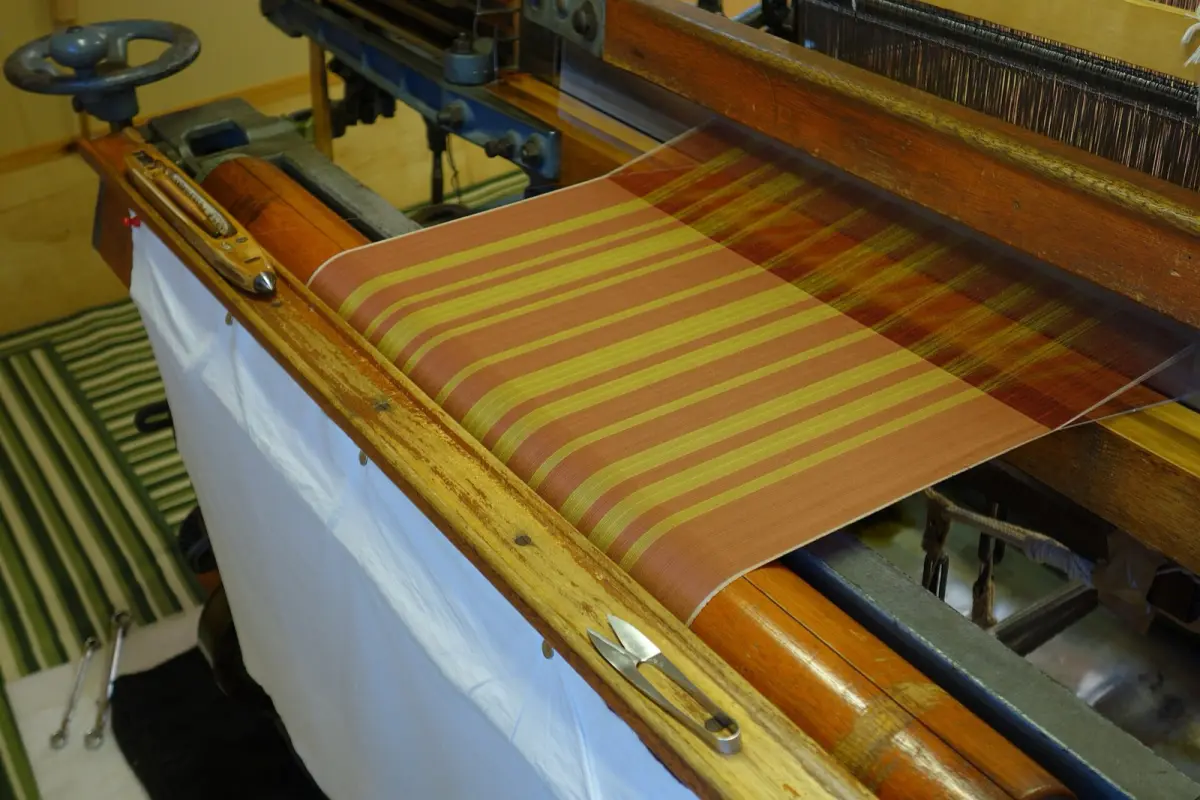
The kozo grown in this region has particularly thin, long fibres, and the papermakers work it with tororo-aoi (トロロアオイ) mucilage, the viscous sap of the sunset hibiscus root, which suspends the fibres evenly in water so they can be lifted, sheet by luminous sheet, on a bamboo screen.
Paper for the Light
For centuries, Sekishū-banshi found its highest calling in the most humble of places: the shōji (障子) sliding screens that partition Japanese rooms. A shōji screen asks much of paper—it must be strong enough to withstand years of opening and closing, yet translucent enough to transform harsh daylight into a soft, even glow. The green-tinged Sekishu sheets, with their long interlocking fibres and the tensile gift of the ama-kawa, proved ideal. Wealthy households and temples across Japan sought them out, and the papermakers of Iwami built their livelihoods on this steady demand.
The paper must be strong enough to last a generation, yet so thin that shadow and light can dance through it—two qualities that seem to contradict, until you hold a sheet of Sekishu-banshi to the window.
Recognition and Rarity
In recognition of its cultural significance and the traditional methods preserved across generations, Sekishū-banshi was designated an Important Intangible Cultural Property. International recognition followed: UNESCO inscribed it on the Intangible Cultural Heritage list in 2009, and again in 2014 as part of 'Washi: craftsmanship of traditional Japanese hand-made paper', alongside Hon-Minoshi and Hosokawa-shi. Yet this acclaim has not reversed the craft's decline. Only a handful of workshops remain in Hamada today, their numbers winnowed by the same forces that have diminished traditional crafts across Japan—aging practitioners, dwindling demand, the patient intensity of work that cannot be rushed.
Holding the Green Light
To watch Sekishu washi being made is to witness a conversation between hand and water, fibre and time. The papermaker rocks the suketa (簀桁) bamboo screen back and forth in the vat, building up layers of suspended kozo, each pass adding strength. The ama-kawa, that green ghost of the living branch, weaves through it all. When the sheet is finally pressed and dried, it carries within it thirteen centuries of knowledge and the particular character of one small corner of Japan—strong, soft, faintly luminous, irreplaceable.
In an age of machine-made uniformity, each sheet remains a singular thing: the light of Iwami, held.
Chaware curates authentic Japanese crafts — straight from the makers in Japan to your table.
Explore the Chaware collection →
Keep exploring