Beppu Bamboo: The Art of Japan's Finest Woven Craft
On this page
Article Body
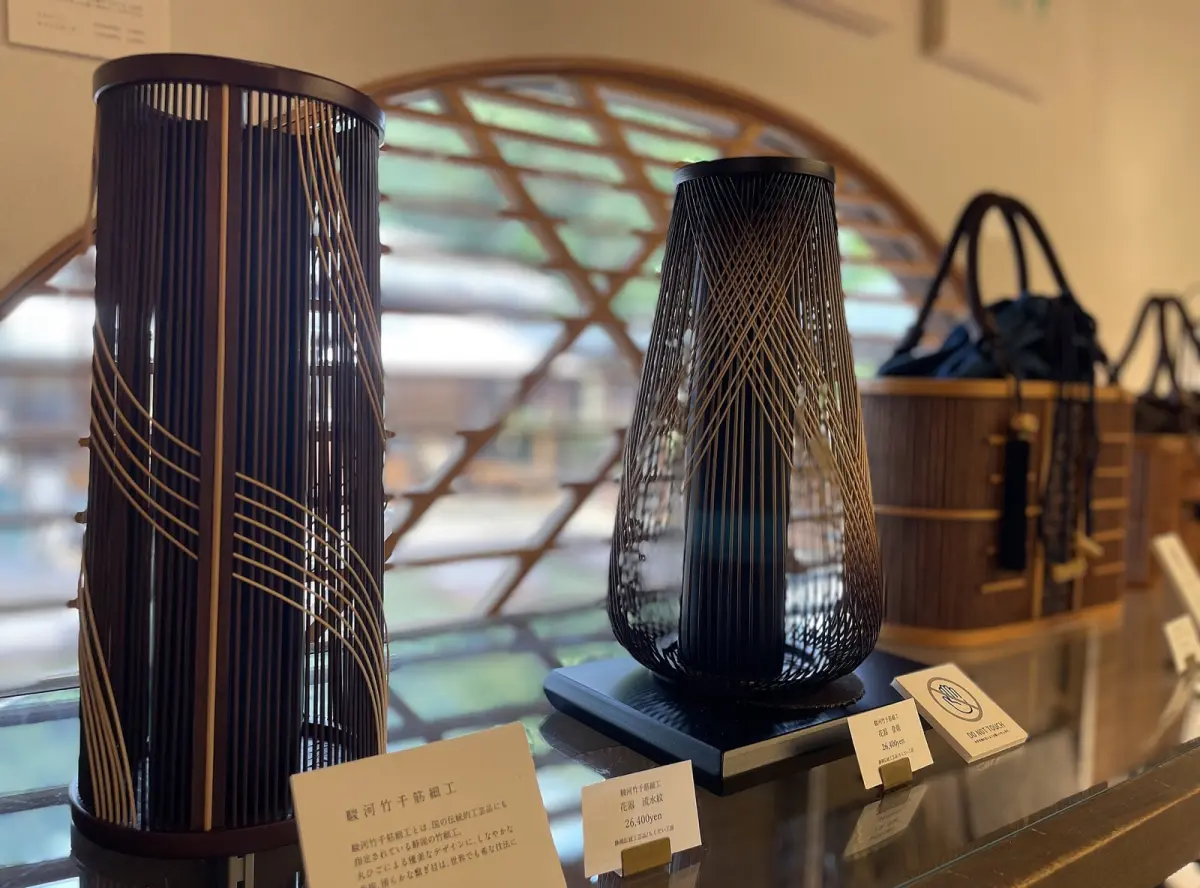
Steam rises from Beppu's thousand hot springs, and for centuries, visitors have carried home more than memories. They've taken baskets—woven tight and light from the hills' own bamboo—that hold both practicality and a weave-work older than the written word.
The Emperor's Basket and a City's Calling
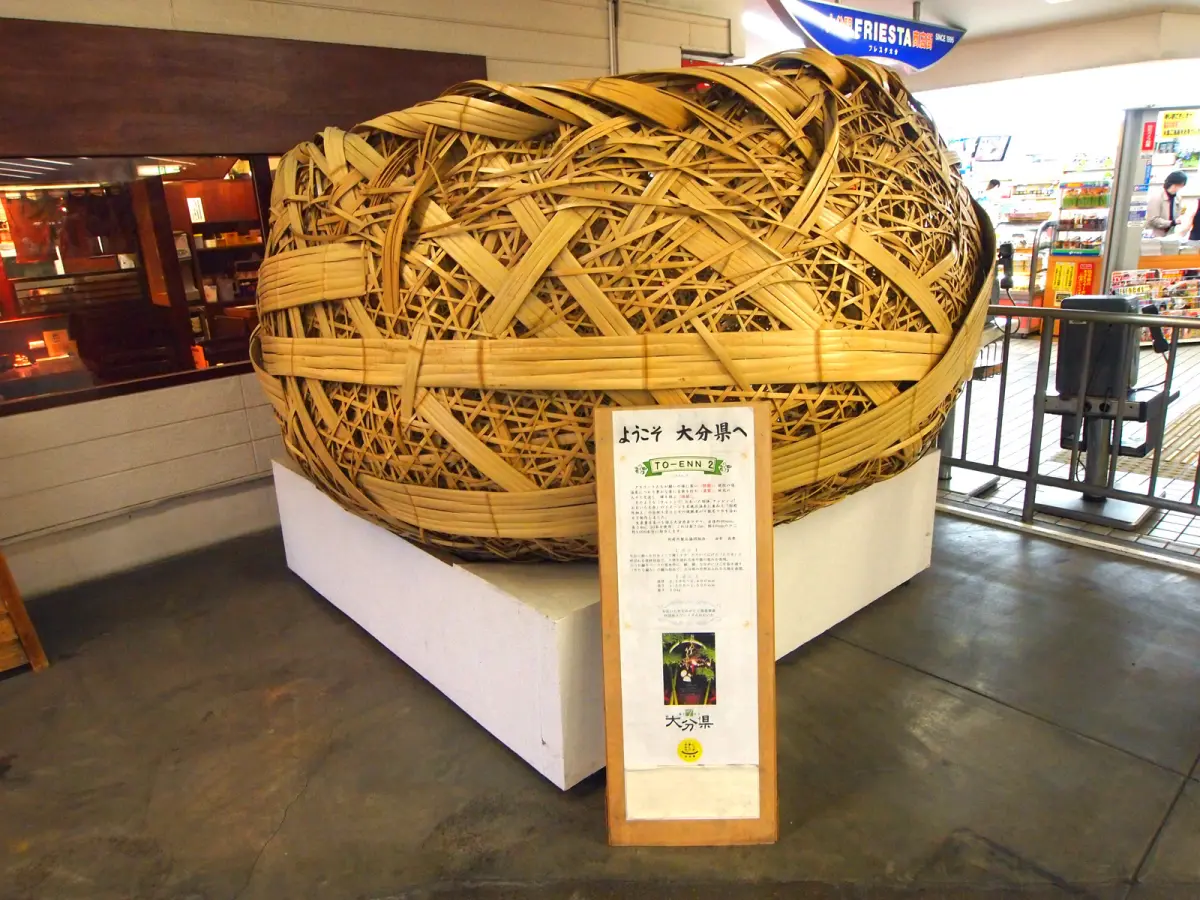
Legend threads Beppu bamboo craft (別府竹細工, Beppu takesaiku) back to the age of Emperor Keiko, when the Nihon Shoki chronicles tell of his party fashioning baskets from local shino bamboo during their stay at Beppu. Whether myth or memory, the story roots this craft in deep time. What's certain is geography: Beppu, nestled in Oita Prefecture, became Japan's bamboo capital not by accident but by abundance. The surrounding hills offered madake bamboo (真竹), a species prized for its elasticity and willingness to split cleanly along its grain, perfect for the weaver's hand.
The city's hot springs drew travelers, and travelers needed containers—for food, for gifts, for the small necessities of the road. Demand met material, and a craft tradition took lasting shape.
Eight Foundations, Two Hundred Faces
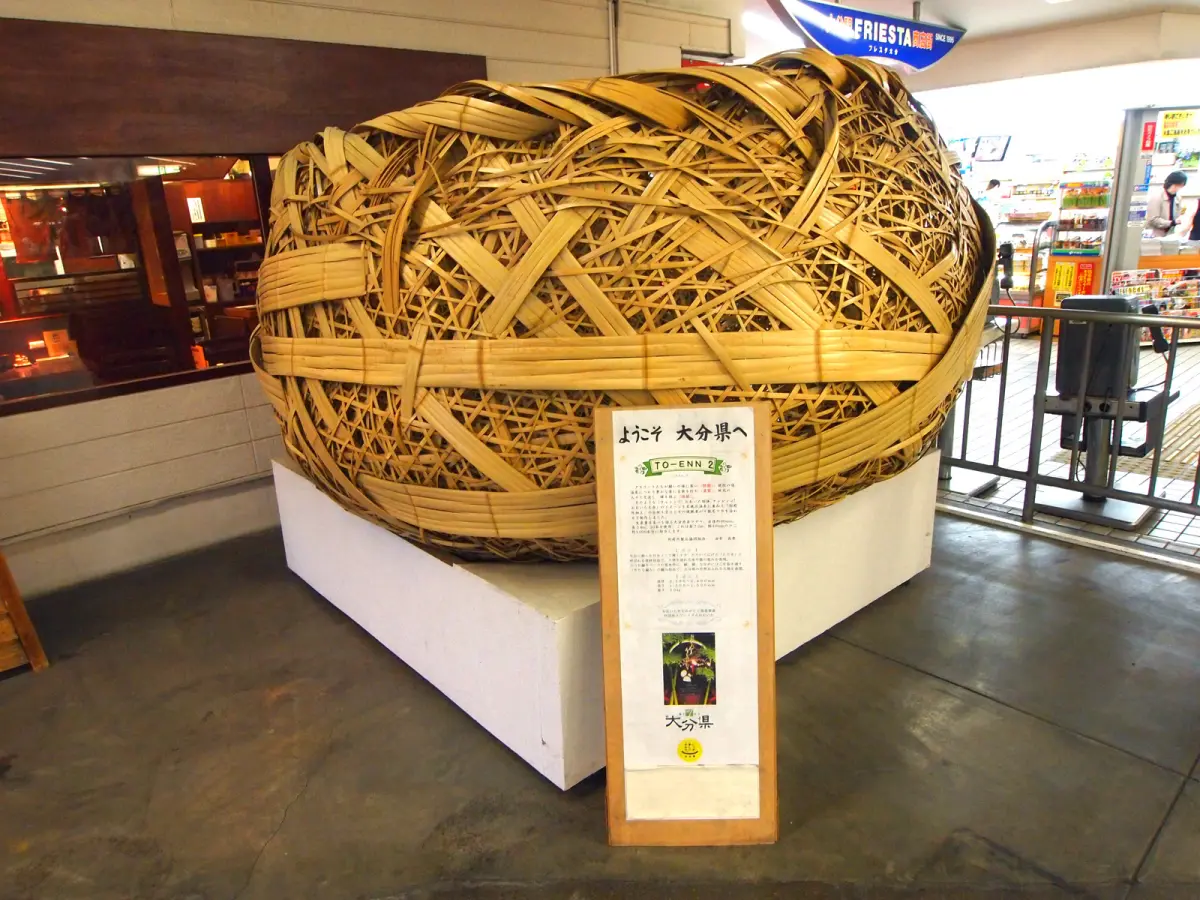
At the heart of Beppu's technique lie eight fundamental weaves, designated as the craft's essential vocabulary:
- Yotsume (四つ目) - four-way eye weave
- Mutsume (六つ目) - six-way eye
- Yatsume (八つ目) - eight-way eye
- Ajiro (網代) - wickerwork pattern
- Gozame (ござ目) - mat weave
- Nawame (縄目) - rope pattern
- Kikuzoko (菊底) - chrysanthemum base
- Rinko (輪弧) - arched ring weave
From these eight, weavers coax over two hundred distinct patterns. The mathematics are simple; the mastery is not. Each weave demands different tension, different bamboo preparation, different rhythm in the hands. A basket might combine three or four patterns in a single form, the transitions invisible to the untrained eye.
The Split and the Shave
Madake begins as a hollow cylinder, green-gold and segmented. The craftsperson splits it lengthwise with a blade that follows the bamboo's own grain, then splits those halves again and again until strips emerge—some as thin as thread, some sturdy as rope, depending on the intended weave. The outer skin, smooth and hard, often remains on the working surface. The inner pith is shaved away. What looks like a single gesture—the draw of a knife along bamboo—is actually a conversation between wood and hand, adjusted for moisture, for the season's weather, for the particular stalk's character.
This preparation can take longer than the weaving itself. Rushed bamboo splinters. Patient bamboo bends.
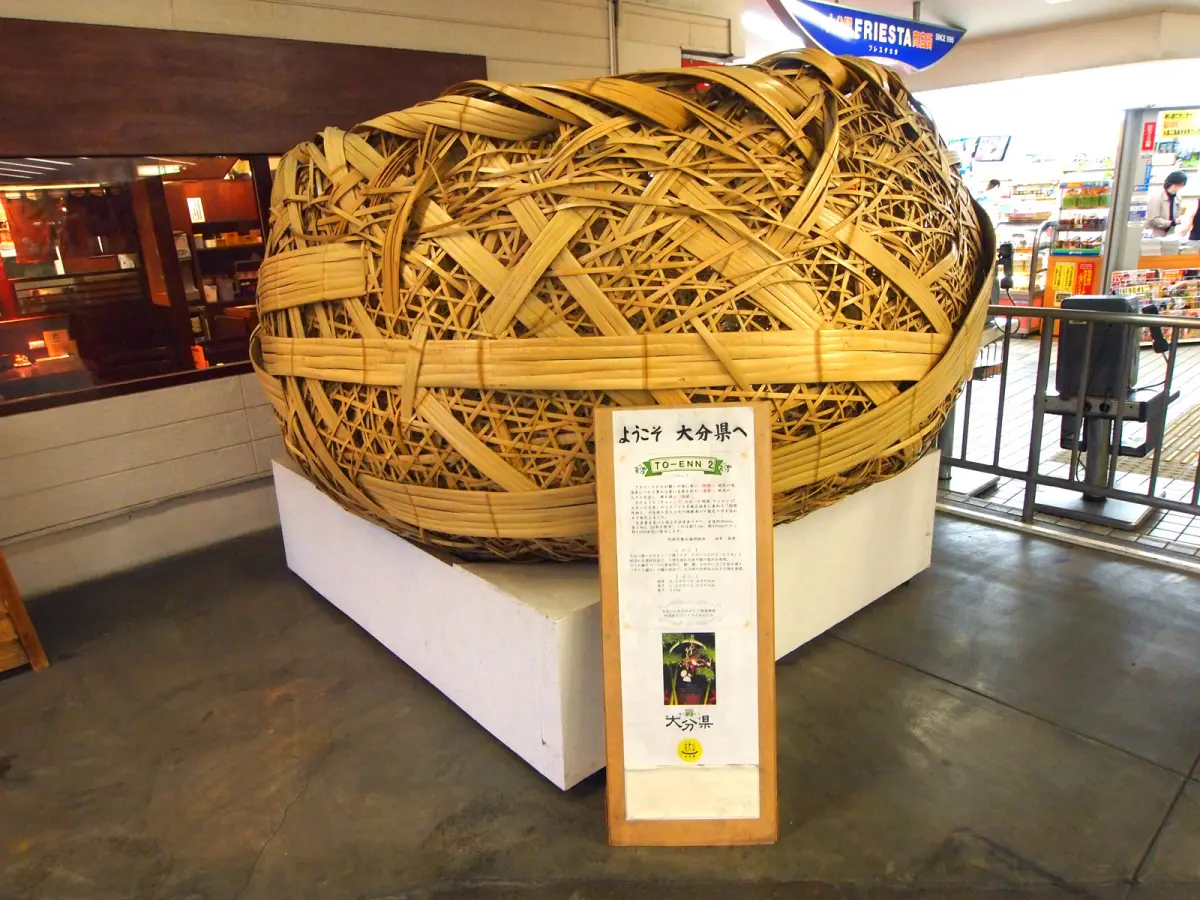
Recognition and a Living Treasure
In 1979, the Japanese government designated Beppu takesaiku as a nationally important traditional craft—the only bamboo craft in Japan to receive this singular honor. The designation acknowledged not just beauty but cultural weight, a living tradition carried by skilled hands through generations.
Among those hands, none shone brighter than Shono Shounsai (生野祥雲斎, 1904-1974), born in Beppu itself. His work elevated bamboo from folk utility to fine art, his forms flowing and sculptural, his technique flawless. In 1967, he became the first bamboo artist ever named a Living National Treasure (ningen kokuhō), a recognition that transformed how Japan—and the world—saw woven bamboo.
Baskets That Hold Time
Walk through Beppu today and you'll still find workshops where bamboo strips hang like curtains, drying in the salt air. The craft serves both daily life and gallery walls now—rice baskets and flower vessels, market carriers and museum pieces. The same weaves that once held a traveler's lunch now hold the attention of collectors worldwide.
Yet the essential gesture remains unchanged: bamboo split, bamboo soaked, bamboo woven into patterns that breathe. In a city built on water rising warm from stone, the craft rises too—rooted, resilient, and still bending toward the future.
FAQ
Chaware curates authentic Japanese crafts — straight from the makers in Japan to your table.
Explore the Chaware collection →
Keep exploring