Suruga Bambooware: The Art of Round-Rod Bamboo Craft from Shizuoka
On this page
Article Body
The old Tōkaidō road once hummed with travelers pausing in Shizuoka's post towns, and among the souvenirs they carried away were delicate cages that seemed to hold light itself. Each piece was built from hundreds of slender bamboo rods, curved and joined with such precision that the lattice appeared to breathe. This is Suruga takesensujizaiku (駿河竹千筋細工), the round-rod bamboo craft that has defined patient, mathematical beauty for nearly two centuries.
A Chance Encounter on the Highway
The craft's origin story reads like fate. In 1840, during the Tenpō era, a samurai named Suganuma Ichiga from Okazaki domain was traveling through Shizuoka when he stopped at a local inn. There he met Shimizu Ihei, the innkeeper's son, and recognized in him an apt pupil. Suganuma taught Ihei the technique of working with maru-higo (round bamboo rods), a method distinct from the flat splints used in bamboo crafts elsewhere in Japan. That roadside lesson became the seed of an entire regional tradition, one that would eventually earn national recognition in 1976 as a Traditional Craft.
The Architecture of a Thousand Lines
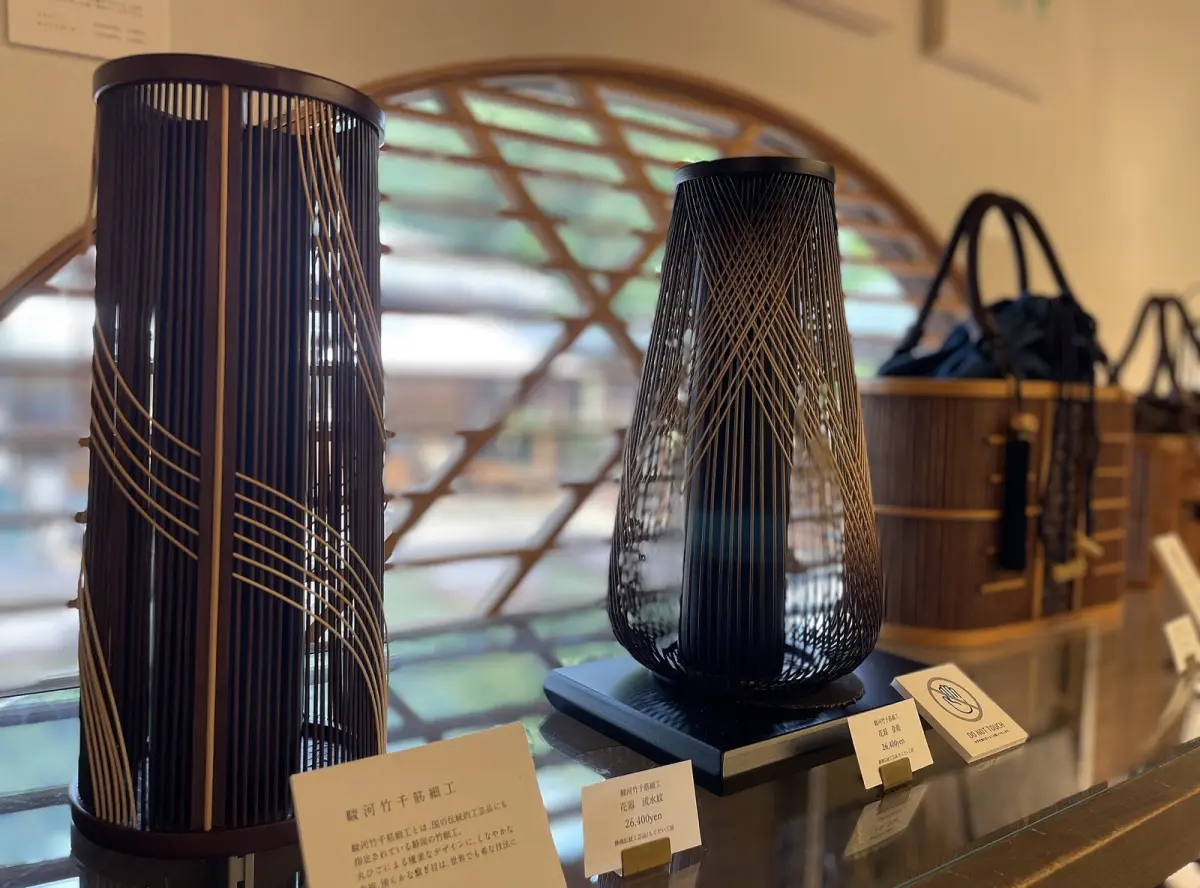
What sets Suruga work apart is its fundamental building block. While most bamboo crafts weave flat strips, takesensujizaiku assembles round rods one by one into intricate sensuji lattices—the term literally means 'thousand lines.' Each rod must be:
- Split and shaped to uniform roundness
- Bent into precise curves using controlled heat and pressure
- Joined with the distinctive tsugite technique, a specialized joint that maintains structural integrity while preserving the flowing lines
The result is a geometric transparency, a play of shadow and interval that makes each piece feel both solid and weightless.
From Insect Cages to Modern Light
In the Edo period, travelers along the Tōkaidō purchased insect cages to house singing crickets and flower baskets that let blooms breathe. These objects served practical purposes but carried aesthetic weight—the cage's lattice framed the insect as a living jewel, the basket honored the flower's form. Today's artisans have expanded the repertoire to include lanterns and lampshades that transform electric light into dappled patterns, wind chimes that add visual rhythm to sound, and even handbags where tradition meets contemporary fashion. The round rods lend themselves to curves and spheres, shapes that feel organic despite their mathematical precision.
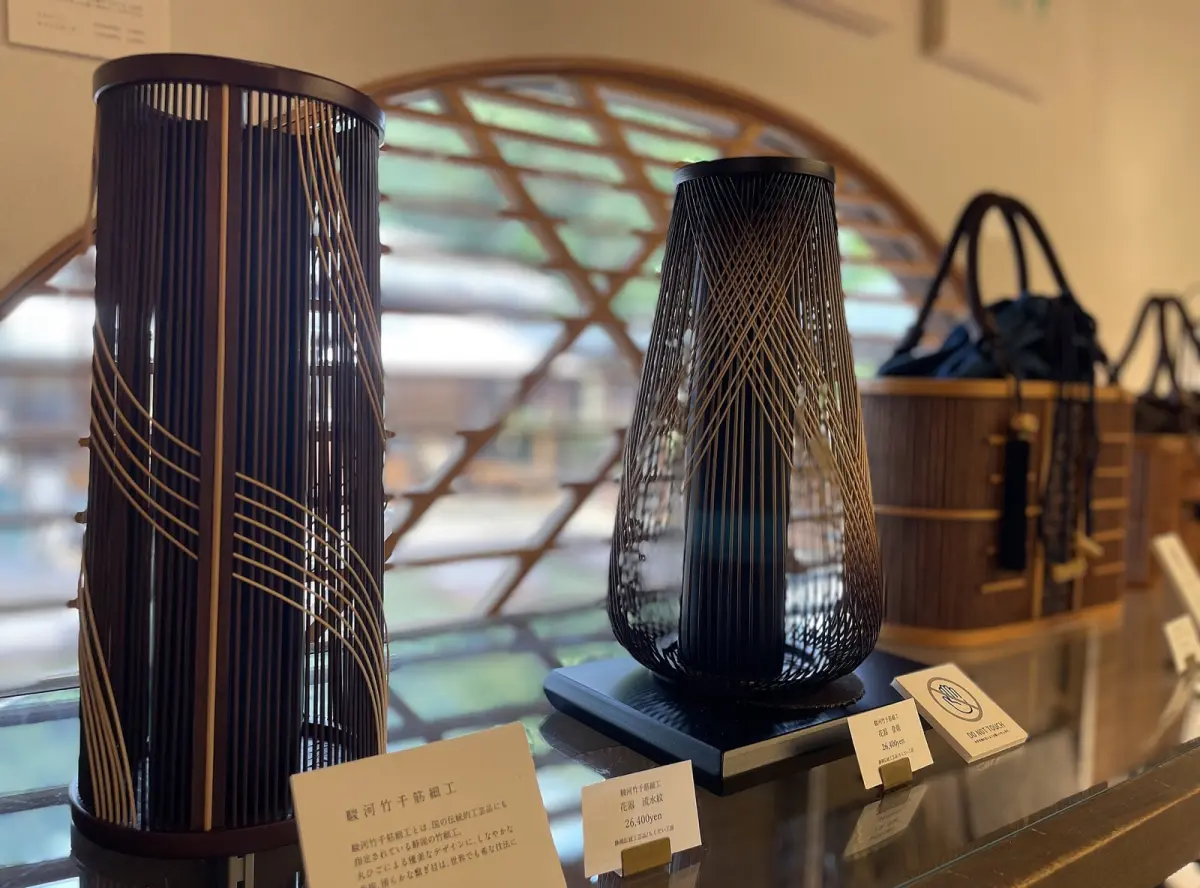
The Patience of Precision
Creating takesensujizaiku demands a particular temperament. The craftsperson must split bamboo into rods of identical diameter—often just a few millimeters thick—then assemble hundreds or thousands of them into patterns where a single misalignment becomes visible. The bending process requires understanding how heat affects bamboo's cellular structure, how much pressure will curve without cracking. The tsugite joint itself is a small marvel of joinery, allowing two rods to meet seamlessly while bearing structural load. This is not the quick work of intuition but the slow accumulation of controlled gestures, each one building toward a whole that appears effortless.
Light Held in Lattice
Walk into a room lit by a Suruga bamboo lamp and you enter a different quality of illumination. The round rods cast multiple overlapping shadows, creating depth where flat surfaces would give only silhouette. A wind chime hangs in a window, its lattice sphere catching afternoon sun, and suddenly you understand why travelers once carried these objects home as treasures. They are containers for the intangible—for air, for light, for the space between things.
The craft endures not through nostalgia but through its particular genius: transforming rigid bamboo into curves, solid rods into transparent volumes, patient labor into objects that seem to float. Each piece remains a descendant of that 1840 lesson at a roadside inn, proof that some teachings travel farther than their teachers ever walk.
FAQ
Chaware curates authentic Japanese crafts — straight from the makers in Japan to your table.
Explore the Chaware collection →
Keep exploring