Echizen Washi: 1,500 Years of Japanese Papermaking Tradition

On this page
The Okamoto River runs cold and clear through the Goka district of Echizen, Fukui Prefecture, where papermakers have worked for fifteen centuries. Here, the water itself is worshipped - not as metaphor, but as deity - and every sheet carries the memory of a goddess who taught villagers to transform fibre into light.
The Goddess Who Taught and Vanished
Legend places the origin of Echizen washi (越前和紙) in the appearance of a beautiful woman along the upper reaches of the Okamoto River. She taught the villagers of Goka the art of papermaking, then disappeared, saying only that she lived upstream. The people named her Kawakami Gozen, the goddess of paper, and built the Okamoto Shrine - also called Otaki Shrine - in her honour. It remains the only shrine in Japan dedicated to a paper deity, and papermakers still visit to offer thanks for their craft.

One of Japan's Three Great Papers
Echizen washi stands alongside Mino washi and Tosa washi as one of Japan's three legendary paper-producing regions, each with distinct character. What sets Echizen apart is the particular beauty of its natural colour and exceptional strength. For 1,500 years, the workshops clustered along the Goka district's clear streams have produced paper prized for the most demanding uses. The purity of the Okamoto River's water proves essential - papermaking requires clean, cold flow to rinse fibres and form sheets of even translucency.
The Strength Behind Beauty
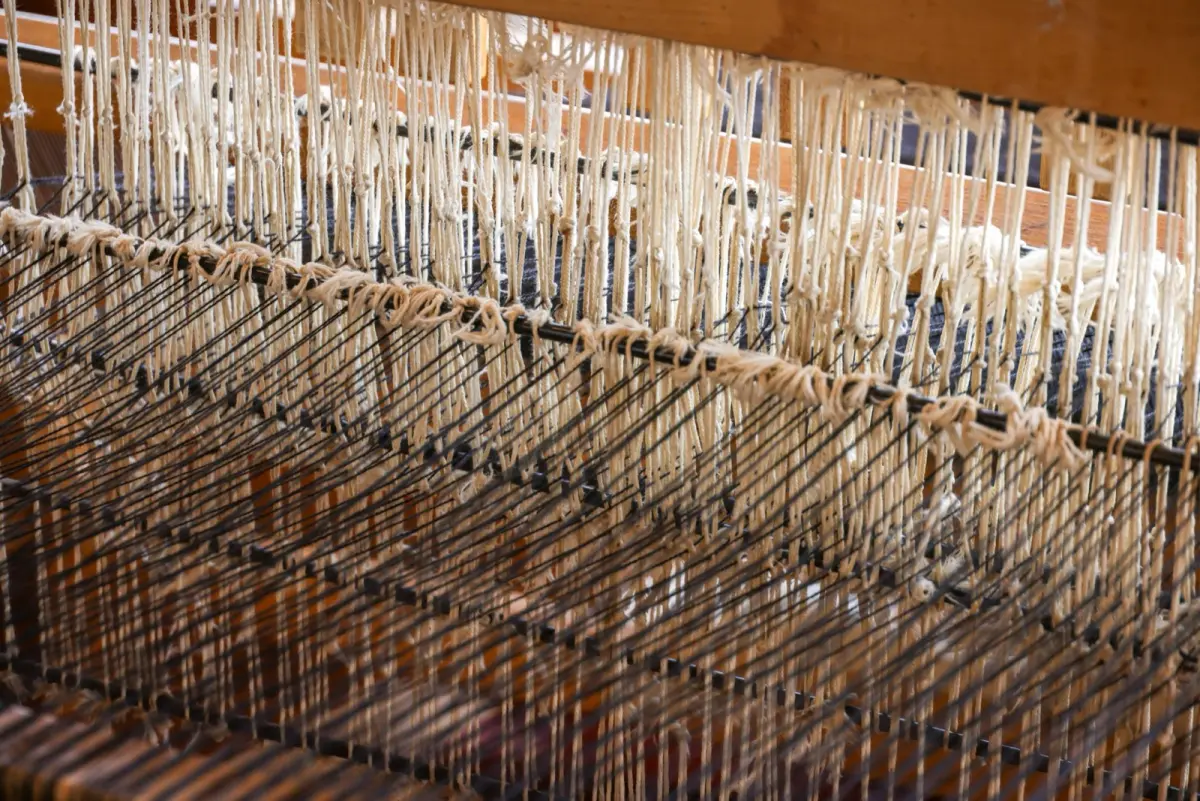
Echizen's reputation rests on more than aesthetics. The paper's tensile strength made it the choice for official documents, calligraphy of consequence, and eventually even banknote paper. This durability comes from careful processing of plant fibres - typically kozo (paper mulberry), mitsumata, or gampi - beaten and suspended in water, then lifted sheet by sheet on bamboo screens. The papermaker's rhythm, the water's temperature, the fibre's preparation: all determine whether a sheet will endure centuries or tear at a touch.
The clear streams of Goka provide the essential element - water pure enough to reveal every flaw, cold enough to slow the settling of fibres, allowing the papermaker to coax them into alignment.

Workshops Along the Stream
The Goka district remains a living centre of production, workshops still positioned along the river as they have been for generations. This clustering is practical - access to water - but also preserves knowledge. Techniques pass between neighbours, apprentices learn by watching multiple masters, and innovations spread through the community while traditional methods anchor the work. Walking through Goka, you encounter the particular smell of steaming kozo bark, the sound of beaters pounding fibre, the sight of fresh sheets drying on boards in winter sun.
From Shrine Offering to Modern Use
Echizen washi continues to serve both sacred and contemporary purposes. Calligraphers seek it for work that must last. Conservators use it to repair ancient documents. Artists value its receptiveness to ink and pigment. The same paper that once recorded imperial decrees now appears in avant-garde printmaking, its strength allowing techniques that would destroy lesser sheets. And each year, papermakers return to Okamoto Shrine, acknowledging Kawakami Gozen - the woman who appeared, taught, and vanished upstream, leaving behind a craft that has outlived empires.
The river still runs clear through Goka, and the paper it helps create still carries light.
FAQ
Chaware curates authentic Japanese crafts — straight from the makers in Japan to your table.
Explore the Chaware collection →
Keep exploring