Bingata: The Vibrant Art of Okinawa's Traditional Textile Dyeing
On this page
Article Body
The tropical sun of Okinawa demands colour that can hold its own against turquoise seas and coral stone. For centuries, the artisans of the Ryukyu Kingdom answered with bingata (紅型), a stencil-dyeing tradition so vivid it seems to pulse with the island's own light.
A Kingdom's Canvas
Bingata emerged in Naha during the thirteenth and fourteenth centuries, when the Ryukyu Kingdom sat at the crossroads of East Asian trade. The technique flourished under royal patronage around Shuri, the kingdom's capital, where it became the exclusive dress of royalty and the warrior class. This was no accident of fashion; the brilliant fabrics signalled rank and power, their colours reserved for those who governed the islands.
The word itself tells part of the story: bin means colour or pattern, while gata refers to the stencil. Together they describe a process that transforms plain cloth into fields of saturated hue.
Borrowed Brilliance
Ryukyu's position as a trading hub brought techniques from distant shores. Indian and Javanese sarasa (printed cotton) arrived alongside Chinese stencil methods, each contributing to what would become distinctly Okinawan. The artisans of Shuri absorbed these influences, then refined them into something new—a synthesis that honoured its sources while answering to local aesthetics and the island's fierce light.
The genius of bingata lies not in invention alone, but in the bold recombination of imported methods with indigenous sensibility.
Pigment and Paste
Two techniques define bingata. The first, kata-zome (型染), employs paper stencils cut with exacting precision. Artisans apply rice-paste resist through these stencils, then brush mineral pigments and plant dyes onto the exposed cloth. The second method, tsutsu-gaki (筒描), dispenses with stencils entirely; paste resist flows freehand from a cone, allowing for spontaneous line and gesture.
The palette draws from both earth and laboratory. Mineral pigments deliver intensity that plant dyes alone cannot match, while botanical sources contribute subtlety and depth. The combination yields colours that seem almost architectural in their solidity—yellows like sunlit stone, blues deep as the Kuroshio Current.
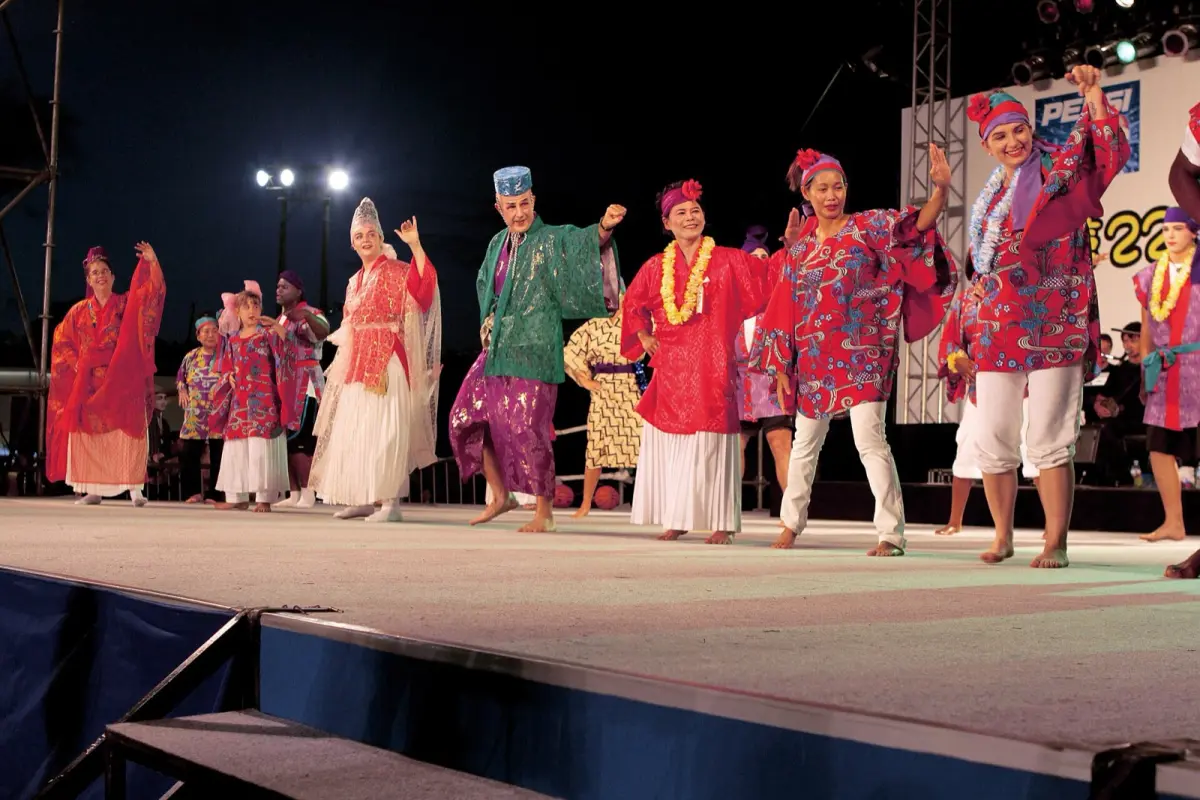
Motifs of Island Life
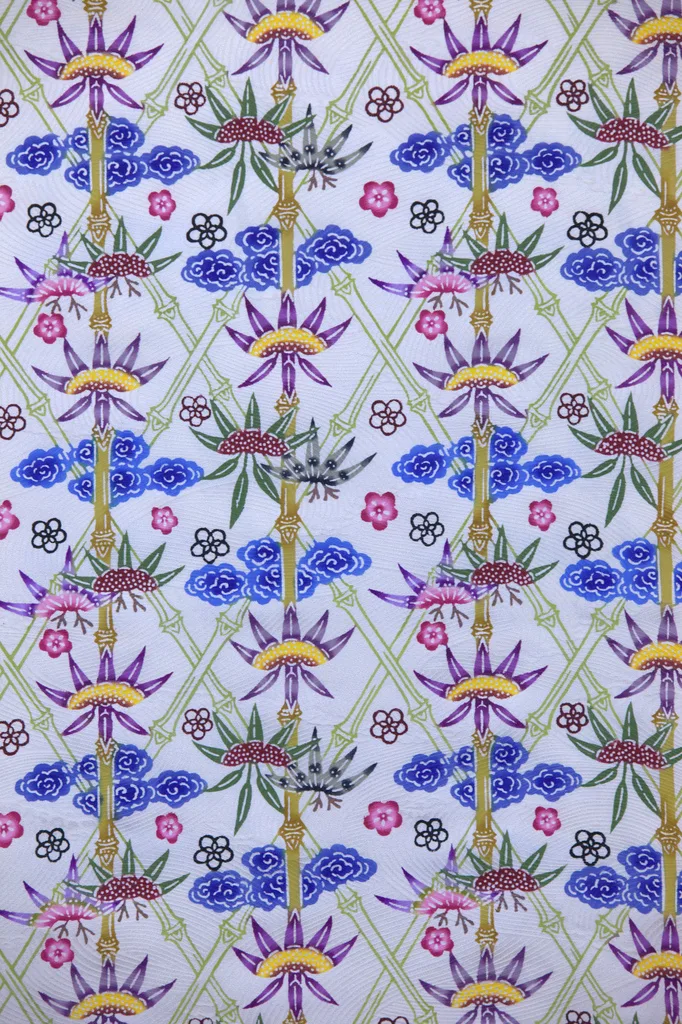
Bingata designs favour simplicity over intricacy. Natural motifs dominate: stylised waves, tropical flowers, birds in flight. These are not botanical studies but distillations, each form reduced to its essential gesture. A hibiscus becomes a bold silhouette; water transforms into rhythmic curves. The effect is immediate, legible even at a distance, which suited garments meant to be seen in procession and ceremony.
The bold combinations—crimson against saffron, indigo beside coral—reflect an aesthetic unafraid of saturation. Where mainland Japanese dyeing often pursued restraint, bingata celebrated abundance.
Living Tradition
In 1973, Okinawa Prefecture designated bingata a cultural property, formal recognition of a craft that had survived the kingdom's dissolution and the upheavals of the twentieth century. Today's artisans in Naha maintain both kata-zome and tsutsu-gaki methods, their workshops continuing techniques refined over seven centuries.
The tradition has expanded beyond court robes into contemporary applications, yet the fundamental process remains unchanged: stencil or cone, paste and pigment, patience and precision. Each length of cloth still requires the same careful registration of pattern, the same understanding of how colour behaves on fiber.
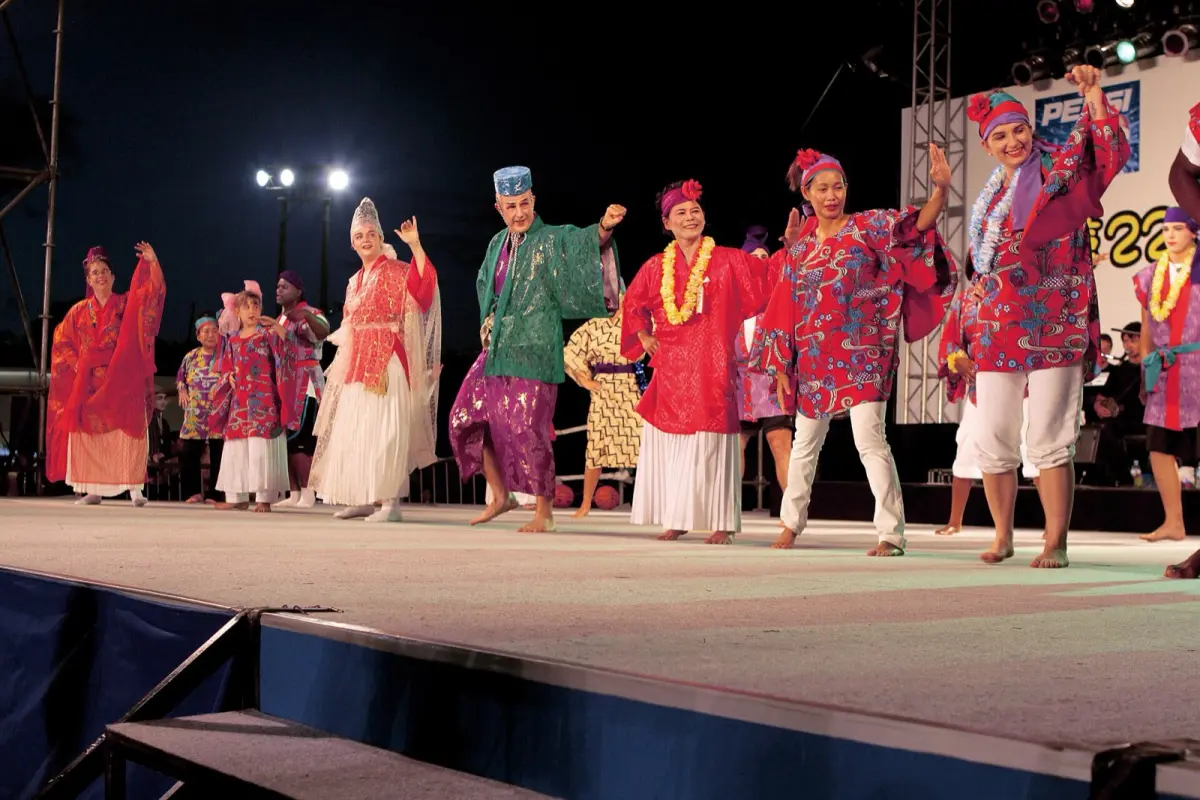
What began as the exclusive language of Ryukyu royalty now speaks to anyone drawn to textiles that refuse to whisper. Bingata endures because it answers something essential—the human need for colour that matches the intensity of lived experience, bold enough to stand against the island sun.
FAQ
Chaware curates authentic Japanese crafts — straight from the makers in Japan to your table.
Explore the Chaware collection →
Keep exploring