Kurume Kasuri: The Indigo Ikat Tradition of Fukuoka
On this page
A girl in early nineteenth-century Kyushu noticed something most of us would overlook: the pale flecks scattered across an old indigo garment, faded and threadbare from years of wear. She unpicked the cloth, thread by thread, and discovered a secret hiding in the warp and weft.
The Accidental Discovery
Around 1800, Inoue Den (井上伝), then only twelve or thirteen years old, made an observation that would transform textile production in her hometown of Kurume, Fukuoka. The mottled white specks she saw on that worn indigo fabric weren't random—they were the ghost of a pattern, created before the cloth was ever woven. By unraveling the garment completely, Den realized the effect came from threads that had been dyed unevenly, some parts resisting the indigo while others absorbed it fully.
Binding and Dyeing
What Den devised was deceptively simple but required meticulous planning. She began binding bundles of cotton thread tightly before dyeing them in indigo. The bound sections remained white, protected from the dye, while the exposed portions turned deep blue. When these threads were later woven—the white and blue segments carefully aligned—patterns emerged across the finished cloth as if by magic. This technique, which she called kasuri (絣), was a form of ikat, though Den arrived at it through observation rather than instruction.
The precision demanded by kasuri cannot be overstated:
Every white dot, every geometric motif, every blurred edge exists because a weaver calculated exactly where to bind the thread, how tightly, and for how long before the indigo bath.
From Village Innovation to Regional Identity
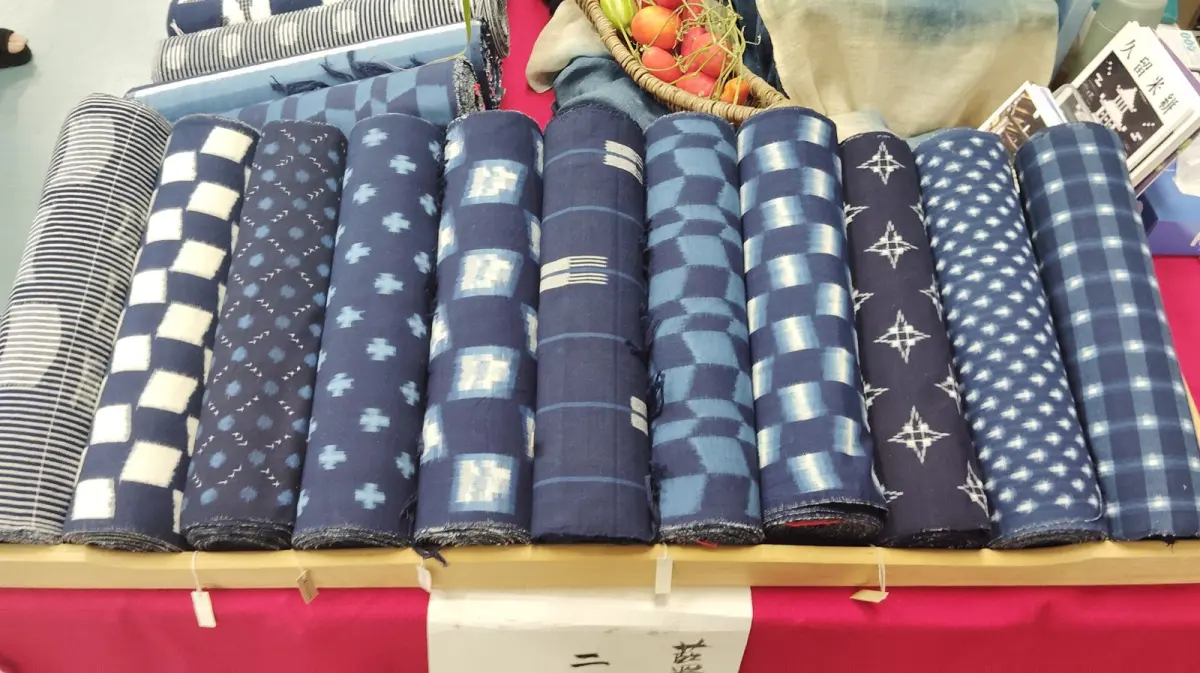
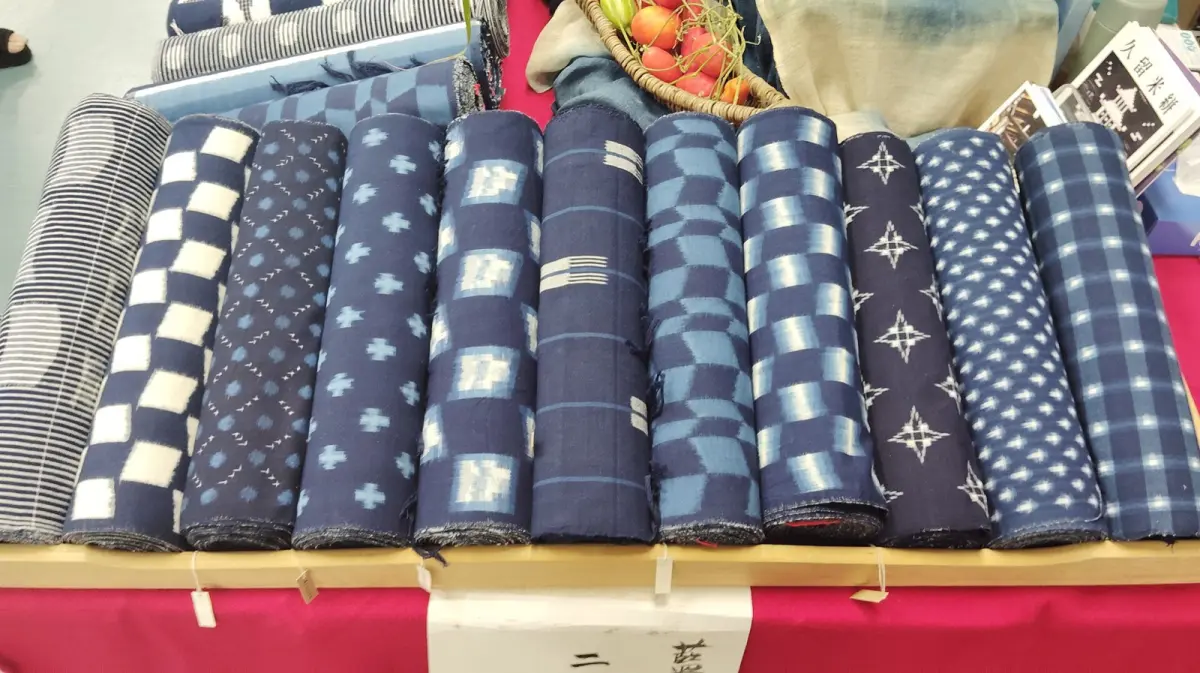
Den's invention spread gradually through Kurume and the surrounding region. What began as one girl's experiment became a cottage industry, then a hallmark of Fukuoka's textile culture. Kurume kasuri developed its own aesthetic vocabulary—small repeating patterns, often geometric or abstracted from nature, rendered in the soft contrast of indigo and undyed cotton. The slightly blurred edges, inherent to the kasuri technique, gave the cloth a painterly quality that distinguished it from sharply printed fabrics.
By the mid-twentieth century, the Japanese government recognized the cultural significance of this regional craft. In 1957, Kurume kasuri was designated an Important Intangible Cultural Property, acknowledging both its technical complexity and its roots in a specific place and tradition.
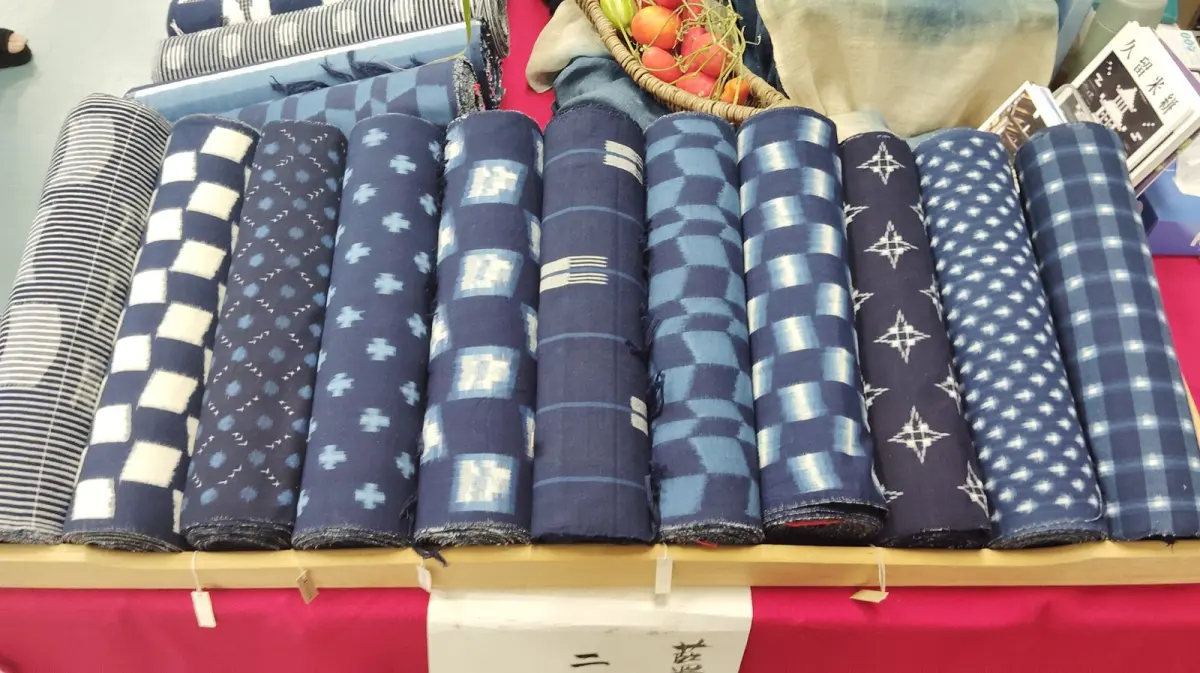
The Weaver's Mathematics
Creating kasuri is an exercise in spatial reasoning. Before a single thread touches the loom, the weaver must map the entire design, calculating which sections of warp and weft will intersect to form each element of the pattern. Bind the thread a few millimeters off, and the motif shifts or dissolves. The indigo dyeing itself—often repeated multiple times to build depth of color—adds another variable, as the dye penetrates differently depending on thread tension and fiber quality.
The finished cloth reveals this hidden labor only to those who look closely. What appears as a simple dotted pattern is actually the convergence of hundreds of individual decisions, each thread a small act of faith that the design will emerge as planned.
Wearing the Past Forward
Today, Kurume kasuri endures in both traditional forms—work jackets, aprons, everyday wear—and contemporary applications. Designers incorporate the fabric into modern garments, drawn to its texture and the understated complexity of its patterns. Each piece carries forward Den's insight: that beauty can emerge from constraint, that pattern can be woven into the very structure of cloth rather than applied to its surface.
The craft remains centered in Kurume, where workshops still practice the binding, dyeing, and weaving that a young girl invented by paying attention to what others had discarded. In the blur between indigo and white, kasuri holds its secret—not in the threads themselves, but in the spaces where they were protected from the dye.
FAQ
Chaware curates authentic Japanese crafts — straight from the makers in Japan to your table.
Explore the Chaware collection →
Keep exploring