Kutani Ware: The Bold, Colorful Legacy of Ishikawa's Painted Porcelain
On this page
The kilns fell silent sometime in the early 1700s. No one knows exactly why. What remained were fragments of bold, jewel-toned porcelain scattered through the mountains of Kaga, each piece a riddle wrapped in saturated colour.
A Domain Lord's Gamble in the Mountains
Around 1655, Maeda Toshiharu, first lord of the Daishoji domain in what is now southern Ishikawa Prefecture, learned of porcelain stone deposits deep in Kutani village. Porcelain-making was still a closely guarded art in Japan, centred in Arita. Maeda dispatched a potter named Goto Saijiro to Hizen province to study the techniques. When Saijiro returned, the kilns of Kutani began to fire, producing wares that would become legendary—not for their quantity, but for their sudden disappearance.
The Mystery of Ko-Kutani
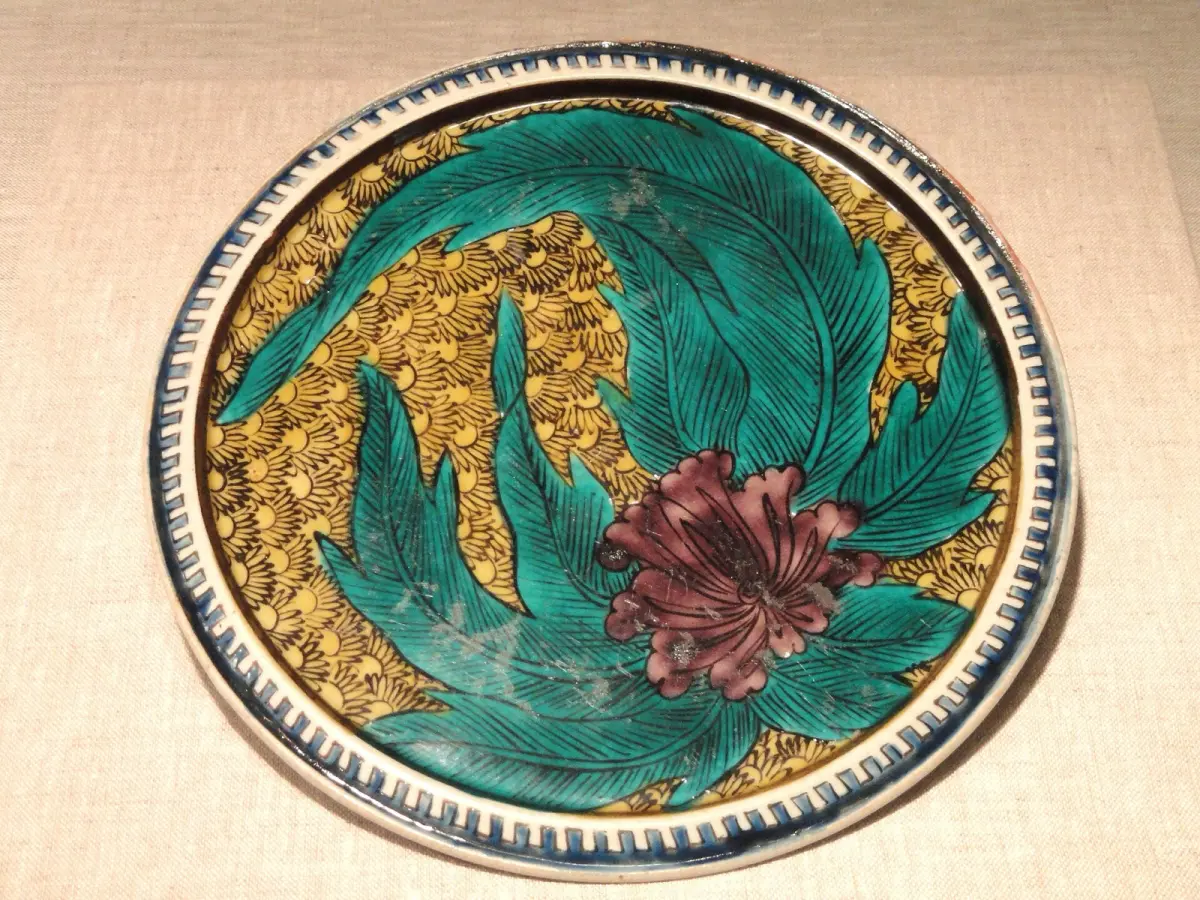
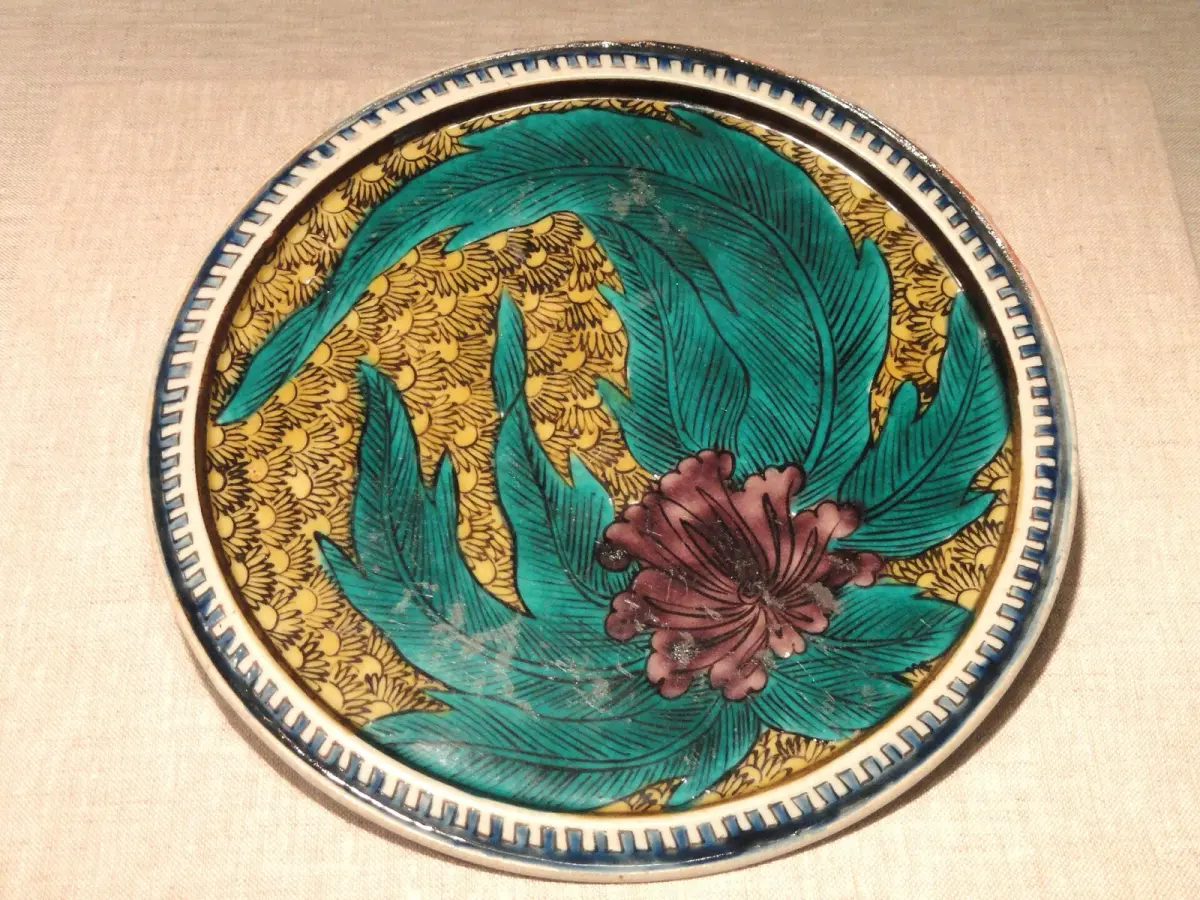
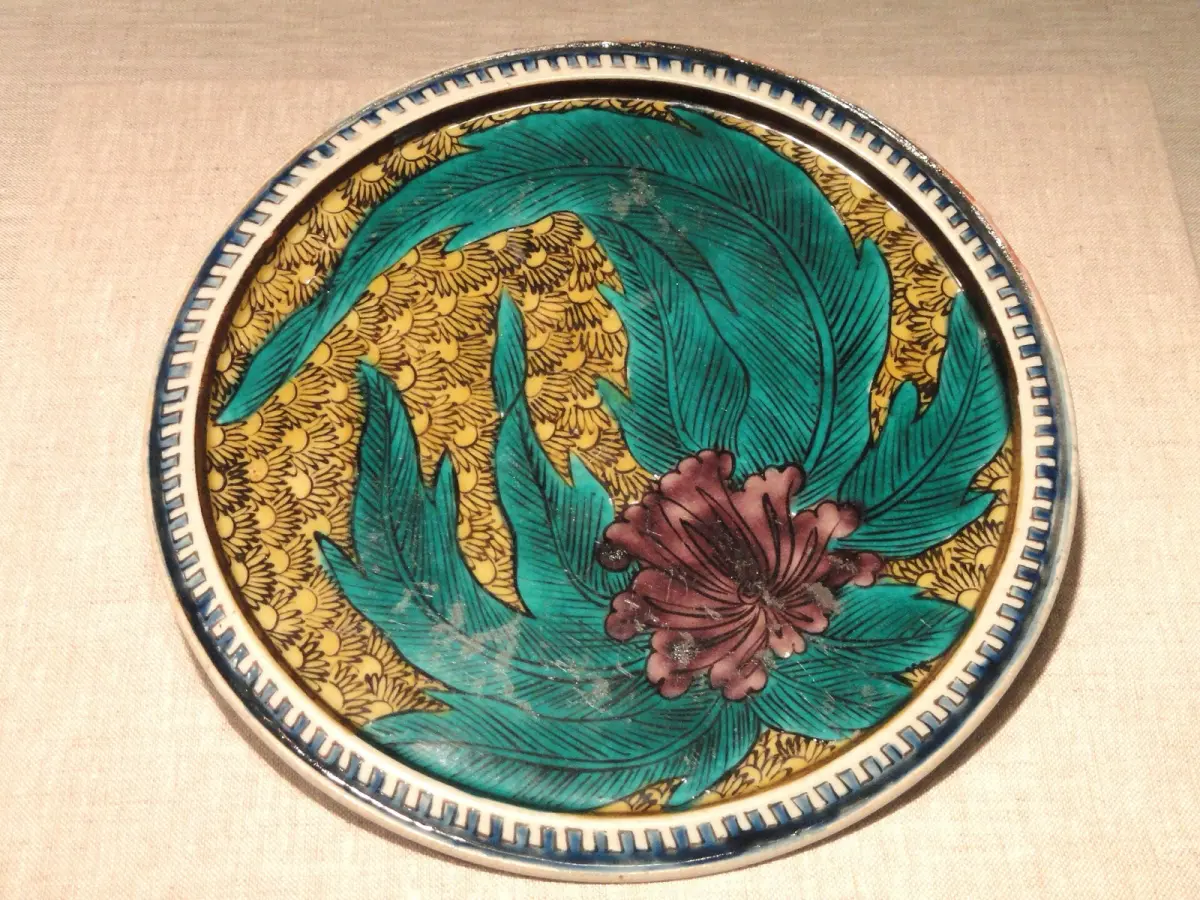
The original Kutani kilns operated for perhaps half a century before shutting down abruptly in the early 1700s. The reason remains unclear: economic pressures, technical difficulties, or shifts in domain politics have all been proposed. What survived are pieces now called Ko-Kutani (古九谷, "old Kutani"), treasured by collectors for their audacious use of colour and space. These early wares established the visual language that would define the tradition: the Kutani gosai (九谷五彩), or "Kutani five colours"—green, yellow, red, purple, and a deep navy blue, all applied as bold overglaze enamels that sit thick and painterly on the porcelain surface.
The five colours don't whisper. They announce themselves with an intensity that can feel almost reckless, as if the potters were determined to use every pigment available before the kilns went cold.
A Century of Silence, Then Revival
For roughly a hundred years, Kutani production lay dormant. Then, in the early 19th century, multiple kilns began firing again across the region, each developing its own aesthetic signature. The Kasugayama kiln worked in the style of the Kyoto potter Aoki Mokubei. The Yoshidaya kiln deliberately revived Ko-Kutani's bold palette, omitting red to focus on green, yellow, purple and navy. The Miyamotoya kiln became known for intricate aka-e (赤絵), red-line drawing of extraordinary fineness. The Eiraku kiln specialised in kinrande (金襴手), gold brocade patterns that covered surfaces in shimmering luxury.
Geography of a Scattered Craft
Unlike pottery traditions centred on a single village, Kutani-yaki (九谷焼) now spreads across multiple cities in Ishikawa: Kaga, Komatsu, Terai, and even Kanazawa, the prefectural capital. This geographic dispersal reflects the revival era's diversity—different patrons, different kilns, different ambitions. What unites them is the commitment to overglaze enamel work, that characteristic layering of saturated colour that makes a Kutani piece recognisable across a room.
Living With Boldness
Contemporary Kutani potters work within this inheritance of intensity. Some maintain the traditional five-colour palette on classic forms—plates decorated with birds and flowers, sake sets patterned with geometric precision. Others push the boundaries, using the overglaze technique on sculptural forms or paring back the palette to explore what two or three colours can do when given space to breathe. The craft remains centred in Ishikawa, where the original porcelain stone was discovered and where Goto Saijiro returned with Arita's secrets more than three centuries ago.
The kilns never did explain why they first went silent. Perhaps that's fitting for a craft that has always spoken most eloquently in colour.
FAQ
Chaware curates authentic Japanese crafts — straight from the makers in Japan to your table.
Explore the Chaware collection →
Keep exploring