Sumida's Edo Kiriko: The Cut Glass Craft of Old Tokyo
On this page
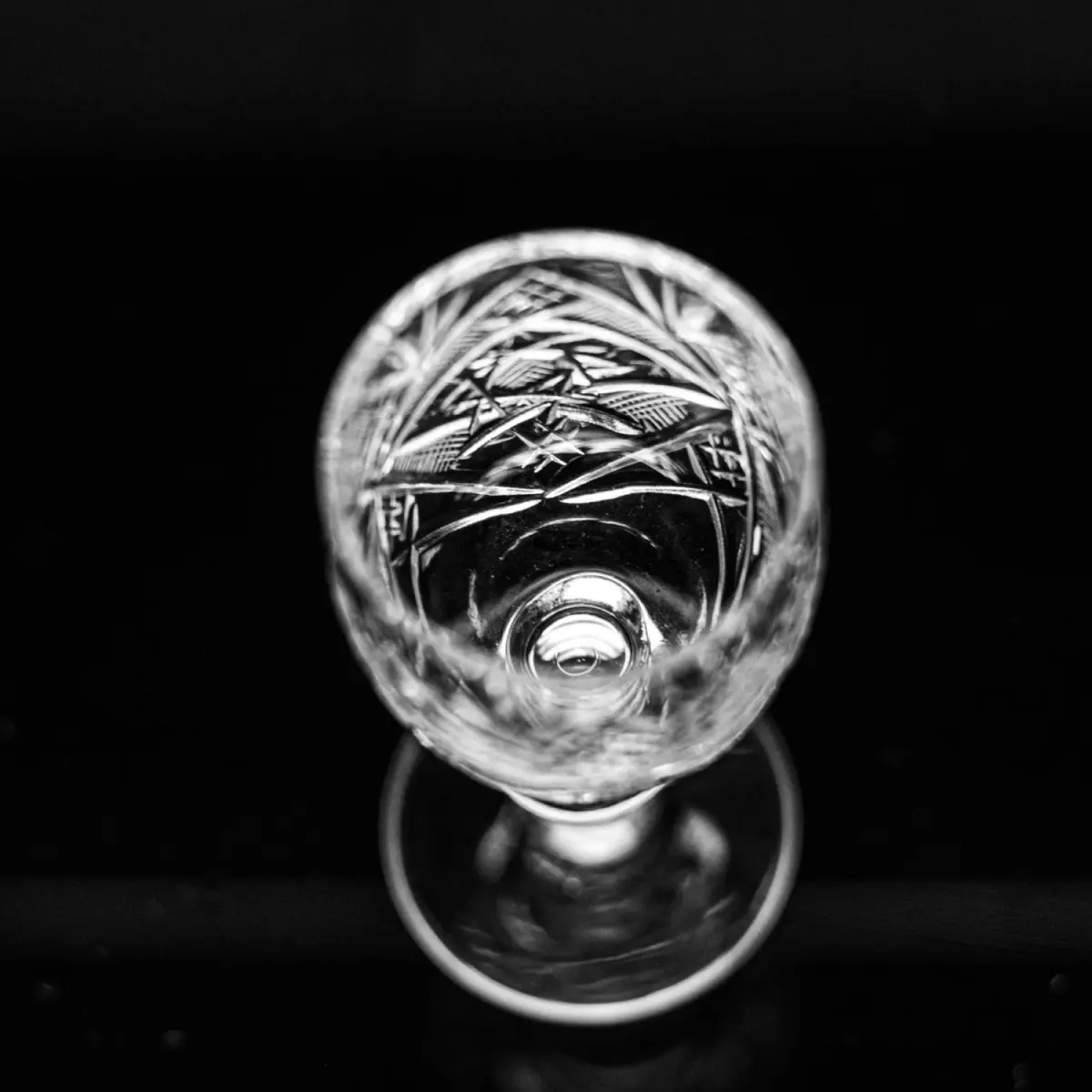
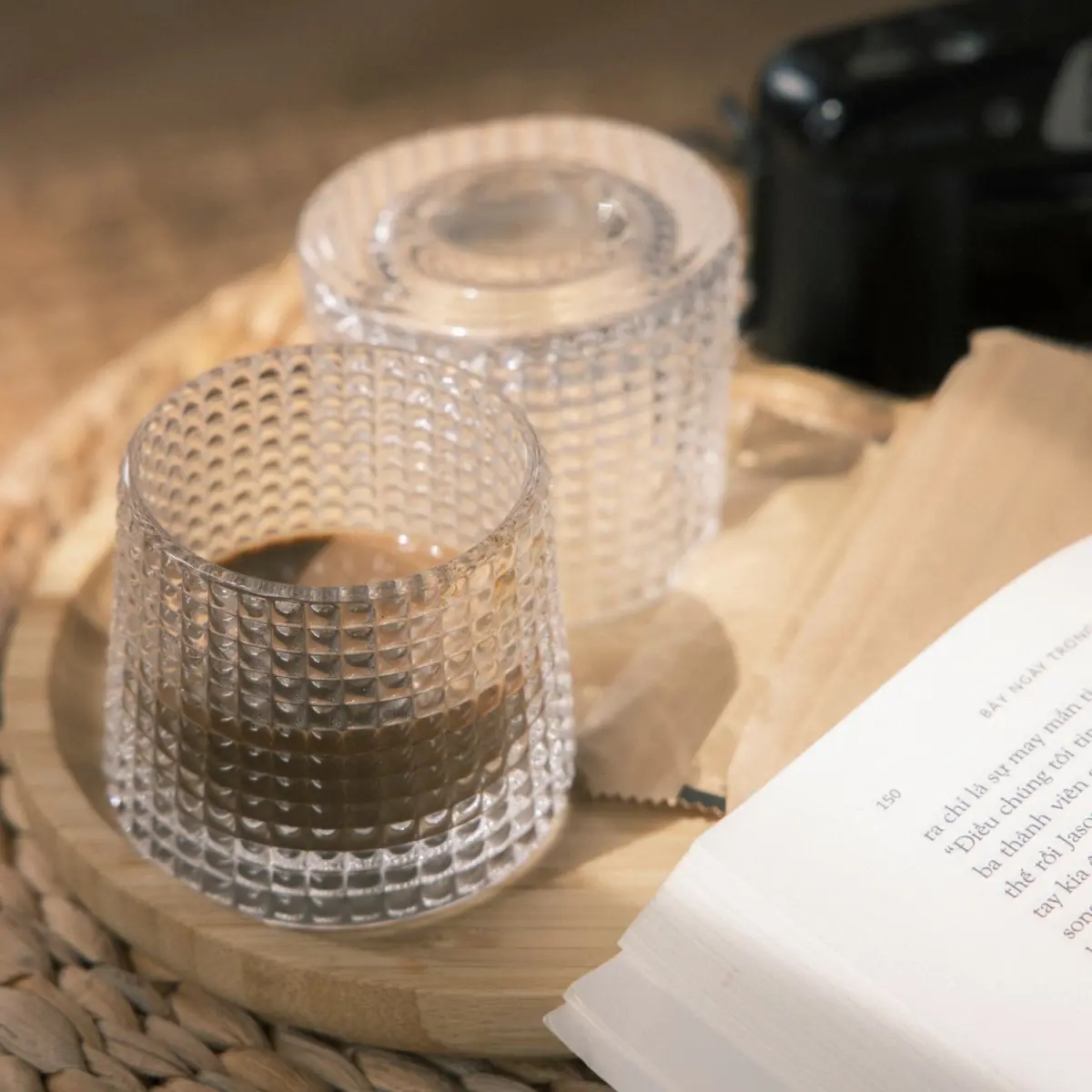
The light catches the rim of a glass tumbler, and suddenly a lattice of stars flares across your table. This is the magic of Edo Kiriko (江戸切子), where precision meets poetry in every facet.
A Merchant's Experiment in Old Edo
In 1834, during the Tenpo era, a glass merchant named Kagaya Kyubei ran his shop in Odenma-cho, a bustling district of Edo. Curious and inventive, he began experimenting with emery powder—a fine abrasive—to engrave patterns directly onto glass surfaces. What started as one tradesman's tinkering would become Tokyo's signature contribution to the world of cut glass. The craft took its name from the old capital itself: Edo Kiriko, the cut glass of Edo.
When East Met West
The turning point arrived in 1881, nearly fifty years after Kagaya's first experiments. The Meiji government, eager to modernize Japanese industry, invited Emanuel Hauptmann, a British cut-glass engineer, to Japan. Hauptmann brought with him the systematic techniques of European crystal cutting—precision wheels, structured patterns, mathematical angles. His teaching merged with the Japanese aesthetic sensibility already taking shape, establishing what we now recognize as the modern Edo Kiriko technique. The craft became a bridge between two glass-working traditions, neither purely Eastern nor Western, but something distinctly its own.
The Poetry of Twenty Patterns
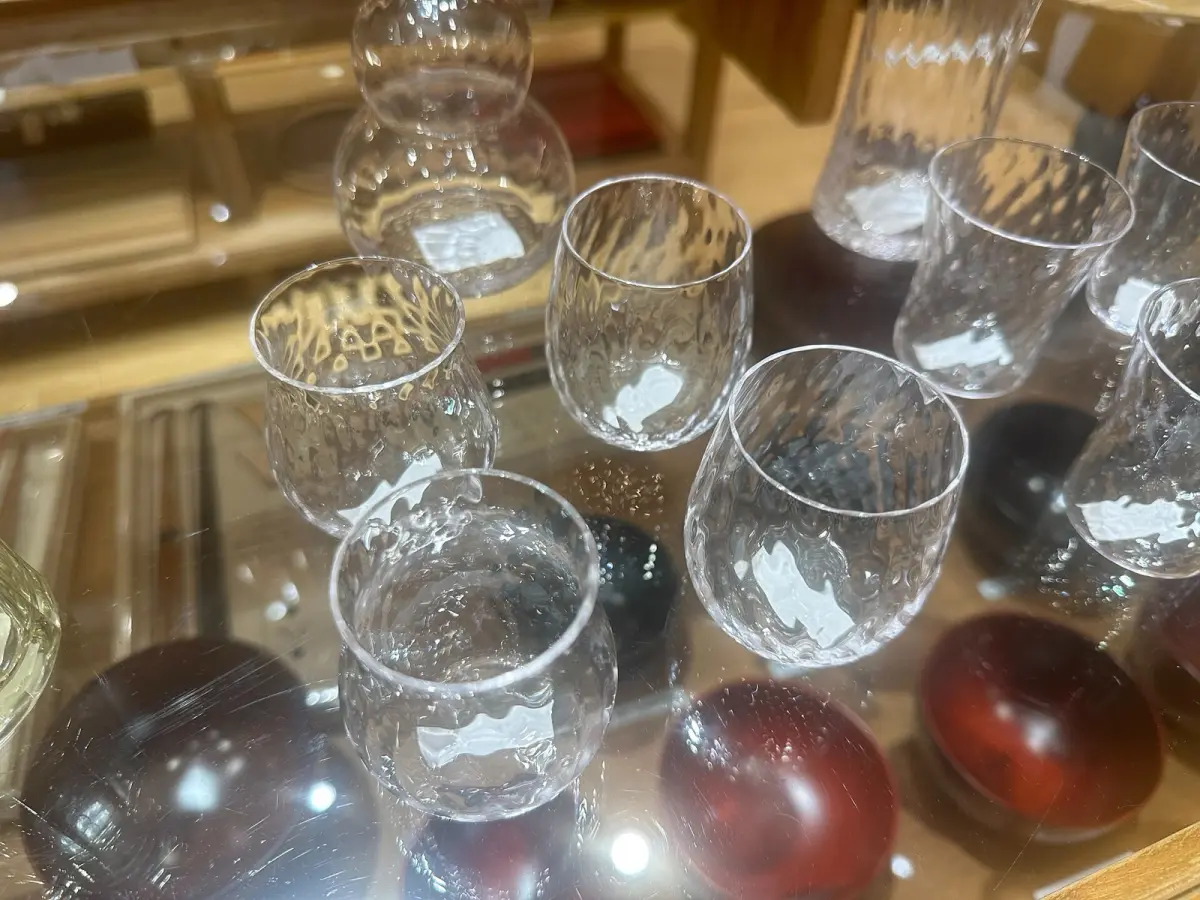
Walk into any Edo Kiriko workshop in Sumida today, and you'll encounter roughly twenty traditional patterns, each named for something familiar from daily life:
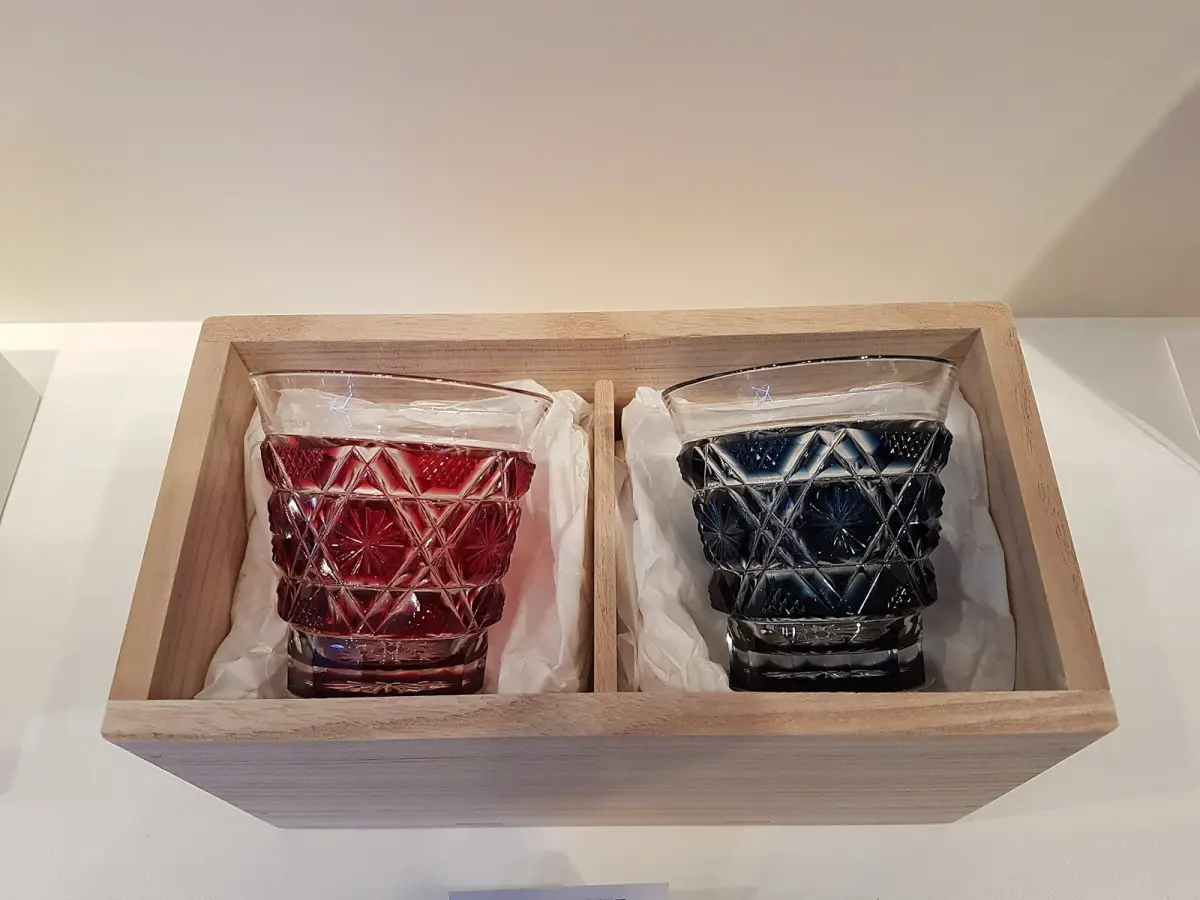
- Nanako (魚子), or 'fish roe'—a field of tiny raised dots symbolizing prosperity and the blessing of many children
- Yarai (矢来)—the crossing bamboo lattice once used for fences
- Kenbishi (剣菱)—interlocking diamond shapes
- Asanoha (麻の葉)—the geometric hemp-leaf motif found throughout Japanese design
These aren't arbitrary decorations. Each pattern carries meaning, connects to the textures and structures people saw around them in old Tokyo. The craft transformed the ordinary—fish eggs, garden fences, textile patterns—into geometry that plays with light.
The Razor-Thin Revelation
The technical heart of Edo Kiriko lies in the iro-kise (色被せ) technique: layering coloured glass over clear in films thinner than a millimetre. The cutter's wheel slices through this delicate skin, revealing the transparent glass beneath. Too shallow, and the pattern disappears. Too deep, and the piece shatters. The artisan works by feel and decades of practice, creating designs where cobalt blue or ruby red frames windows of perfect clarity. Light doesn't simply pass through Edo Kiriko; it fractures, refracts, and dances between the coloured surface and the crystal depths.
Recognition, Hard-Won
For much of the twentieth century, Edo Kiriko existed in the shadow of its older cousin, Satsuma Kiriko from Kagoshima. But the craft's practitioners in Sumida—Tokyo's traditional artisan district—persisted. In 1985, Tokyo officially designated Edo Kiriko as a metropolitan craft. Recognition at the national level took longer: in 2002, the Japanese government named it a Traditional Craft, acknowledging both its historical significance and the unbroken lineage of skill passed from master to apprentice.
The craft that began with one merchant and emery powder now represents Tokyo itself—precise, inventive, and utterly unafraid of light.
FAQ
Chaware curates authentic Japanese crafts — straight from the makers in Japan to your table.
Explore the Chaware collection →
Keep exploring