Satsuma Kiriko: The Lost Cut Glass Art of Kagoshima, Reborn
On this page
In the 1840s, on the southern tip of Kyushu, a feudal lord with a passion for Western science commissioned glassmakers to create something the world had never seen. For barely two decades the workshops glowed, then vanished so completely that even the recipe for their signature crimson disappeared into smoke and memory.
The Lord's Vision and the Shuseikan Dream
Satsuma Kiriko (薩摩切子) emerged not from centuries of tradition but from the ambitious modernization drive of Shimazu Nariakira, lord of the Satsuma domain in what is now Kagoshima. In the 1840s and 1850s, Nariakira established the Shuseikan enterprise, a remarkable complex of Western-style factories producing everything from cannons to textiles. Within this industrial experiment, glassmaking found its place. By 1851, Nariakira was actively promoting the cut glass for foreign trade and as prestigious gifts to other domain lords, positioning Satsuma's coloured crystal as both diplomatic tool and commercial venture.
The Phantom Years
The brilliance lasted barely a generation. When Nariakira died suddenly in 1858, the workshops lost their driving patron. The glass enterprise declined, and during the violent upheavals of the Meiji Restoration the workshops burned. By the time of the Satsuma Rebellion in 1877, the technique had vanished entirely. For over a century, Satsuma Kiriko existed only as the 'phantom kiriko'—a legend whispered among collectors who treasured the rare surviving pieces, their makers' secrets lost to fire and time.
Bokashi: Where Colour Breathes
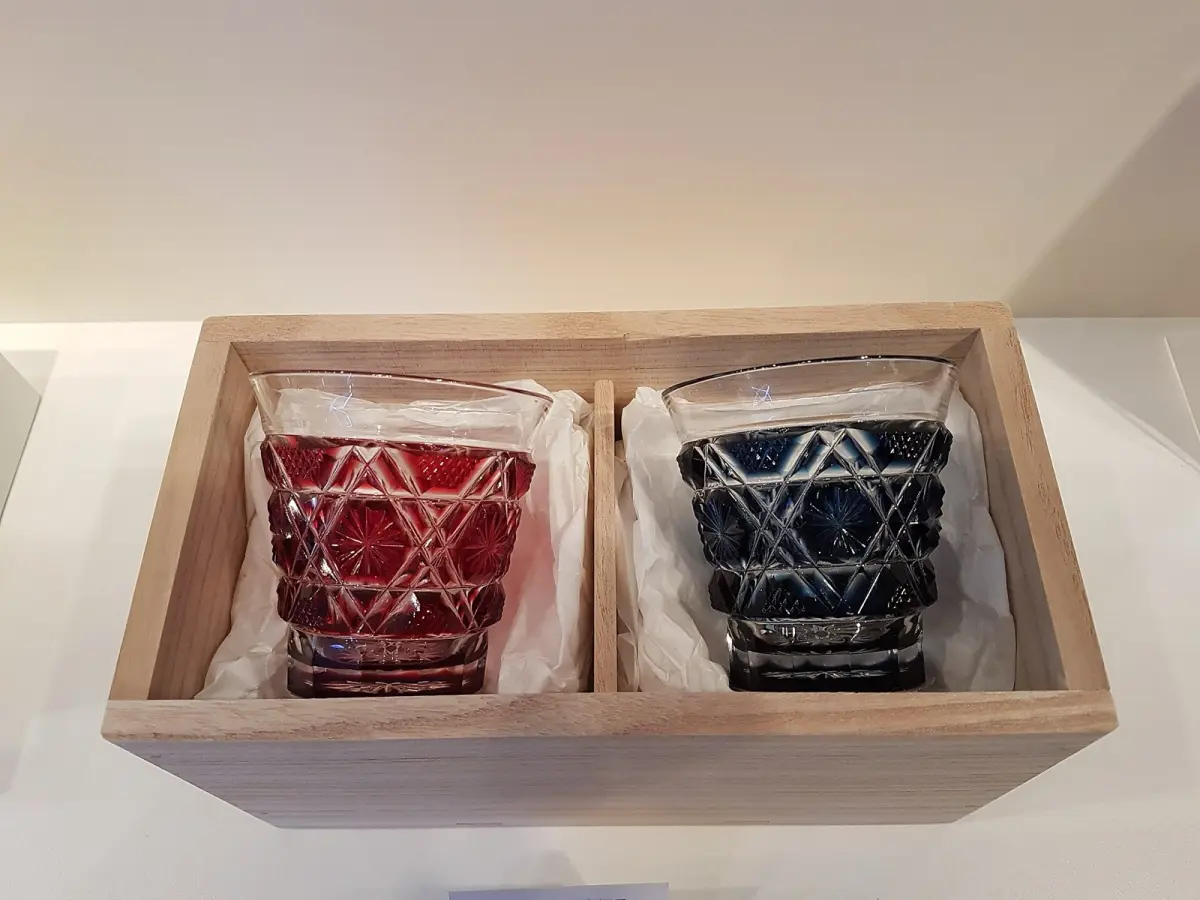
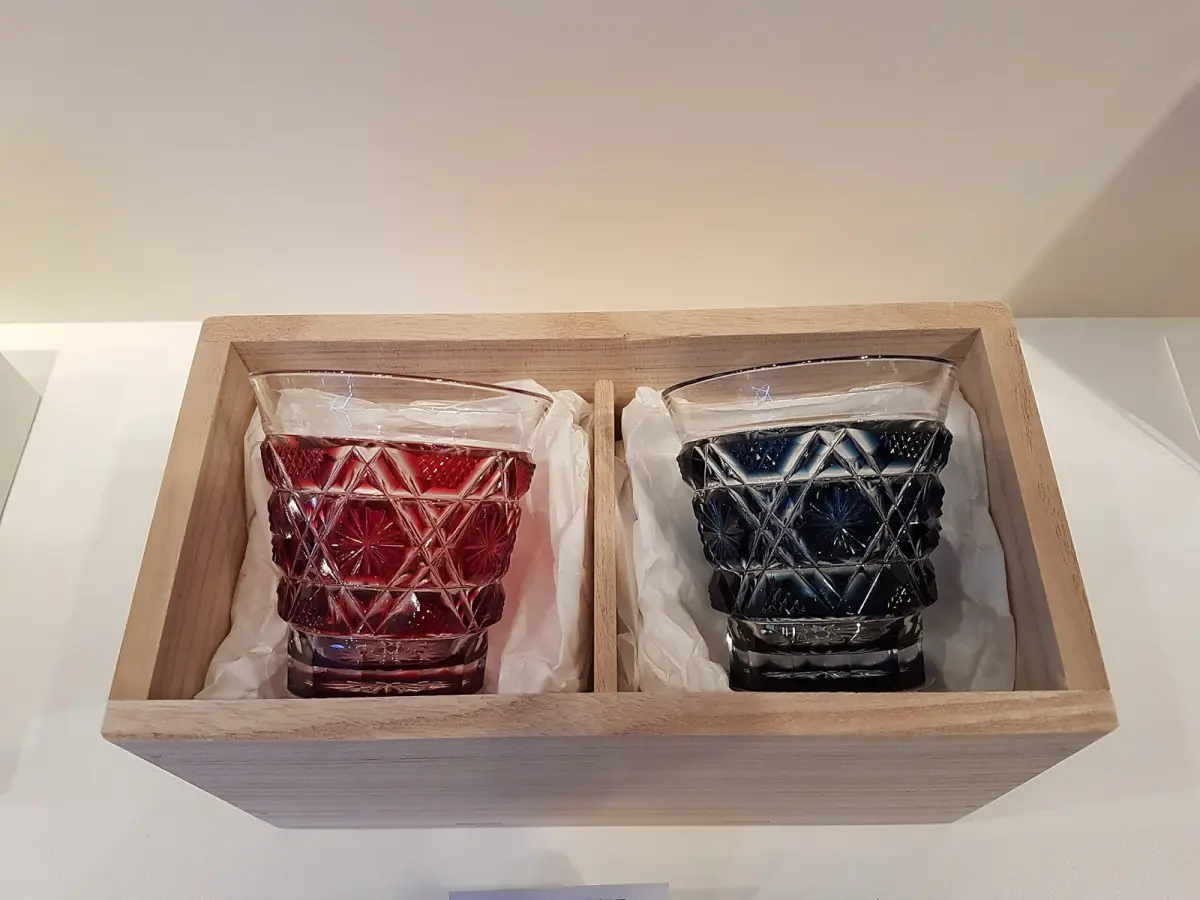
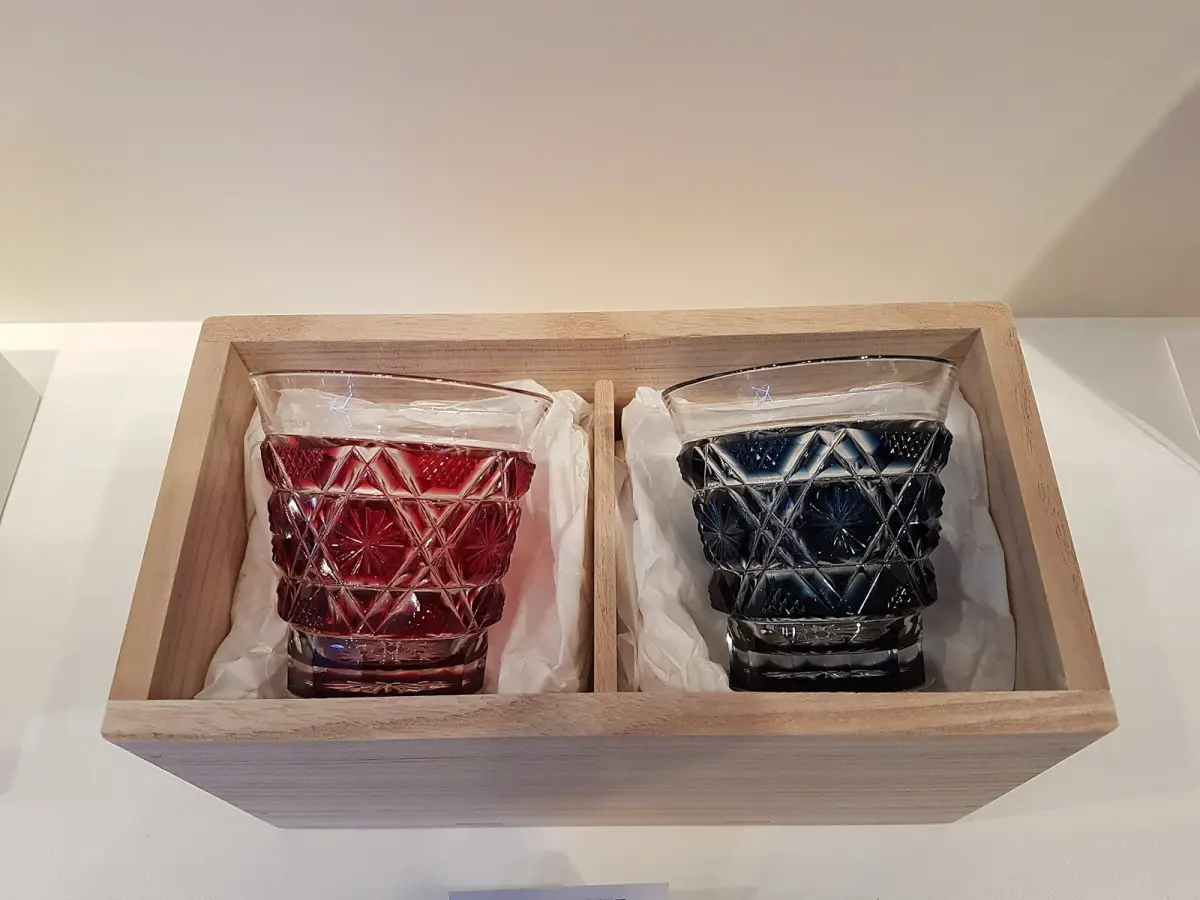
What made these pieces so distinctive was the bokashi (ぼかし) gradation technique. Unlike other cut glass traditions that applied thin surface colour, Satsuma craftsmen layered thick coloured glass over a clear base. When the cutter's wheel bit deep into this sandwich, it revealed a gradual fade from saturated hue to crystalline transparency. The effect is neither abrupt nor uniform but organic, as though the colour itself were breathing through the glass. This depth of cut, this generous overlay, gave Satsuma Kiriko a presence that thinner overlays could never achieve.
The Crimson That Disappeared
Among the colours developed in those brief decades, one became emblematic: Satsuma no beni (薩摩の紅), a particular crimson red. The exact formula died with the workshops. Surviving pieces glow in museum cases, their ruby depths a challenge to every modern revivalist. That red—along with deep blues, ambers, and greens—represented not just aesthetic choice but technical mastery, each hue requiring precise control of metallic oxides and firing temperatures in an era when such knowledge was hard-won and jealously guarded.
Revival from the Ashes
In 1985, more than a century after the technique's disappearance, Kagoshima craftsmen began the painstaking work of revival. Working from fragmentary records, studying surviving pieces under magnification, experimenting with overlay thickness and cutting angles, they slowly reconstructed what had been lost. The modern Satsuma Kiriko workshops now produce pieces that honour the bokashi tradition, though artisans readily acknowledge that some mysteries—particularly that exact crimson formula—remain elusive. Today's pieces carry forward Nariakira's vision, proving that even techniques reduced to ash and rumour can, with patience and reverence, find their way back into skilled hands.
The glass catches light differently when you know it was born twice.
FAQ
Chaware curates authentic Japanese crafts — straight from the makers in Japan to your table.
Explore the Chaware collection →
Keep exploring