Kurashiki & Okayama, Go Deeper
Kurashiki and Okayama form a double portrait of the Inland Sea coast: one a merchant town of white-walled storehouses and willow-shaded canals, the other a castle city with sweeping lawns and a black keep. Between them lie Momotaro legends, Japan's first Western art museum, and the birthplace of Japanese denim. Together they offer a quieter counterpoint to the Kansai corridor, rich in craft, garden design, and the textures of Edo-period commerce.
- Tap Open in Google Maps on any place for live directions, transit, hours & reviews.
- Get an ICOCA / Suica IC card — tap on/off trains, subways & buses, no ticket needed.
- Carry some cash (¥) — many small shops, shrines & old streets are cash-only.
- Go early: the famous spots are calm and beautiful before ~9am.
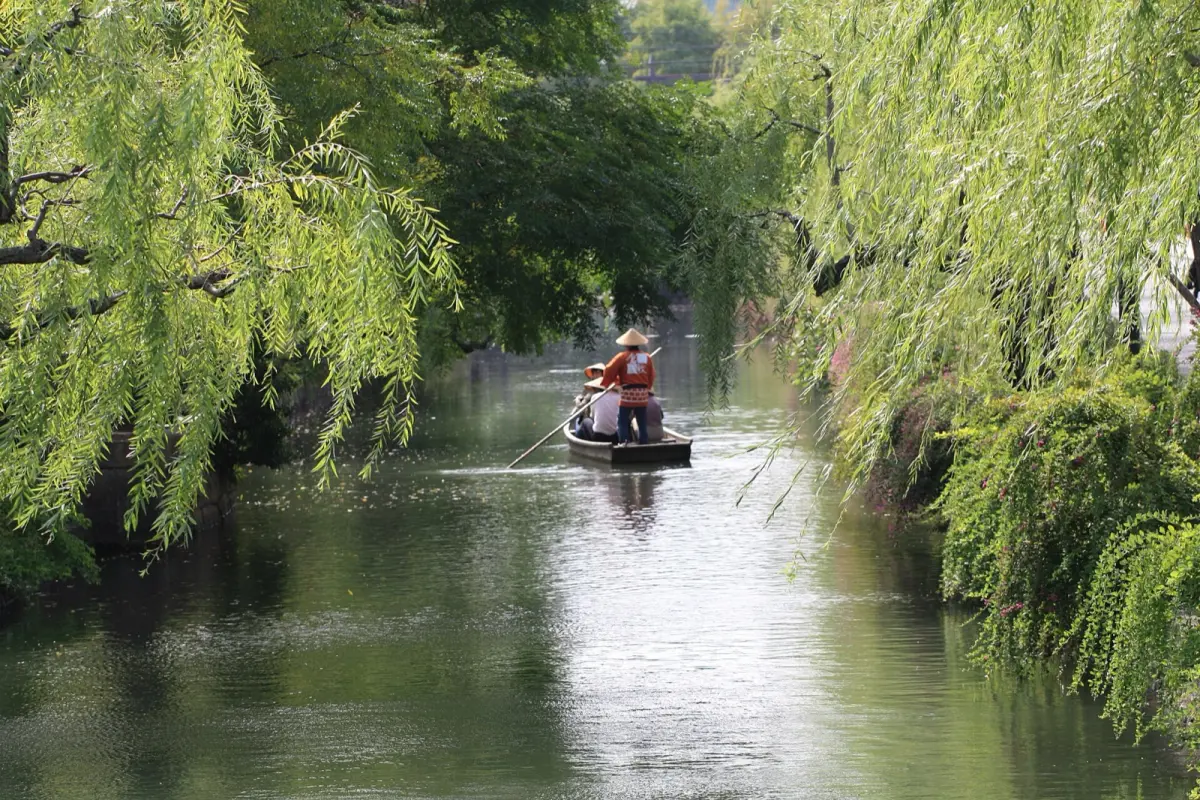
Bikan Historical Quarter
The Bikan historical quarter lines a canal with white-plastered Edo-era rice storehouses, now transformed into cafes, galleries and craft shops. Ride a wooden punt under the willows and watch the grey-tiled roofs drift past.
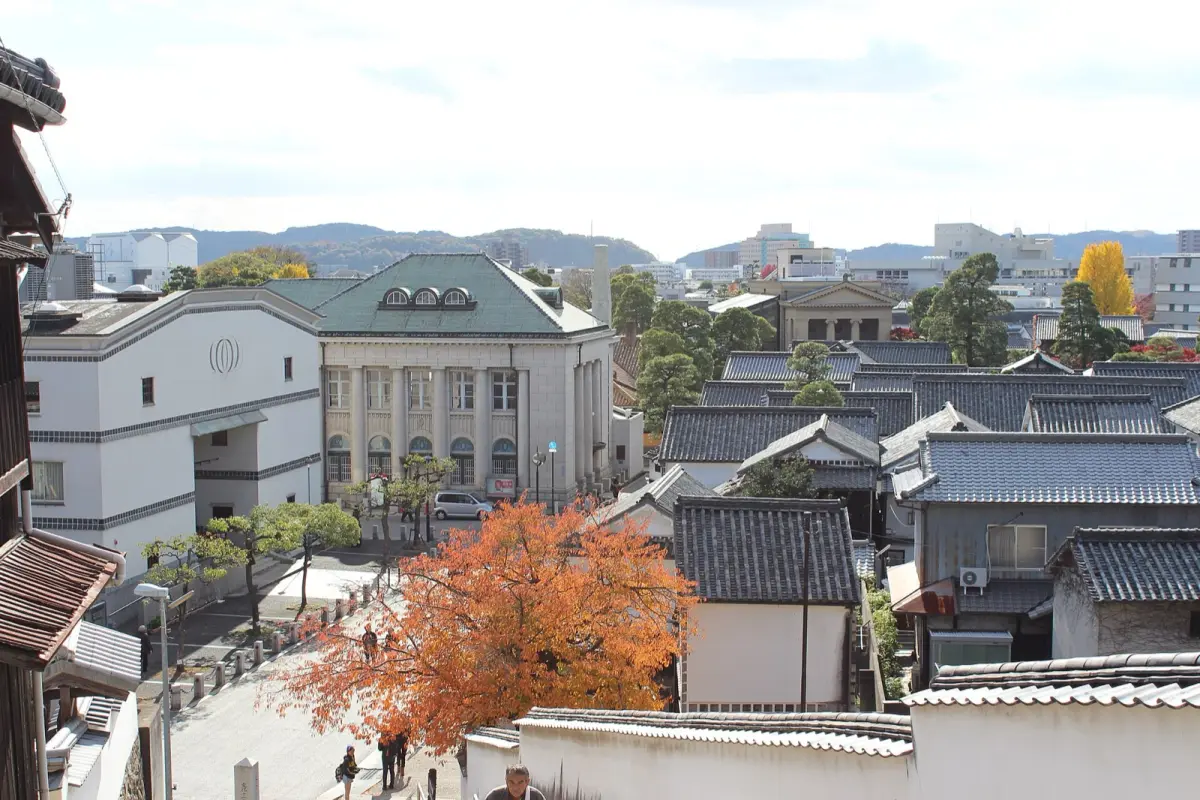
Ohara Museum of Art
Opened in 1930 by textile magnate Magosaburo Ohara, the Ohara Museum was Japan's first museum of Western art. Behind its Greek-temple facade hang works by El Greco, Monet and Gauguin, a startling collection in a provincial canal town.
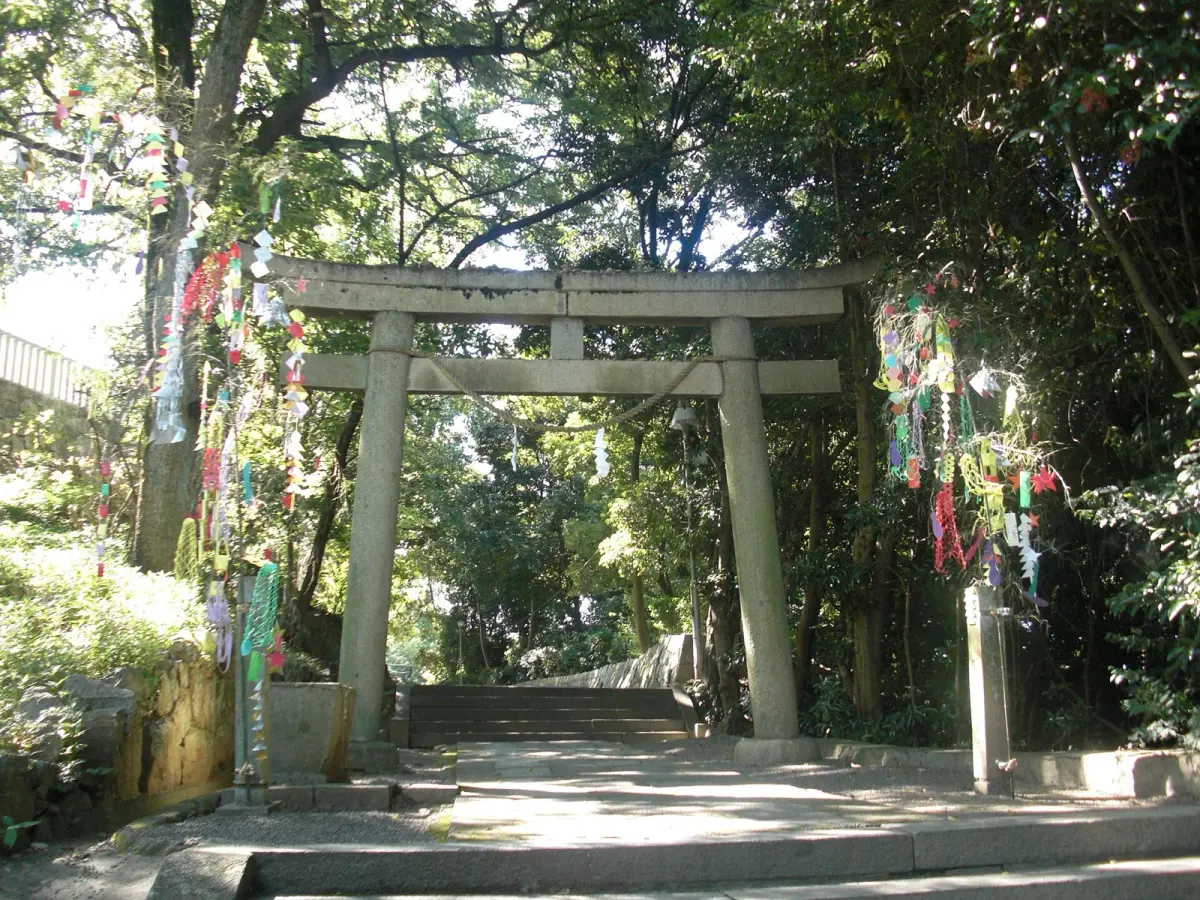
Achi Shrine
Achi Shrine, the old town's guardian on Tsurugatayama hill, dates back to the Heian period. Climb up for long views over Bikan's grey-tiled roofs and the canal district below.
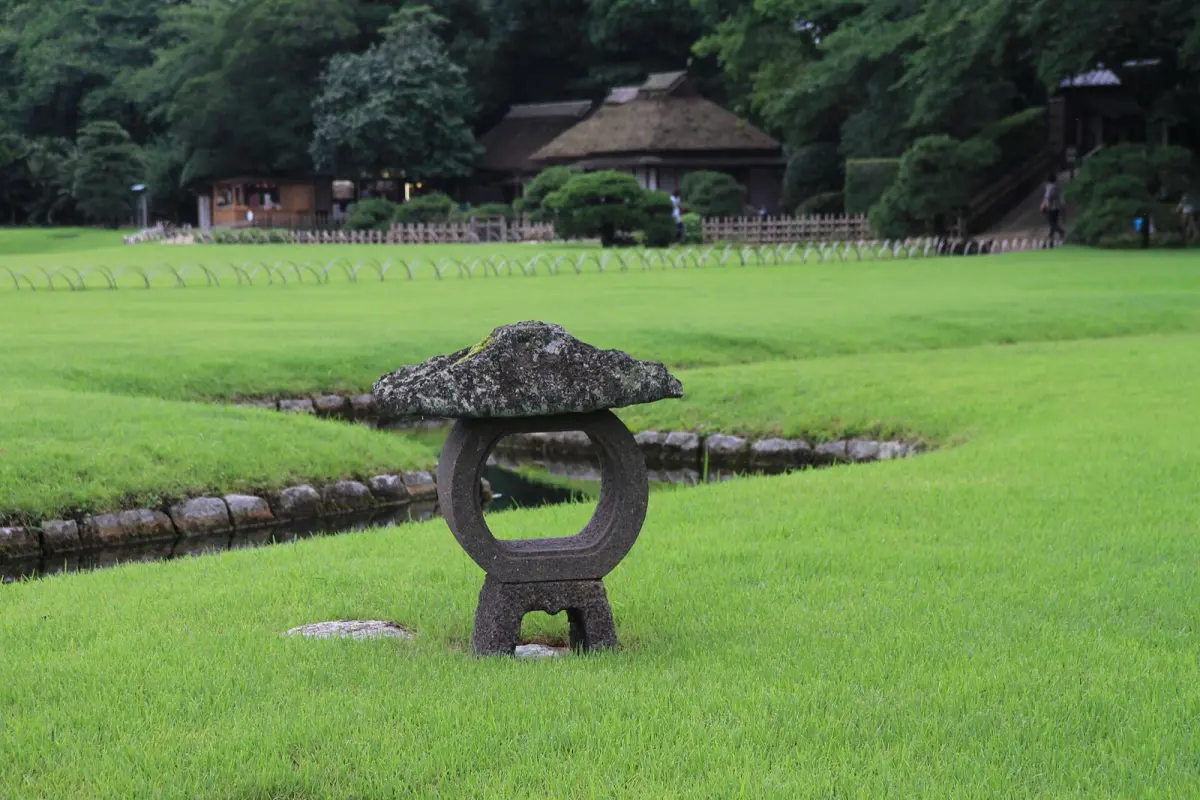
Korakuen Garden
Korakuen in nearby Okayama is one of Japan's three great gardens, laid out for the Okayama lords. Rare for its broad, open lawns, it offers an expansive, uncluttered vision of landscape design.
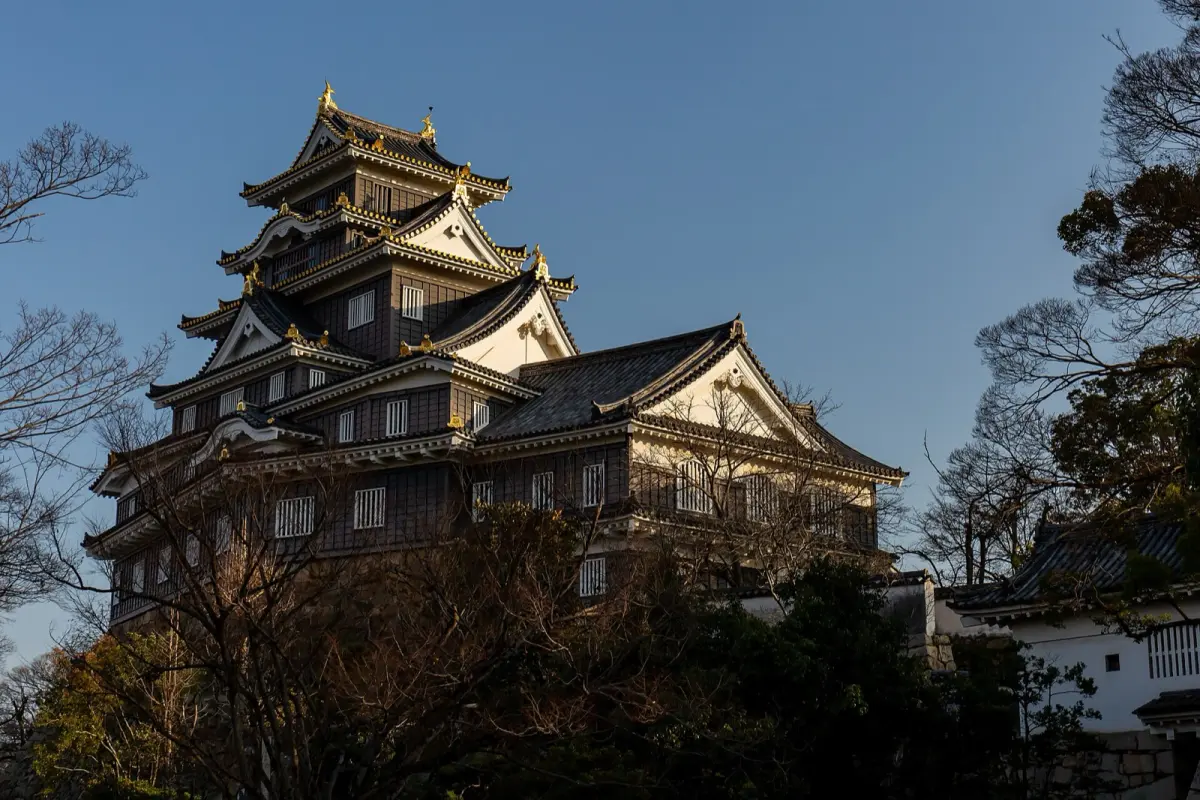
Okayama Castle (Crow Castle)
Okayama Castle, the black-walled 'Crow Castle' across the river from Korakuen, is crowned with gilded roof-fish. The keep is a modern rebuild, but the silhouette remains striking against the water.
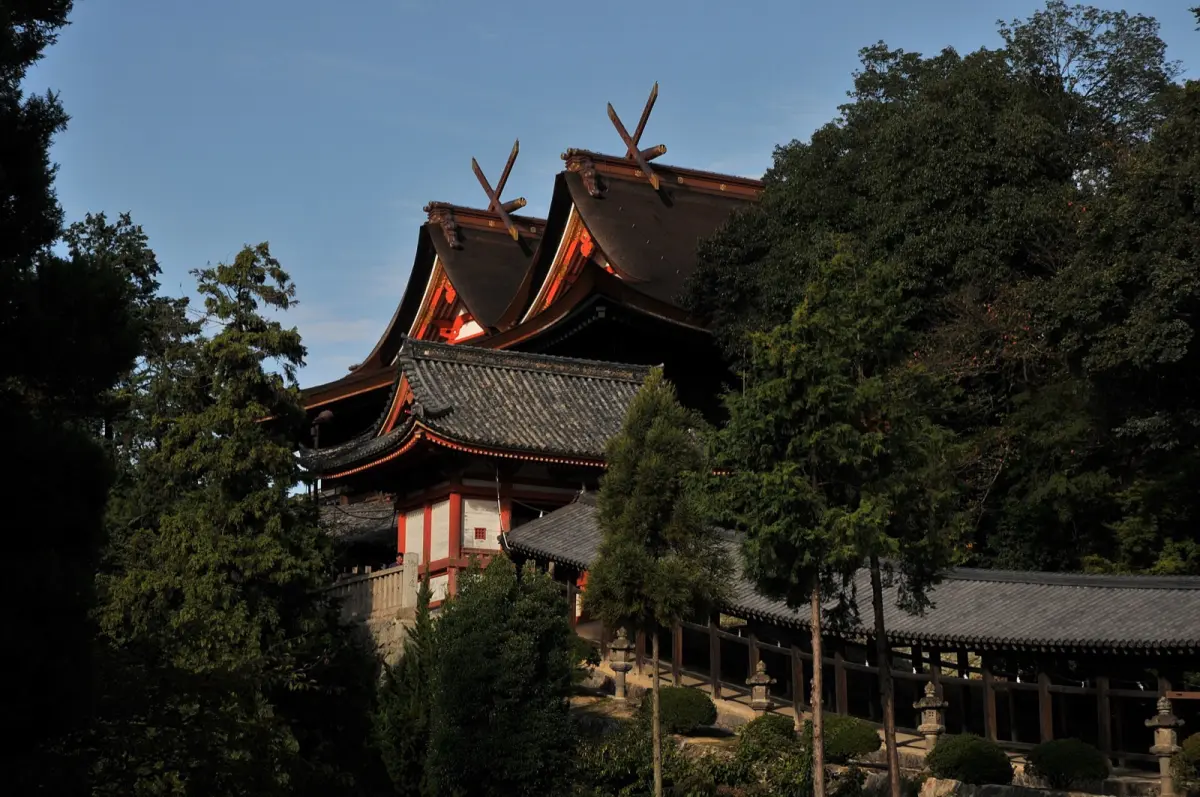
Kibitsu Shrine
Kibitsu Shrine is tied to the legend behind Momotaro the Peach Boy. Its sweeping roofed corridor stretches four hundred metres, and the unique twin-gabled roof is a National Treasure.
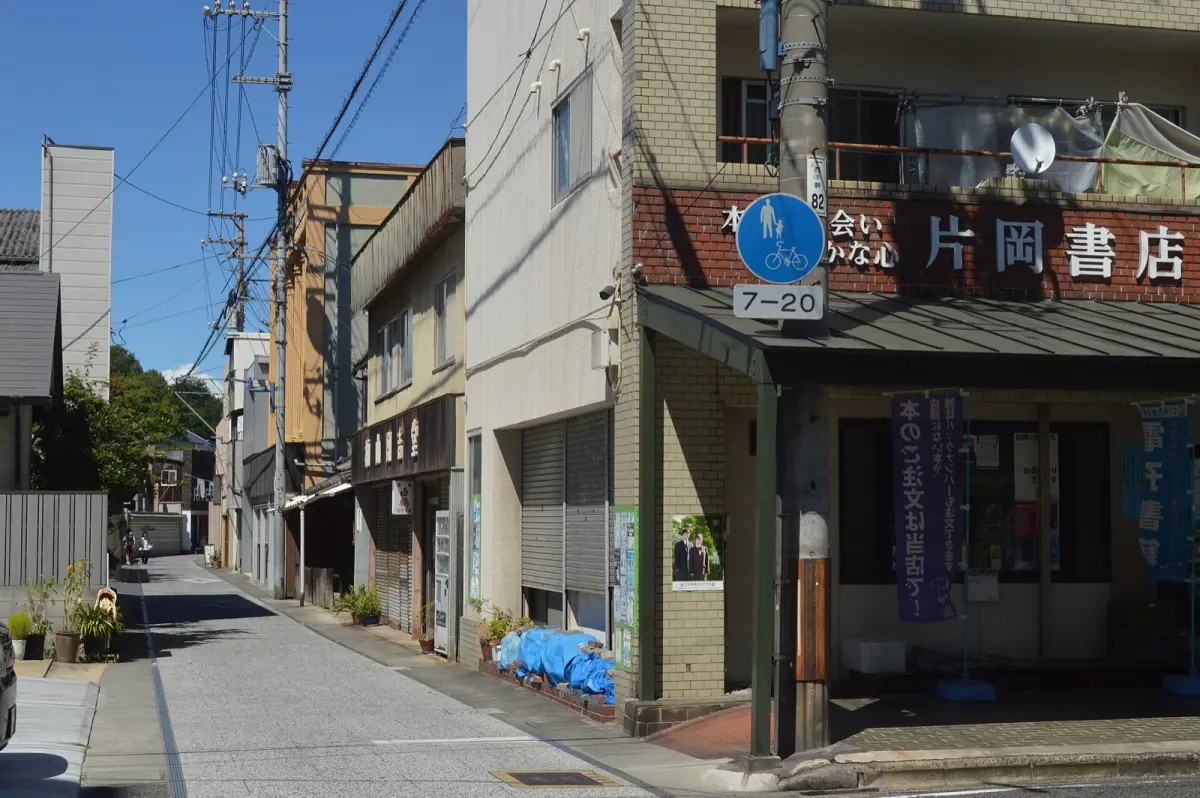
Kojima Jeans Street
Kojima Jeans Street is the birthplace of Japanese denim, a street lined with indigo workshops and denim shops. The craft that began here in the postwar years now defines a global aesthetic.
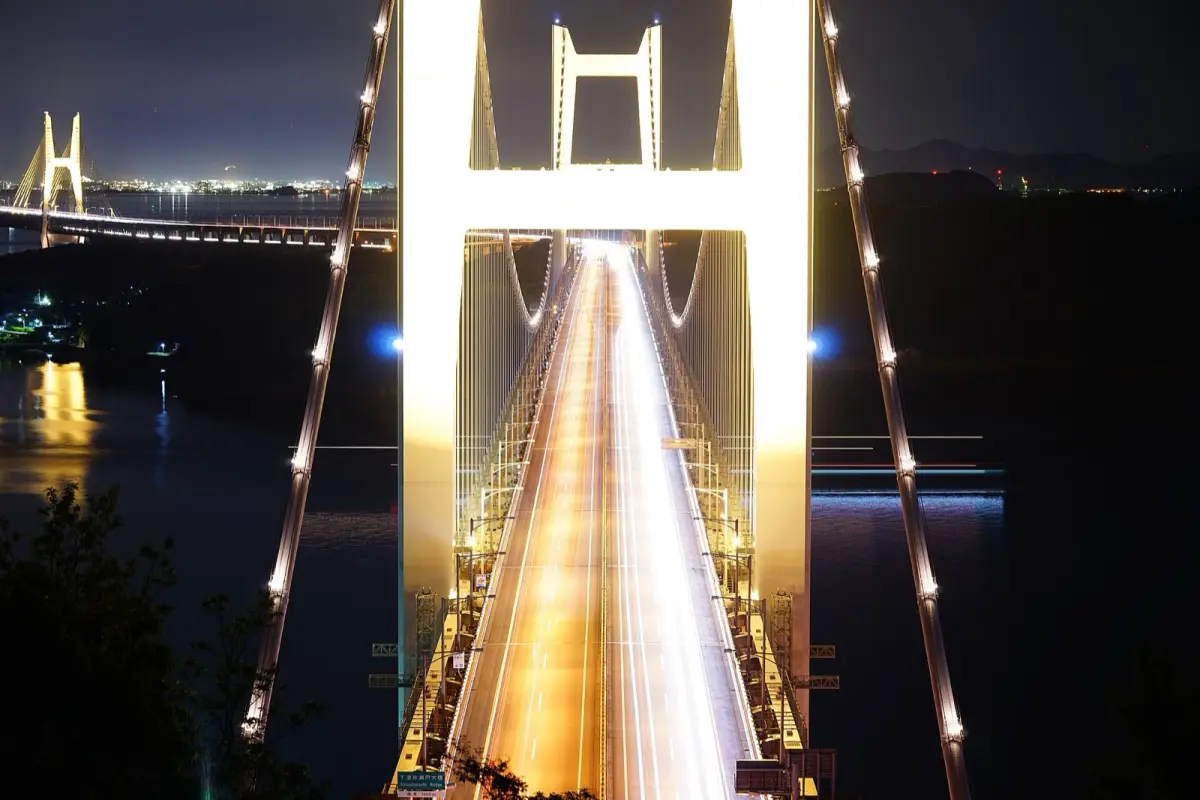
Washuzan Viewpoint
Washuzan is a low headland looking over the island-strewn Inland Sea and the vast Seto Ohashi bridge. The view is especially fine at sunset, when the steel and water turn gold.
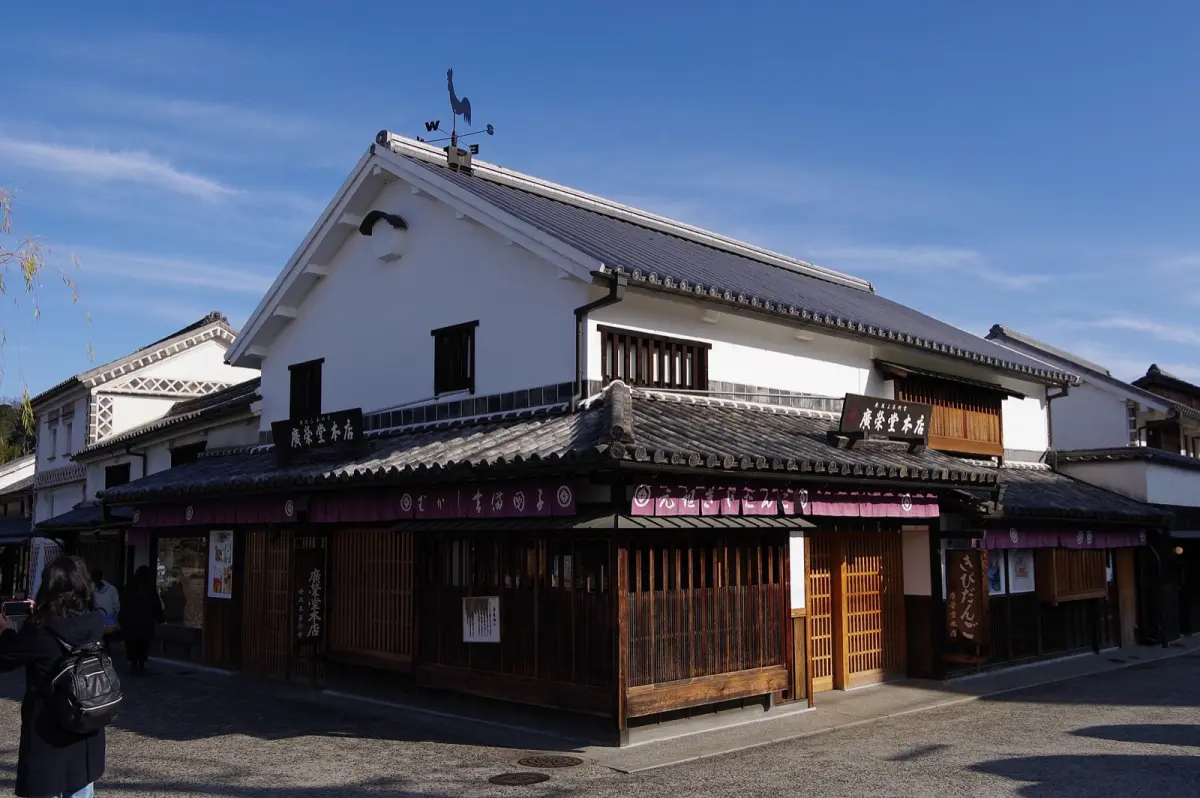
Kibi Dango
Kibi dango are soft millet dumplings, Okayama's Momotaro souvenir. The shop Koeido has made them since 1856, wrapping each in a slip of paper printed with the peach-boy hero.
Crafts of this region
Authentic pieces made near here — learn the story, then bring one home.
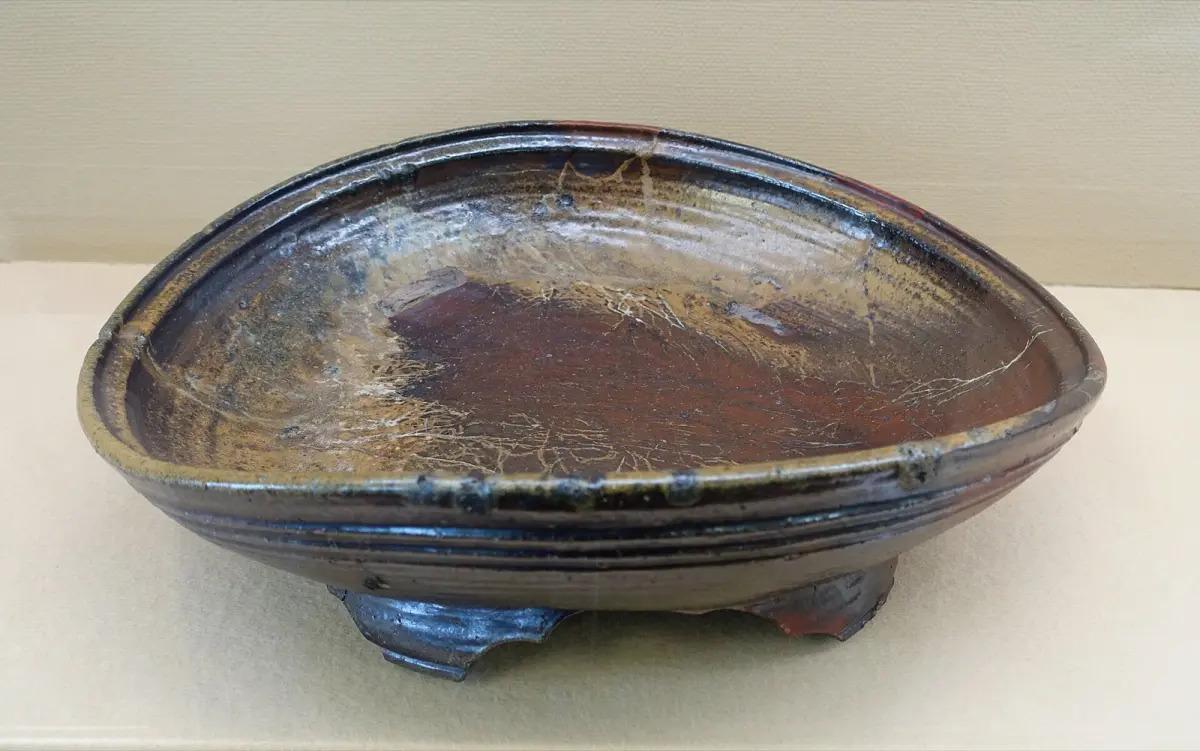 Bizen Ware
備前焼 · Bizen, Okayama
Bizen Ware
備前焼 · Bizen, Okayama
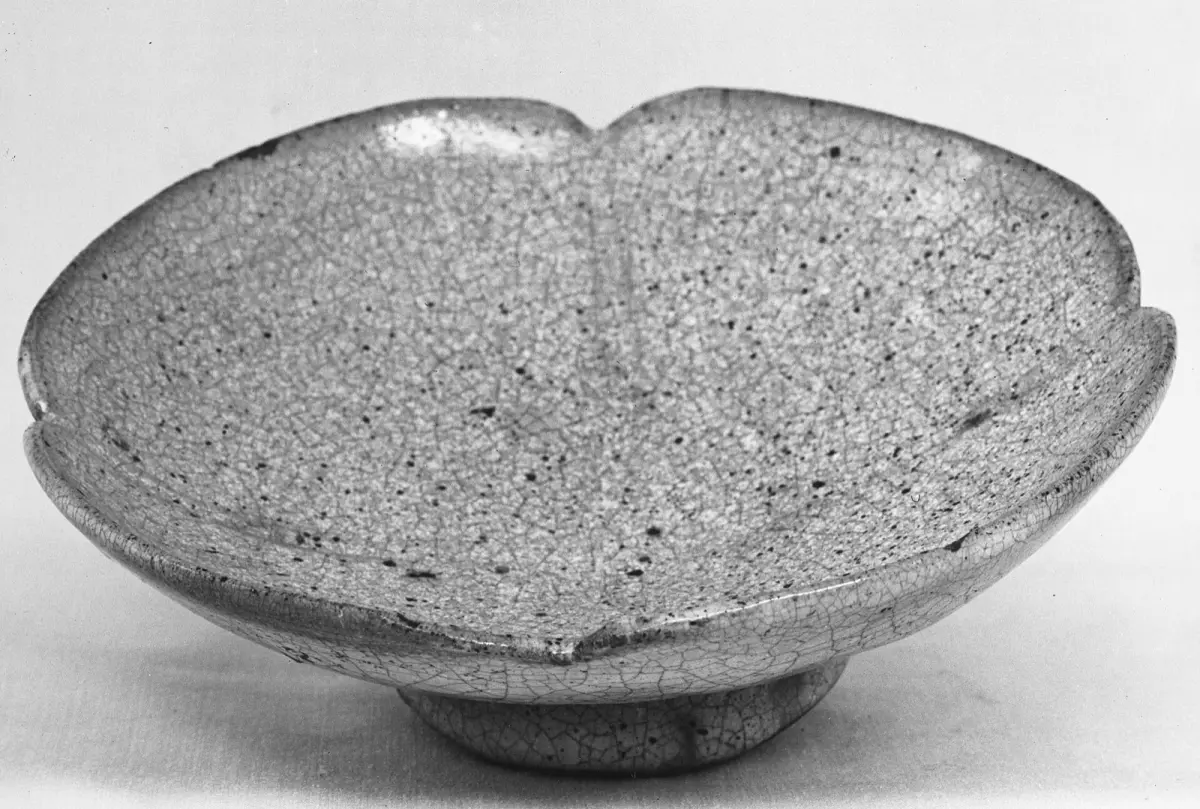 Hagi Ware
萩焼 · Hagi, Yamaguchi
Hagi Ware
萩焼 · Hagi, Yamaguchi
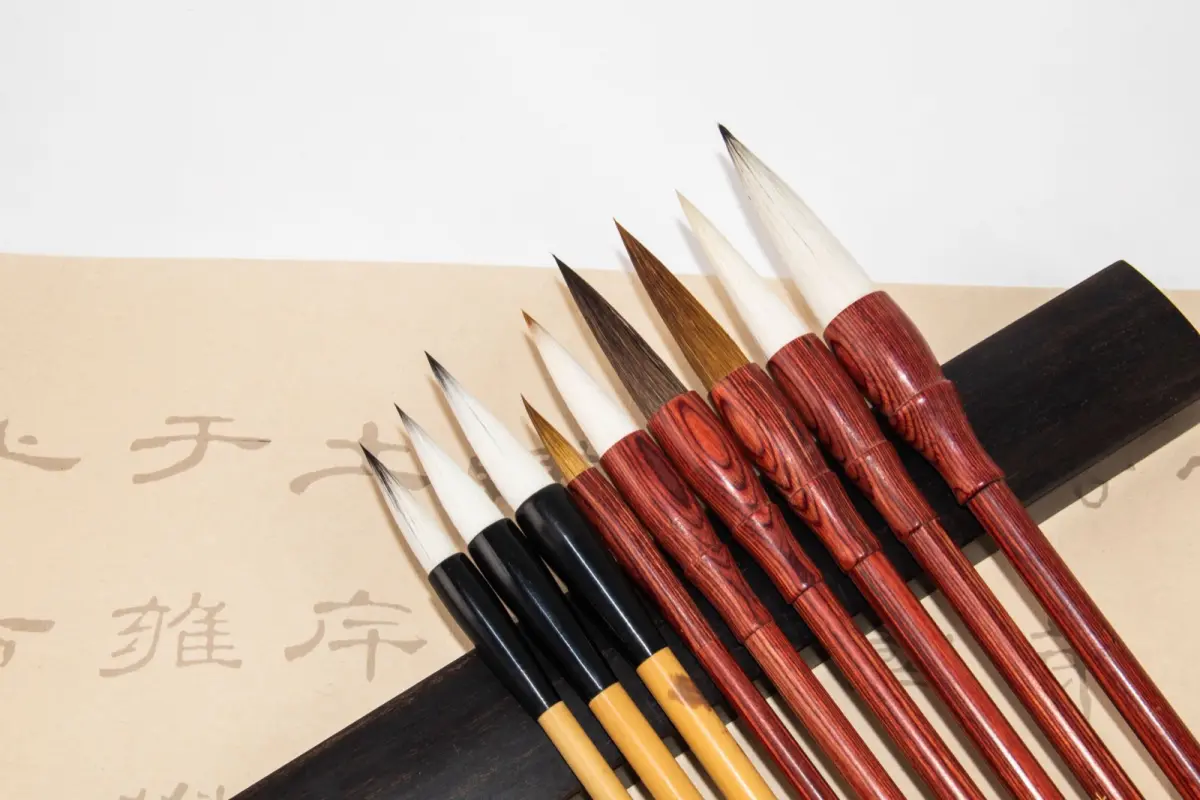 Kumano Brushes
熊野筆 · Kumano, Hiroshima
Kumano Brushes
熊野筆 · Kumano, Hiroshima
 Sekishu Washi
石州和紙 · Hamada, Shimane
Sekishu Washi
石州和紙 · Hamada, Shimane