What Are Japanese Chopsticks? A Beginner's Guide to Hashi Culture
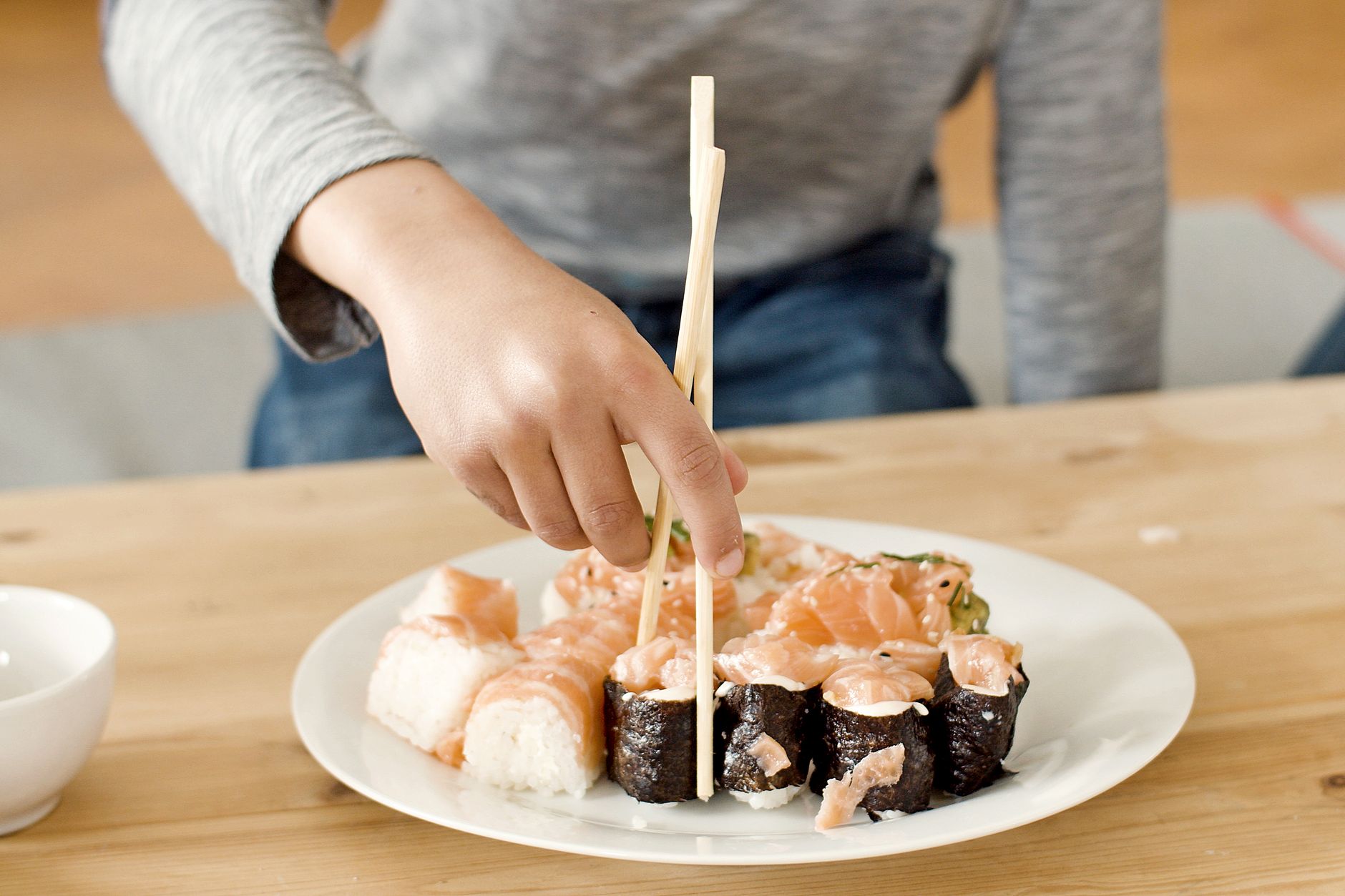
They're not just utensils — they're an extension of your hand, a bridge between you and your meal.
Japanese chopsticks, or *hashi*, are shorter and more delicate than their Chinese or Korean counterparts. Typically 20–23 cm long, they taper to a fine point, designed for the precision needed to lift a single grain of rice, peel apart flaky fish, or gently pick up a piece of simmered vegetable without crushing it.
The difference isn't arbitrary. It reflects the Japanese meal itself: smaller portions, intricate arrangements, dishes meant to be savored slowly. The pointed tip allows you to navigate bones in grilled fish or tease apart tempura batter without disturbing the shape. The shorter length brings your hand closer to the bowl — a gesture of intimacy, of paying attention.
Historically, chopsticks were introduced to Japan from China over a thousand years ago, but they evolved in distinctly Japanese ways. While early versions were joined at the top like tweezers and used in religious ceremonies, the separated pair we know today became an everyday tool by the Nara period. Over time, craftspeople began carving them from regional woods — hinoki cypress, cherry, ebony — and finishing them with lacquer that could last decades.
What makes them particularly Japanese is this: the care taken in their making, and the care expected in their use. There's an etiquette, yes, but beneath it is a philosophy — that how you hold your chopsticks, how you set them down, even how you rest them on the *hashioki* (chopstick rest) between bites, is a form of respect. For the food. For the maker. For the moment.
They teach you to slow down.
The Distinctive Design of Japanese Chopsticks
- Japanese chopsticks (hashi) are shorter and more tapered than Chinese or Korean styles, typically 20-23 cm for adults
- The pointed tips allow precision when handling delicate foods like fish bones, rice grains, and small pickles
- Materials range from lacquered wood and bamboo to high-grade natural woods like cherry, zelkova, and ebony
- Many feature urushi (lacquer) finishes that protect the wood and add subtle beauty through layered craftsmanship
Chopsticks as Cultural Objects, Not Just Utensils
- In Japan, chopsticks are deeply personal—families often have individual pairs, and sharing is uncommon
- They mark life milestones: babies receive their first chopsticks at 100 days old (okuizome ceremony)
- Chopsticks connect to Shinto and Buddhist values of respect, gratitude, and mindfulness during meals
- Regional styles reflect local craft traditions—Wakasa-nuri from Fukui, Tsugaru-nuri from Aomori, Wajima-nuri from Ishikawa
Basic Chopstick Etiquette Every Beginner Should Know
- Never stick chopsticks upright in rice—this resembles a funeral ritual and is considered deeply disrespectful
- Avoid passing food chopstick-to-chopstick, as this also echoes funeral customs (bone-passing after cremation)
- Rest chopsticks on a hashioki (chopstick rest) when not in use, never across your bowl
- Use the opposite (clean) end of your chopsticks when taking food from shared dishes
FAQ
Explore the crafts we feature →