How to Whisk Matcha Properly: A Beginner's Guide to the Traditional Japanese Method
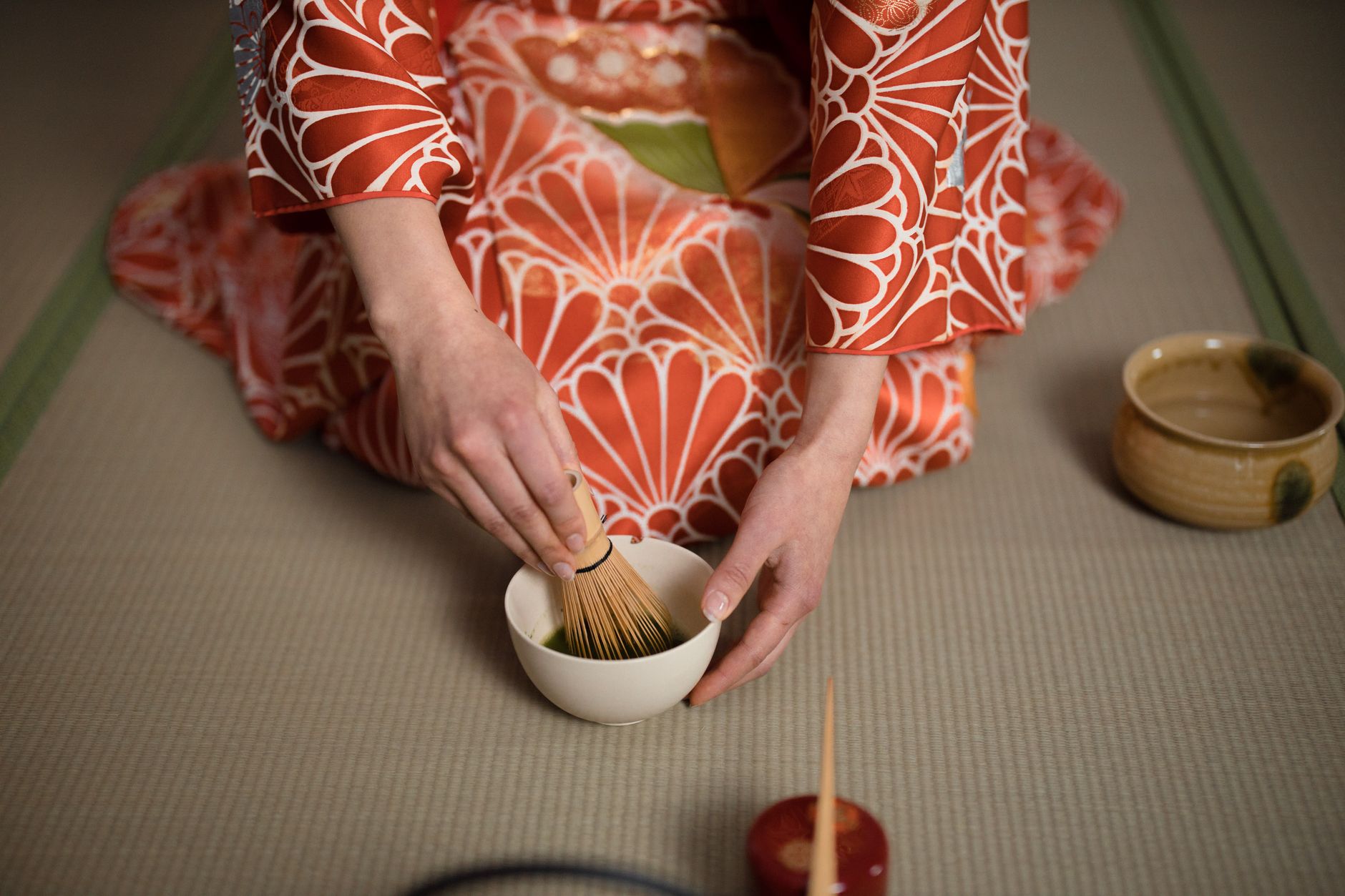
Most beginners assume matcha that clumps or tastes bitter means they bought the wrong tin. Far more often, it's the whisking. Matcha is not steeped like a tea bag. It is a powder of stone-ground green tea leaf, and to taste it properly you have to coax it into the water rather than simply stir it in.
The tool that does this is the chasen, a whisk carved from a single length of bamboo into dozens of slender tines. Its job is not to mix but to aerate, breaking up every clump and lifting the suspension into a soft, even foam. That foam is more than decoration. It tells you the leaf and water have fully come together, which is what gives a well-prepared bowl its rounded, almost creamy texture.
The motions are simpler than they look. Sift the powder first so it dissolves cleanly. Add water that has come off the boil and cooled slightly, never fully boiling, which can scorch the leaf and sharpen the bitterness. Then whisk briskly from the wrist, tracing a quick W or M shape rather than a circle, keeping the whisk near the surface where it can pull in air. Within fifteen or twenty seconds the surface should turn pale and frothy.
In the tea ceremony, this small act carries centuries of attention behind it. You do not need a tatami room or a lifetime of training to honor that spirit. You only need to slow down enough to notice the bowl in your hands.
Why Matcha Is Whisked, Not Steeped
- Unlike most teas, matcha is a fine powder of stone-ground green tea leaf, so you consume the whole leaf rather than an infusion strained away from it.
- Because the powder does not dissolve, it must be suspended in water through whisking, which keeps the particles evenly distributed in the bowl.
- This is why a spoon alone leaves clumps and grit, while a proper whisk produces a smooth, integrated drink with a soft foam on top.
The Tools and Preparation
- The traditional whisk is the chasen, carved from a single piece of bamboo into dozens of fine tines designed to aerate rather than simply stir.
- A wide, flat-bottomed bowl, or chawan, gives the whisk room to move and the foam space to form.
- Sift one to two small scoops of matcha through a fine strainer before adding water to break up clumps in advance.
- Use water that has come off the boil and cooled slightly, around 70 to 80 degrees Celsius, since fully boiling water can scorch the leaf and heighten bitterness.
The Whisking Motion Step by Step
- Pour a small amount of the hot water over the sifted powder and, if you like, make a smooth paste first to eliminate any remaining lumps.
- Hold the chasen lightly and whisk from the wrist, not the whole arm, keeping your forearm relaxed.
- Trace a quick back-and-forth W or M shape across the surface rather than a circular stir, which builds far more foam.
- Keep the tines near the surface of the liquid so they pull in air, and after roughly fifteen to twenty seconds a fine, pale foam should appear.
- Finish by drawing the whisk slowly across the top and lifting it straight out to leave the surface even.
FAQ
Explore the crafts we feature →