What Is Satsuma Kiriko? The Lost Art of Kagoshima Cut Glass
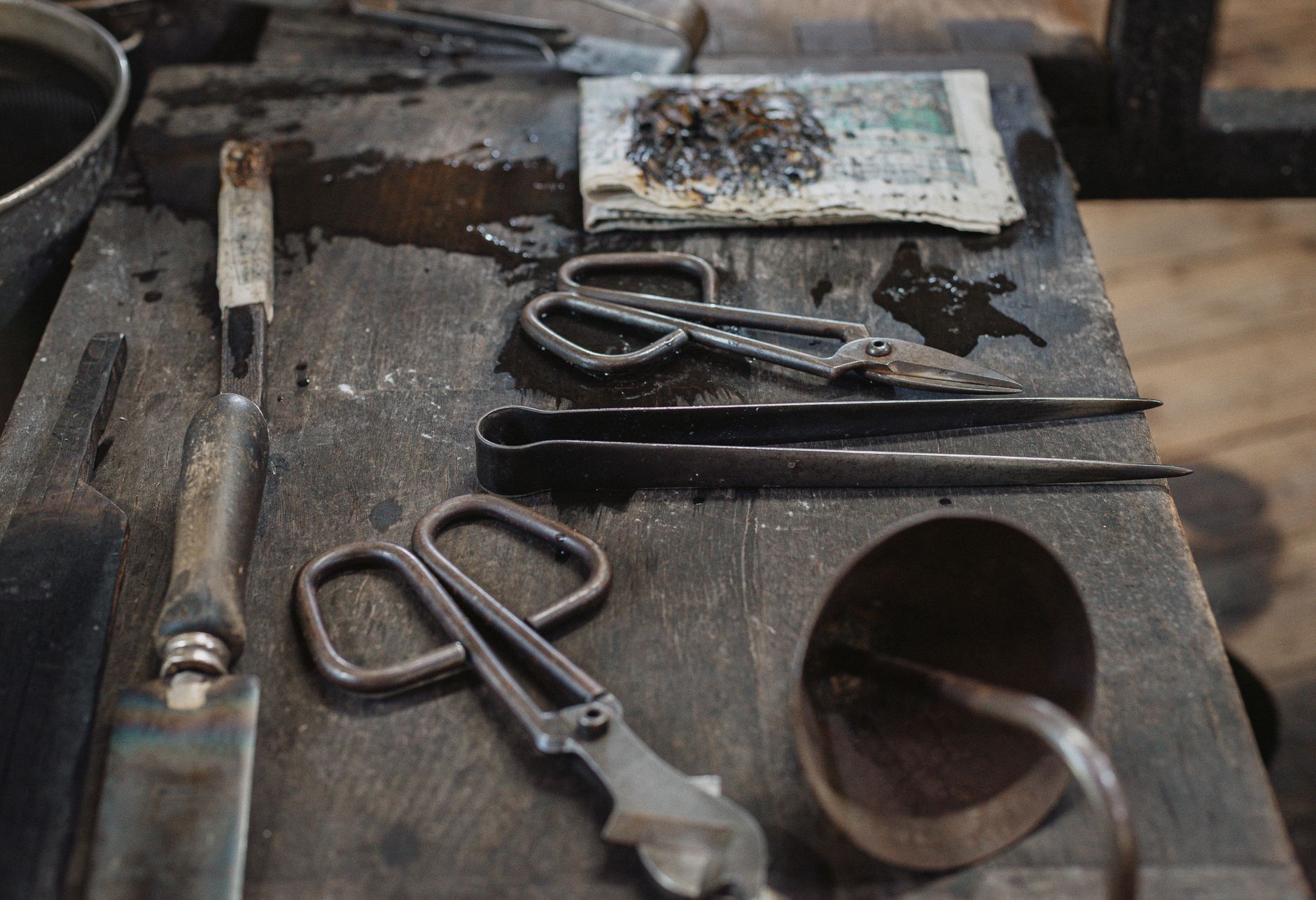
A crystal glass that vanished for a century — then returned from memory.
Satsuma Kiriko is one of Japan's most dramatic craft stories. Born in the 1850s in Kagoshima, at the southern tip of Japan, this cut glass was made under the patronage of the Shimazu clan during the final years of the samurai era. Unlike the delicate transparency of Edo Kiriko, Satsuma Kiriko is known for its thick colored overlay — deep crimson, cobalt blue, violet — cut away in geometric patterns to reveal brilliant crystal beneath.
The craft was astonishingly short-lived. It flourished for barely 30 years before the glassworks were destroyed during the Satsuma Rebellion in 1877. The artisans scattered. The techniques were lost. For over a century, Satsuma Kiriko existed only in museum fragments and fading records.
Then, in 1985, a small group of glassmakers in Kagoshima began the painstaking work of revival. With no living masters to learn from, they studied surviving pieces under microscopes, analyzed the chemistry of the glass, and tested hundreds of cutting angles. They had to rediscover not just how to cut, but how to create that signature layered glass itself — a formula that had died with its makers.
Today, authentic Satsuma Kiriko is still rare, still made by hand in small workshops in Kagoshima. Each piece carries the weight of that interruption — a craft that had to be remembered back into existence. When you see one, you're looking at both an object and an act of cultural archaeology.
Some traditions flow unbroken. Others must be rebuilt, fragment by fragment, from silence.
The Origins and Rediscovery of Satsuma Kiriko
- Born in the 1850s under the Shimazu clan in Kagoshima (former Satsuma domain)
- Lost after the Satsuma Rebellion (1877) and forgotten for over a century
- Revived in 1985 through painstaking research of surviving fragments
- Today produced by a small number of artisans in Kagoshima Prefecture
What Makes Satsuma Kiriko Unique: Technique and Aesthetics
- Layered colored glass (iro-kiriko) with thick overlay—creating gradients when cut
- Deep, bold cuts (atsugire) that reveal multiple color depths and soft transitions
- Traditional motifs: fish roe (nanako), hemp leaf (asanoha), tortoiseshell (kikko)
- Heavier and more saturated in color compared to Edo Kiriko's delicate precision
Satsuma Kiriko in Japanese Culture and Today
- Originally a symbol of samurai prestige and regional pride in southern Japan
- Designated a Traditional Craft of Kagoshima Prefecture
- Rare and labor-intensive: each piece takes days to weeks to complete
- Appreciated as art objects, gifts for diplomacy, and living heritage
FAQ
Explore the crafts we feature →