What Is Matcha? The Story Behind Japan's Iconic Powdered Green Tea
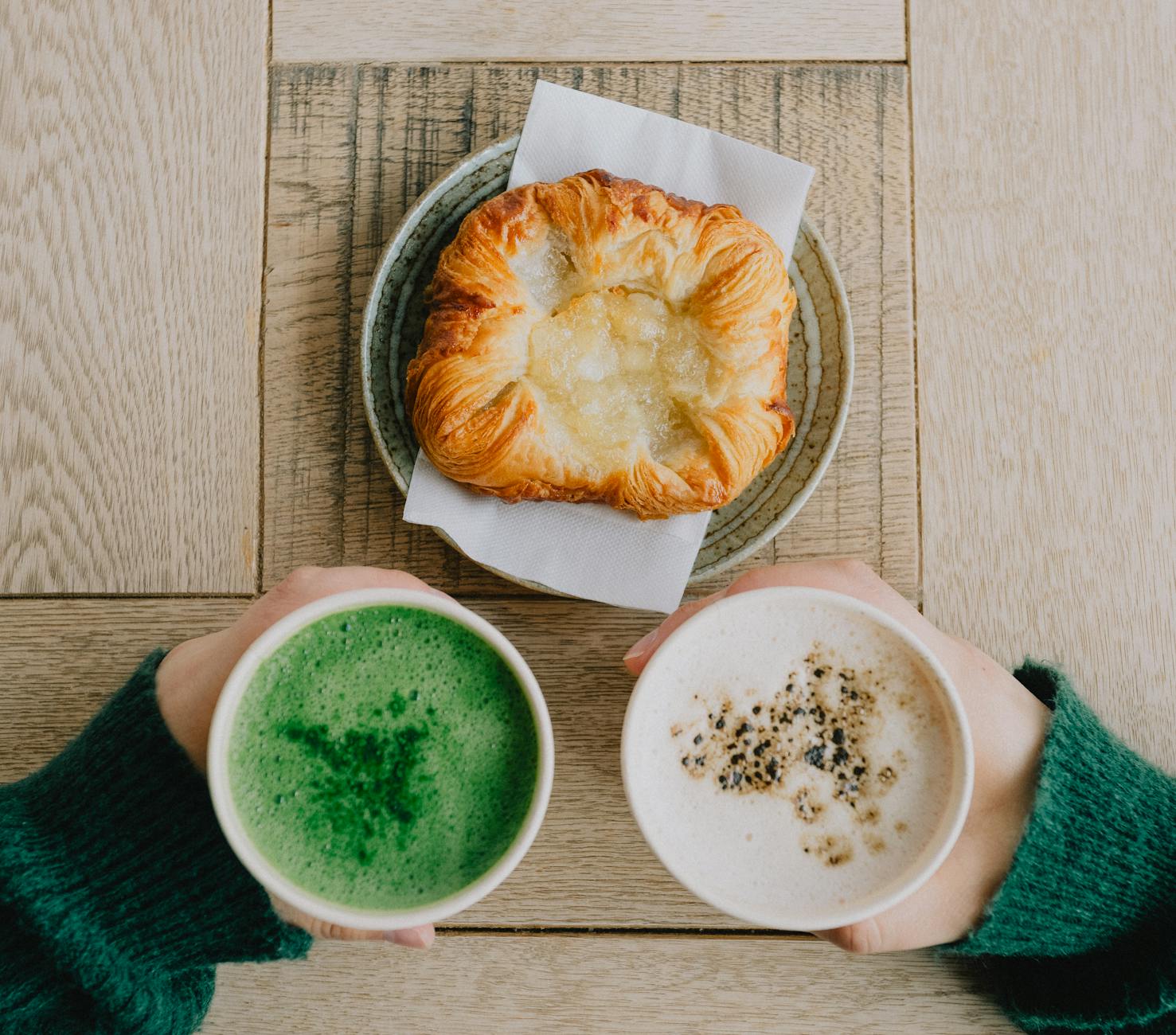
That brilliant green powder whisking into foam isn't just tea—it's an entire philosophy suspended in water.
Matcha is what happens when you choose presence over convenience. Unlike steeped tea, where leaves are discarded, matcha is stone-ground whole tea leaves, turned into the finest powder imaginable. When you drink it, you consume the entire leaf—nothing is left behind.
The leaves destined for matcha live their final weeks in shade. Farmers drape the tea fields in black mesh, blocking up to 90% of sunlight. The plants respond by flooding their leaves with chlorophyll, desperately reaching for what little light remains. This is what creates that luminous green and the rich, almost savory sweetness called umami.
After harvest, leaves are steamed, dried, and stripped to their pure essence—no stems, no veins. Then comes the grinding: granite stones turning at just 30 rotations per minute, so slow that a single stone mill produces only 40 grams in an hour. Too fast, and friction would scorch the leaves. This patience is intentional.
In the 16th century, Sen no Rikyū built an entire ceremony around this powder—not because matcha was rare, but because the act of preparing it demanded your full attention. The measuring, the sifting, the whisking in a precise W-motion. Every gesture a small meditation.
Today, matcha appears in lattes and desserts worldwide, but at its heart, it remains what it's always been: an invitation to slow down. To notice the foam. To taste the shade. To be, for a moment, completely where you are.
What Is Matcha and How Is It Different from Regular Green Tea?
- Matcha is stone-ground powdered green tea made from shade-grown leaves, consumed whole rather than steeped
- Unlike loose-leaf tea, you ingest the entire leaf, resulting in higher caffeine and nutrient concentration
- The shading process (20-30 days before harvest) boosts chlorophyll and L-theanine, creating matcha's vivid green color and umami flavor
- Only specific cultivars like Yabukita, Samidori, and Okumidori are used for quality matcha production
The Cultural Roots of Matcha in Japanese Tea Ceremony
- Introduced to Japan by Zen monk Eisai in 1191, matcha became central to spiritual practice and meditation
- The Japanese tea ceremony (chanoyu) elevated matcha preparation into a choreographed ritual emphasizing mindfulness, respect, and simplicity
- Sen no Rikyū (16th century) codified the principles of wabi-sabi aesthetics that still define tea ceremony today
- Matcha's role extends beyond beverage—it represents harmony (wa), respect (kei), purity (sei), and tranquility (jaku)
How Matcha Is Made: From Shade to Stone Mill
- Tea plants are covered with shade structures to limit sunlight, forcing leaves to produce more chlorophyll and amino acids
- Only the youngest, most tender leaves (first or second flush) are hand-picked in spring
- Leaves are steamed immediately to halt oxidation, then dried and stripped of stems and veins to become 'tencha'
- Tencha is ground between slow-turning granite millstones—a process so gradual it takes one hour to produce just 30-40 grams of matcha
FAQ
Explore the crafts we feature →