Why Japanese Zen Gardens Use Raked Gravel: The Meaning Behind Karesansui
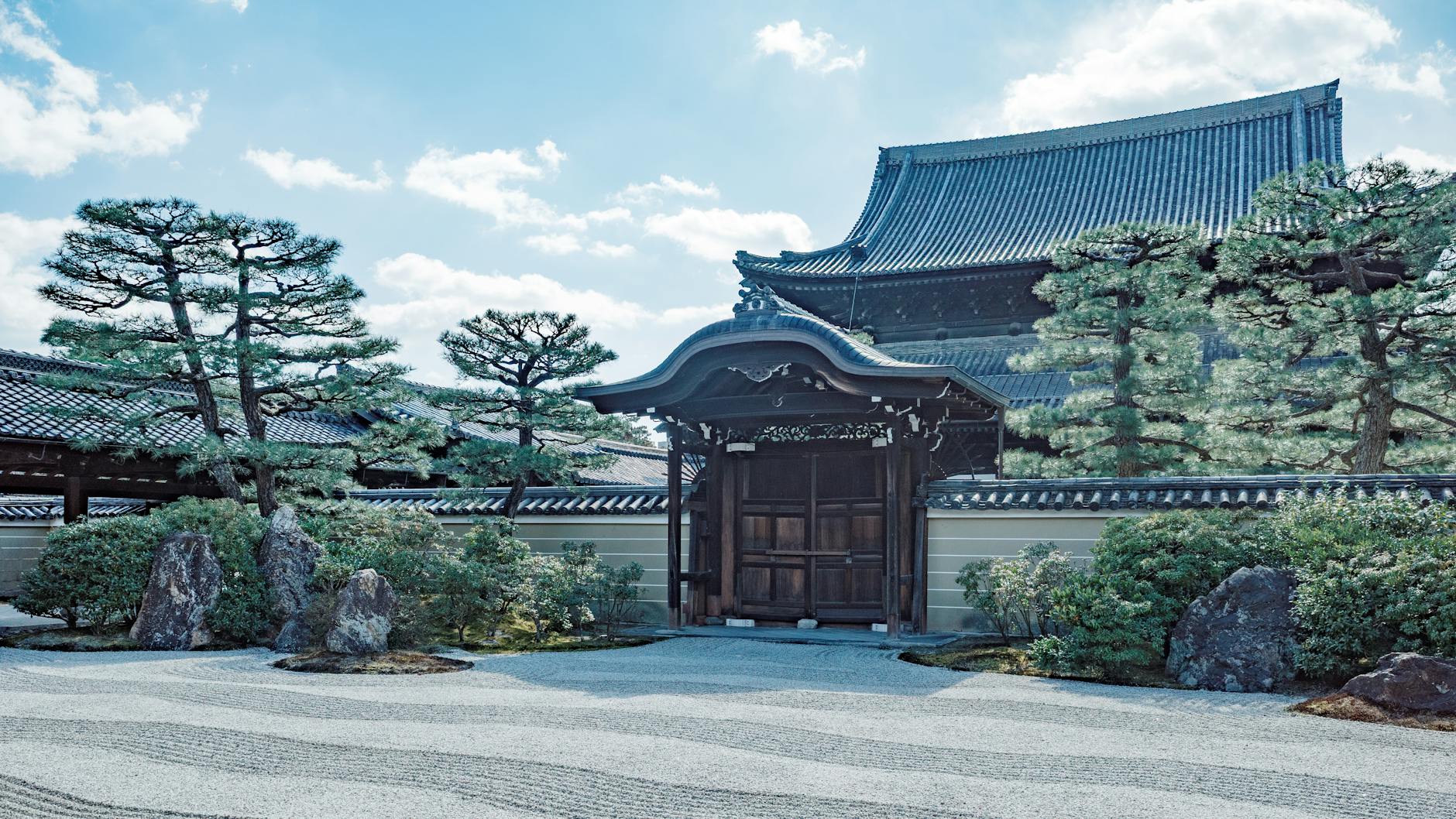
Those perfectly raked lines aren't decoration—they're water frozen in time.
In Japanese Zen gardens, or *karesansui* (dry landscape), gravel becomes the ocean without a single drop. Monks rake careful patterns into white stone, creating ripples that flow around larger rocks like currents around islands. The practice began in Kyoto's temples during the 14th century, when Zen Buddhism taught that nature's essence could be captured through extreme simplicity.
But here's what most visitors miss: the raking itself is the point.
Each morning, a monk walks the garden with a wooden rake, erasing yesterday's lines and drawing new ones. The motion is meditative—slow, rhythmic, deliberate. Your mind empties as your hands move. The garden becomes both the teacher and the student. You're not creating art to preserve; you're practicing presence through an act you'll undo tomorrow.
The gravel also serves a practical poetry. In a country where water means life—rice fields, rivers, the surrounding sea—a waterless garden becomes a koan, a riddle for the mind. How can stones flow? How can stillness move? The raked lines ask you to see what isn't there, to find the ocean in absence.
Stand quietly beside a karesansui, and you might notice: the patterns never repeat exactly. Each day's lines are subtly different, like no wave is ever the same. The garden teaches what Zen masters have always known—permanence is an illusion, and peace lives in accepting the temporary nature of all beautiful things.
Even perfectly raked gravel.
What Is Karesansui? Understanding the Dry Landscape Garden
- Karesansui (枯山水) literally means 'dry mountain water'—a garden style using rocks and gravel instead of actual water
- Emerged during the Muromachi period (14th-16th century) at Zen Buddhist temples in Kyoto
- Designed as spaces for monks to practice meditation and contemplate Buddhist teachings
- Famous examples include Ryōan-ji Temple's rock garden and Daisen-in's dry waterfall
The Symbolic Purpose of Raked Gravel in Zen Gardens
- Gravel represents flowing water—rivers, oceans, or mist—without using actual liquid elements
- Raking patterns evoke ripples, waves, or currents, creating a sense of movement and impermanence (mujō)
- The act of raking itself becomes a meditative practice, requiring focus and mindfulness
- White or light-colored gravel reflects sunlight, changing appearance throughout the day to suggest the passage of time
How Raking Transforms Gravel Into a Meditation Tool
- Monks rake daily, often in the early morning, as a form of moving meditation (samu—working practice)
- Different patterns carry meaning: concentric circles suggest ripples; parallel lines evoke still water or raked fields
- The repetitive motion quiets the mind and cultivates presence, embodying Zen principles of simplicity and discipline
- Viewing the finished patterns encourages contemplation—the eye follows lines, the mind settles, distractions fade
FAQ
Explore the crafts we feature →