Why Japanese Chopsticks Are Pointed: The Design Behind the Tip
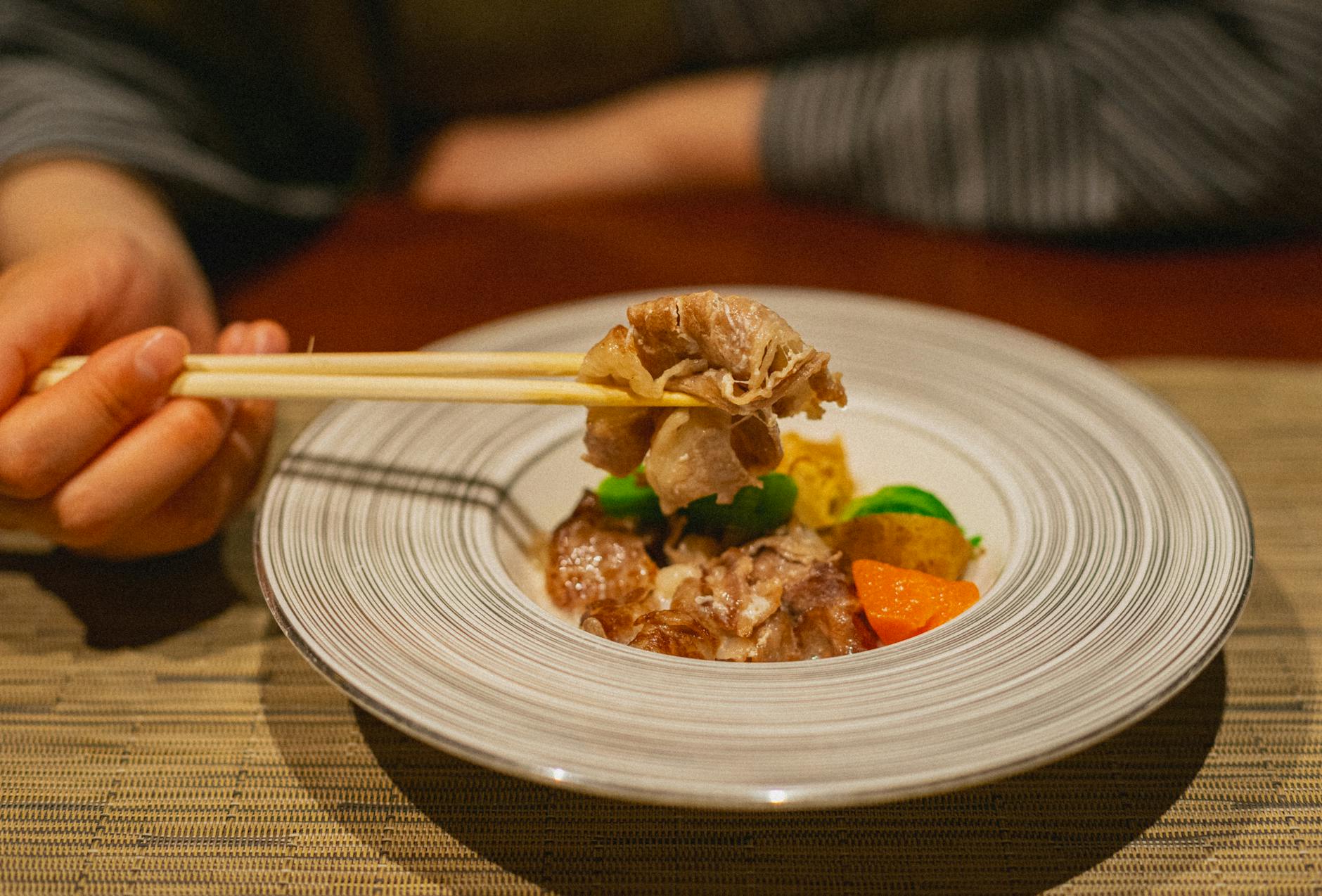
Pick up a pair of Japanese chopsticks and you may notice something subtle: the tips narrow to a fine, almost needle-like point. Set them beside chopsticks from China or Korea and the difference becomes clear. Chinese chopsticks tend to be longer with blunter ends, while Korean ones are often flat and metal. Japanese chopsticks, by contrast, are usually shorter and taper sharply.
Why? The answer lives in the food. Japanese cuisine leans heavily on fish, much of it served whole or grilled with the bones intact. A pointed tip lets the diner lift out tiny bones, separate flaky flesh, and handle delicate morsels of tofu, pickles, and rice with quiet precision. The shape follows the meal.
Chopsticks, called hashi, are believed to have reached Japan from China around the 6th to 7th century, initially in ritual and court settings. Over the centuries, as a distinctly Japanese table culture developed around individually served portions and seafood, the tools evolved too. They grew shorter, lighter, and sharper at the working end. Lacquer, applied for both beauty and durability, became common.
There is something worth pausing on here. A point is easy to overlook, yet it records a whole way of eating: the respect for whole ingredients, the attention to detail, the idea that a single person's pair of chopsticks is personal. The next time you hold a pair, look at the tip. It has been refined by countless ordinary meals.
A Tip That Stands Apart
- Japanese chopsticks (hashi) are known for tapering to a fine, narrow point at the working end.
- Compared regionally, Chinese chopsticks are often longer with blunter tips, and Korean chopsticks are frequently flat and made of metal.
- The pointed Japanese tip is a functional choice, not merely an aesthetic flourish.
Shaped by the Food on the Table
- Japanese cuisine relies heavily on fish, much of it served whole or grilled with bones still in place.
- A sharp tip allows diners to lift out small bones and separate flaky, delicate flesh cleanly.
- The same precision helps handle soft tofu, pickles, individual grains of rice, and slippery noodles.
How the Shape Evolved Over Centuries
- Chopsticks are believed to have reached Japan from China around the 6th to 7th century, first in ritual and court contexts.
- As a distinct Japanese table culture formed around individually served portions and seafood, the tools were refined to be shorter and sharper.
- Lacquer was commonly applied for durability and beauty, and a personal pair became standard for each diner.
FAQ
Explore the crafts we feature →