Matcha vs Green Tea: Understanding the Differences Beyond the Powder
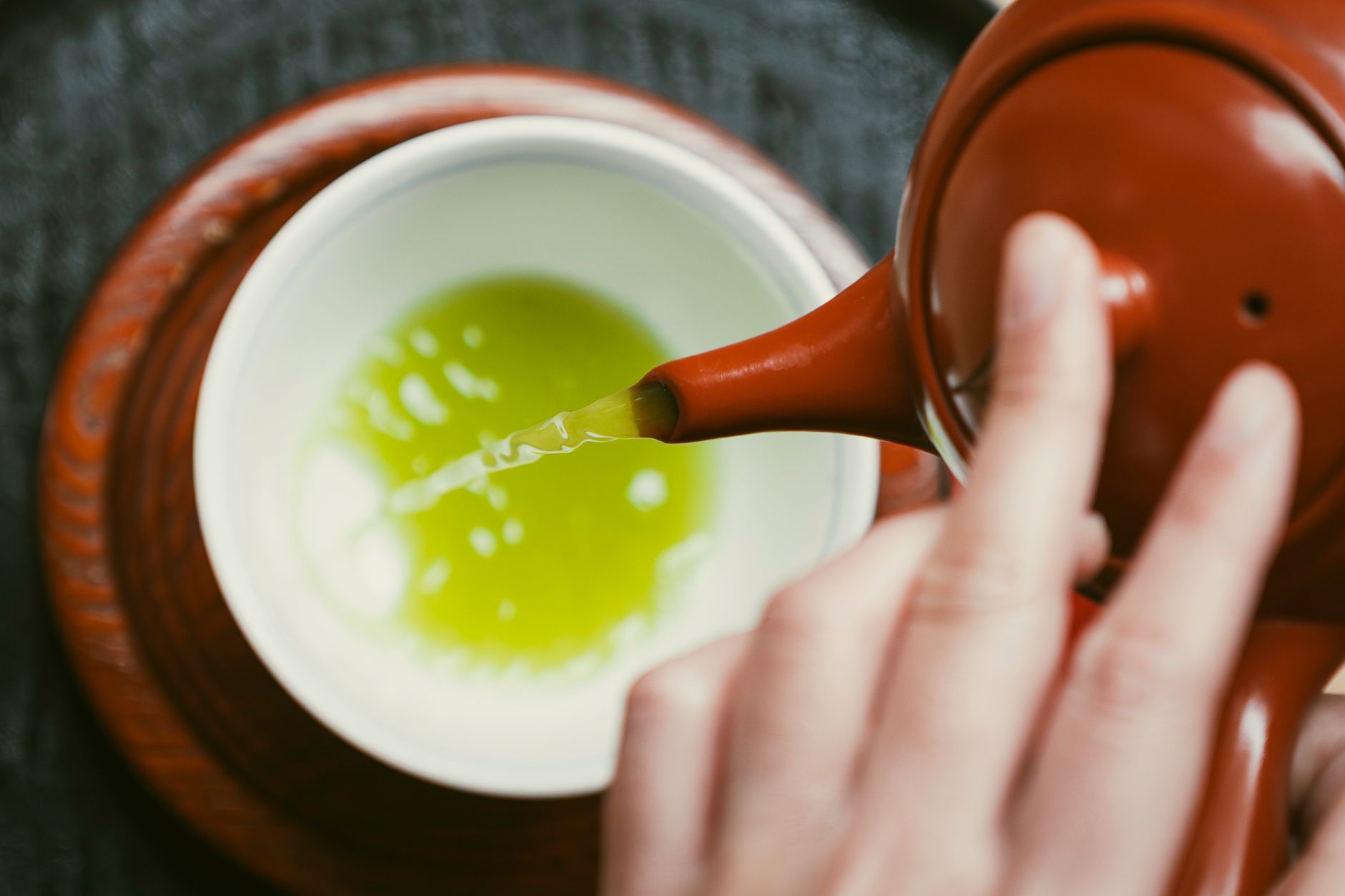
The question isn't which is better—it's how differently the same leaf can speak.
Both matcha and regular green tea come from Camellia sinensis, the same plant that has shaped Japanese ritual and quiet moments for centuries. But their paths diverge long before they reach your cup.
Regular green tea—sencha, for example—grows under open sky. The leaves are plucked, steamed to halt oxidation, rolled, and dried. You steep them in water, sip the infusion, and discard what remains. You're drinking the shadow of the leaf.
Matcha takes a more intentional route. About three weeks before harvest, farmers shade the tea plants with bamboo screens or tarps, filtering the sunlight. Deprived of direct sun, the leaves produce more chlorophyll and L-theanine—the compound behind matcha's vibrant green and its signature calm-alert feeling. After harvest, only the finest leaves are selected, steamed, dried, and stone-ground into a fine powder. The stems and veins are removed entirely.
When you prepare matcha, you don't steep—you whisk the powder directly into water. You're not extracting; you're suspending. You consume the whole leaf, which means more concentrated flavor, caffeine, and nutrients in a single bowl.
This is why matcha has always held a ceremonial place. It asks for attention. It asks you to slow down and whisk with intention. Regular green tea is everyday comfort. Matcha is presence.
Both are beautiful. Both are green tea. But one invites you to witness the leaf from the outside. The other asks you to take it in, completely.
How Matcha and Green Tea Are Grown and Processed
- Shade-growing: Matcha plants are covered 20-30 days before harvest, increasing chlorophyll and amino acids; regular green tea grows in full sun
- Leaf selection: Only the youngest, most tender leaves become matcha; green tea uses a wider range of leaf grades
- Processing method: Matcha leaves are steamed, dried, de-stemmed, then stone-ground into fine powder; green tea leaves remain whole after steaming and drying
- Labor intensity: One hour of grinding produces only 30-40 grams of matcha powder, making it significantly more time-intensive than standard tea production
The Preparation Ritual: Whisking vs Steeping
- Consumption method: Matcha powder is whisked directly into water and fully consumed; green tea leaves are steeped and discarded
- Traditional tools: Matcha requires a bamboo whisk (chasen), tea bowl (chawan), and scoop (chashaku); green tea needs only a teapot or cup
- Water temperature: Matcha uses 70-80°C water to preserve delicate flavors; green tea varies by type, typically 60-85°C
- Ceremonial context: Matcha preparation forms the foundation of Japanese tea ceremony (chanoyu); green tea is typically enjoyed more casually
- Taste profile: Matcha offers concentrated umami sweetness with vegetal notes and a creamy mouthfeel; green tea tends toward lighter, more astringent, grassy flavors
- Caffeine content: Matcha contains 60-80mg per serving versus 20-40mg in steeped green tea, due to consuming the entire leaf
- Nutrient absorption: Because you ingest the whole leaf, matcha delivers significantly higher levels of antioxidants, L-theanine, and chlorophyll
- Visual appearance: Matcha creates an opaque, jade-green suspension with foam; green tea produces a clear, pale yellow-green infusion
FAQ
Explore the crafts we feature →