Exploring The World Of Japanese Bamboo Crafts: A Beginner's Guide
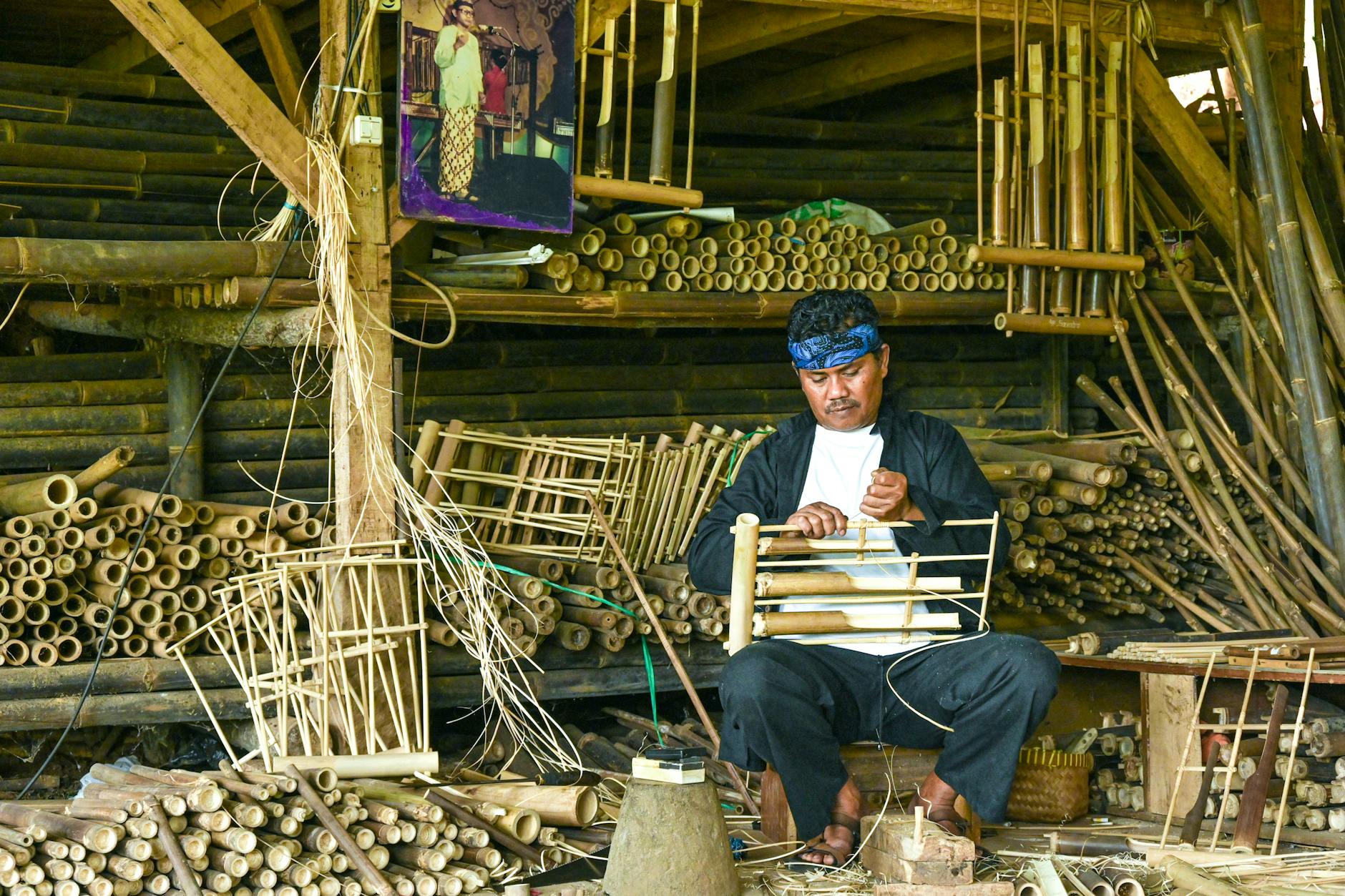
The bamboo splits with a whisper, not a crack—because the craftsman knows exactly where the fiber wants to go.
Japanese bamboo craft, or *takezaiku*, begins long before the weaving. It starts in the forest, where artisans select bamboo at just the right age—typically three to five years old. Too young, and it's weak. Too old, and it loses flexibility. Once harvested, the bamboo is dried, sometimes for years, until it reaches a honey-gold color and a strength that rivals steel by weight.
Then comes the splitting. Using nothing but a small blade and decades of muscle memory, a craftsman can split a single stalk into impossibly thin strips—some as fine as thread. Each strip is shaved, beveled, and sorted by thickness. Only then does the weaving begin.
What makes Japanese basketry so distinct is *mutsume-ami* and *yotsume-ami*—the six-plaited and four-plaited weaves that create geometric perfection without a single measurement. The basket grows from the bottom up, the rhythm hypnotic, each strip locking into place with a soft tick. No glue. No nails. Just tension, balance, and intention.
These baskets were never meant to be precious. They carried rice. They held tea utensils. They hung from the belts of farmers and monks. But in their utility, they became poetry—lightweight, breathable, nearly indestructible, and more beautiful with age.
Today, only a few hundred artisans in Japan still practice this craft at the highest level. What they make are not objects. They are arguments—quiet, stubborn arguments—that slowness has value, that materials have memory, and that human hands, even now, can make something a machine never could.
Next time you see a woven basket, look closer. You're not looking at a container. You're looking at a conversation between a person and a plant, carried on for centuries.
The History and Cultural Significance of Bamboo in Japan
- Bamboo's abundance and versatility made it essential to daily life for over 10,000 years
- From Jomon period utility to Edo period tea ceremony refinement
- Bamboo's symbolism: resilience, flexibility, and spiritual purity in Japanese philosophy
- The transition from folk craft to recognized art form in the 20th century
Traditional Techniques in Japanese Basketry and Bamboo Crafts
- Splitting, stripping, and preparing bamboo: the foundation of all bamboo work
- Core weaving patterns: mutsume-ami (hexagonal), yotsume-ami (square), and ajiro (twill)
- Regional differences in technique and aesthetic philosophy
- The role of natural aging and patina in bamboo objects
Regional Styles and Contemporary Bamboo Craft in Japan
- Beppu (Oita): Japan's bamboo craft capital known for refined basketry
- Kyoto's tea ceremony bamboo: flower baskets and tea utensils with restrained elegance
- Modern artists pushing boundaries while honoring tradition
- The challenge of preserving bamboo craft knowledge for future generations
FAQ
Explore the crafts we feature →